
RB-57 showing wider wingspan than its B-57 progenitor.
May 3, 2012 7:36 pm
RB-57 showing wider wingspan than its B-57 progenitor.
Following World War II, during the presidency of former Supreme Allied Commander Dwight Eisenhower, the US faced a defense and security issue previously unknown to mankind. The combined invention of the atomic bomb and long-range bombers, and the accelerating pace of development of rocketry meant that it was possible for a surprise enemy attack to wipe out their civilization. The next Pearl Harbor would not destroy our military; it would stop our culture.
Further compounding this problem was the culture of the enemy – the USSR. America was an open society; it was assumed that Soviet intelligence was able to travel the country and make estimates of what US capabilities were through conventional espionage. The same was not true of the Soviet Union’s closed, totalitarian state. This created the backdrop for an urgent need for new tools to conduct strategic reconnaissance.

A B-47 in take-off. From Wikipedia.
Previously, reconnaissance flights into the Soviet Union were conducted by conventional airplanes. They were modified B-47s or B-57s. Unfortunately, they were not optimized for their newly defined need. What was needed was a strategic reconnaissance aircraft; and to achieve that several components were needed.
Four components were required to create the correct strategic reconnaissance aircraft;
Each of these components then have their own sub-components. For the airplane, it must include whichever inventions allowed it to be capable of;
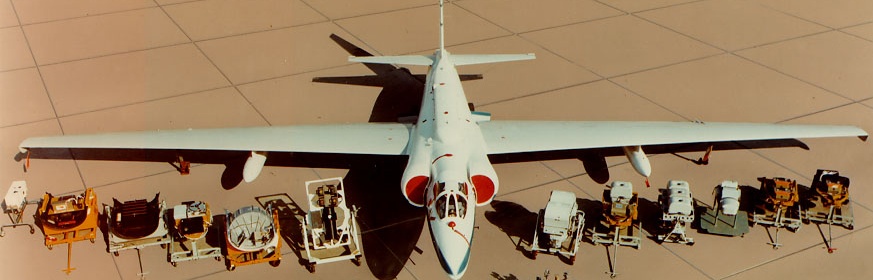 The answer to all of these was the U-2 spy plane – which itself was the predecessor of the US’s fleet of strategic reconnaissance satellites.
 Posted by flybrand1976
Categories: Disruption, Innovation, Invention
Tags:
Mobile Site | Full Site
Get a free blog at WordPress.com Theme: WordPress Mobile Edition by Alex King.
[…] break down the components of Dr. Cui’s material using the standard materials science framework used in Callister. […]
By Nonwovens and Battery Anodes: Applying the Materials Science Framework | Fred Lybrand on May 12, 2012 at 1:28 pm