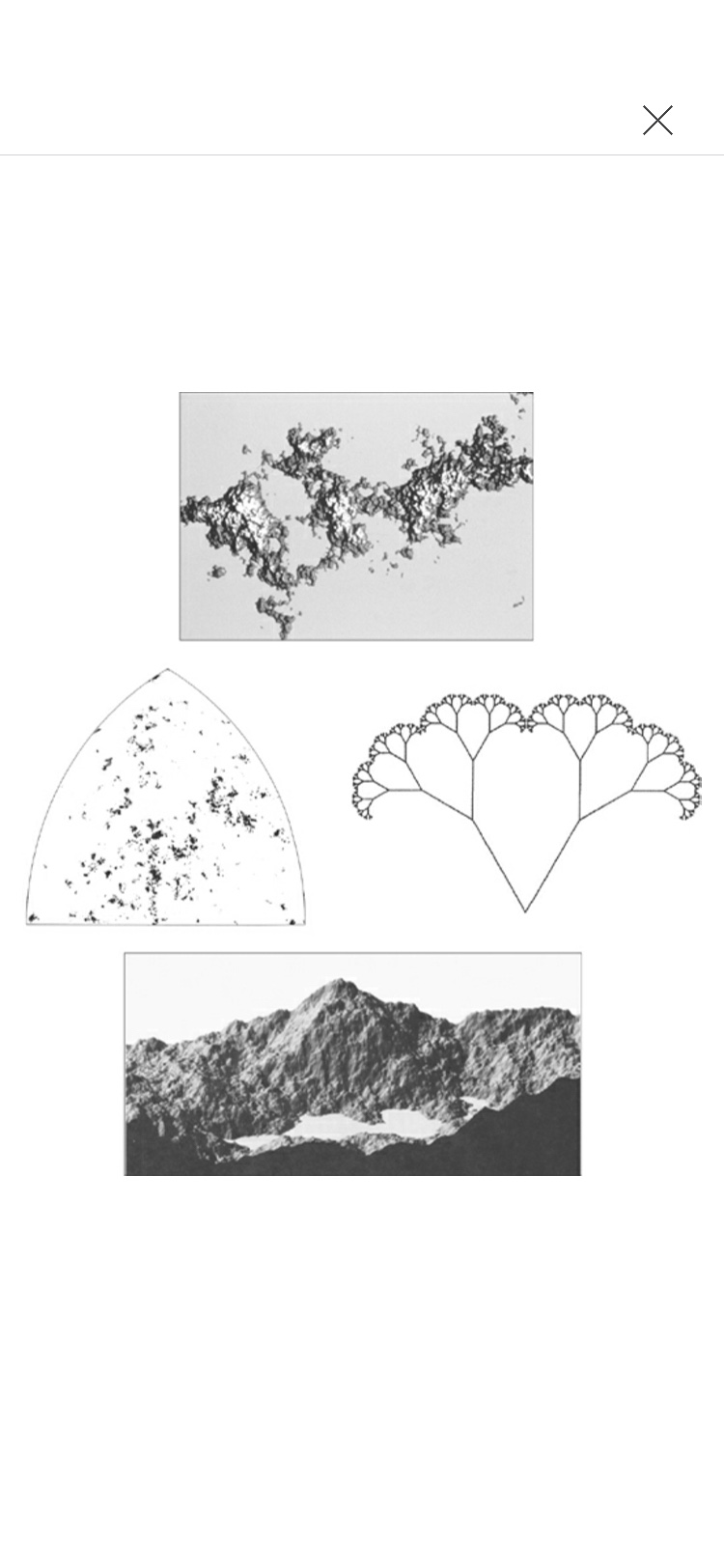
Mandelbrot’s The Fractalist Chapter 08: Paris: Exam Hell, Agony of Choice, and One Day at the École Normale Supérieure, 1944–45

Part Two – My Long and Meandering Education in Science and in Life

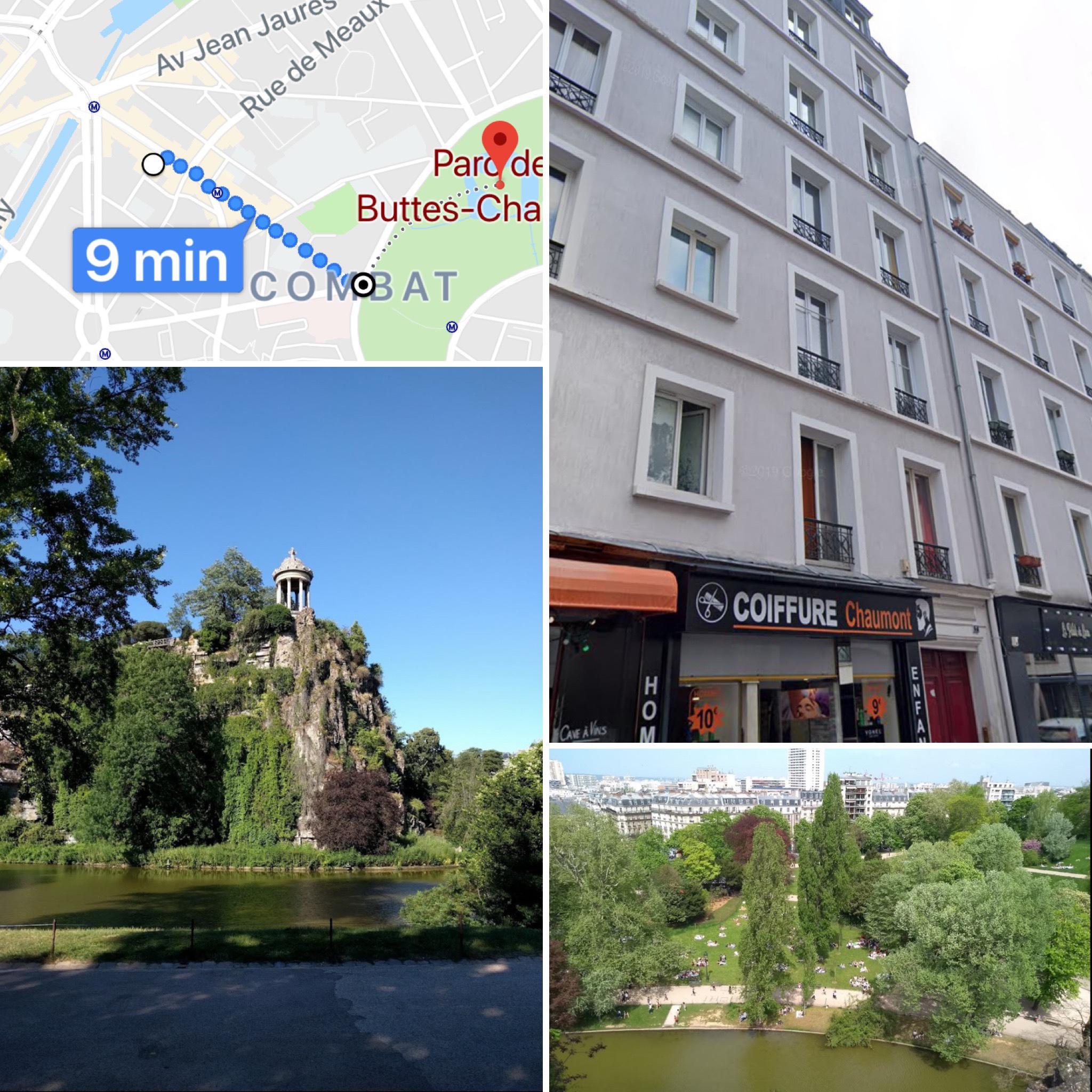
Mandelbrot has now survived World War II, but with survival he is now quickly forced into major life decisions.  Which school to attend?  His decision to attend Normal – which he does for 1 day before realizing he has made a mistake – is met with a quick reversal.  He attends Polytechnique.  Uncle Szolem is embarassed, but what courageous behavior for a young man to exhibit at a hectic time of life.

Best Quote(s)

“The high stakes terrified us all, and my parents did not trust my teachers. So a family “war council” was called to help:…” Location 1430

This is more of a statement about me – as the writer of this chapter summary and blog, than it is about Mandelbrot.  I’d never heard of a family doing such a formal review before helping a young member make a major life decision.  The examples that Mandelbrot shares of the other great scientists – who went on to win Noble prizes and more, shows the wisdom of such a process.

“Good wine or cheese must not be rushed. So why rush good humans by pressing a cookie cutter on a malleable young mind?” Location 1536

By attending Polytechnique, Mandelbrot would enter into a French bureaucratic educational system that would force him to pause his scientific career several times to follow the rules of the state.  Rather than seeing this idle time as a waste, he embraced it and believed it to help his ultimate achievements in developing a theory of roughness and fractals.

Page by Page, Location by Location

1352

1356

“I wanted to keep close to geometry and to prepare myself to realize in some way that Keplerian dream I had formulated not too long before. The scary exams proved a cinch and brought about the first, the freest, and most agonizing professional choice of my life.”

“… [Mandelbrot’s] mathematics teacher, M. Pons, hailed me in the street, and we had our first and last private conversation. “Let’s talk about the big math problem at Polytechnique. I could not solve it in the time allowed, but examiners say that—in the whole of France—one student did solve it, and he is from my class. Could it be you?” “Well, I did solve the entire problem—including every optional question at the end.” “How did you manage? No human could resolve that triple integral in the time allowed!” “I saw that it is the volume of the sphere. But you must first change the given coordinates to the strange but intrinsic coordinates I thought the underlying geometry suggested.” “Oh!” And he walked away, repeating, “But of course, of course, of course!””

1402

“Plain and simple, not only had I survived the war, but in France I had it made for life. Of course, nothing could guarantee that I would mature into a great scientist—or a great anything. But either school could open every door and provided a kind of automatic lifelong insurance. All this was simply beyond belief. Only nine years since my move to France, only months since the liberation, and still officially residing in that slum of Belleville, I was in no way ready for such choices.”

1408

“Then I moved to the United States—where French credits had no value.”

1424

“Regular schooling identifies sensible ambitions, and my classmates had been preparing over much of their lives.”

“By contrast, I was both underschooled and suddenly overadvised. Only months before, I had been desperately focused on staying alive.”

1430

“The high stakes terrified us all, and my parents did not trust my teachers. So a family “war council” was called to help:…”

1447

“Also, never forget something basic: professors are civil servants. Trouble may leave you somewhere—as it did Mother—with a worthless foreign certification. Keep away from state-certified fields and large national organizations. Education, health, and law are the plague. Go for broad engineering skills that every country will need under every political regime.”

1453

“One hears the same advice today all over the media: don’t count on lifetime protection from one employer.”

1458

Monod – “It reported that as a biologist he would match Pasteur and as a musician he would match Mozart. He chose biology and won a Nobel Prize.”

Von Neumann – who was excellent as a child in both math and chemical engineering also had a ‘war council’ with his family, “The advice was that he should do both. He perfected an alloy whose composition is not expected to ever be encountered again.”

1475

“What am I doing here? This is absolutely the wrong place for me.” Reversing out of Normale – what a courageous decision for a young man to realize he had made a mistake, and to then reverse it.

1480

“It was indeed the absolute worst place for a strong-willed person with already clearly defined tastes.”

1486

“Individual decisions are randomly influenced by history in the making.”

1497

“Having entered Normale, this boy has left on his second day and is about to enter Polytechnique.”

Paul Levy teaching statistics.

1513

“Sierpiński intellectual and political views made Uncle flee Poland, and Bourbaki made me leave Normale in 1945—and France in 1958.”

1530

“Its practical applicability revealed that it reflects the irreducible messiness of where I have chosen to work—the scientific frontier.”

1536

“Many people I know and respect value efficient processing of youths and view “wasted time” as harmful, even threatening, or immoral.”

“Good wine or cheese must not be rushed. So why rush good humans by pressing a cookie cutter on a malleable young mind?” Location 1536

1552

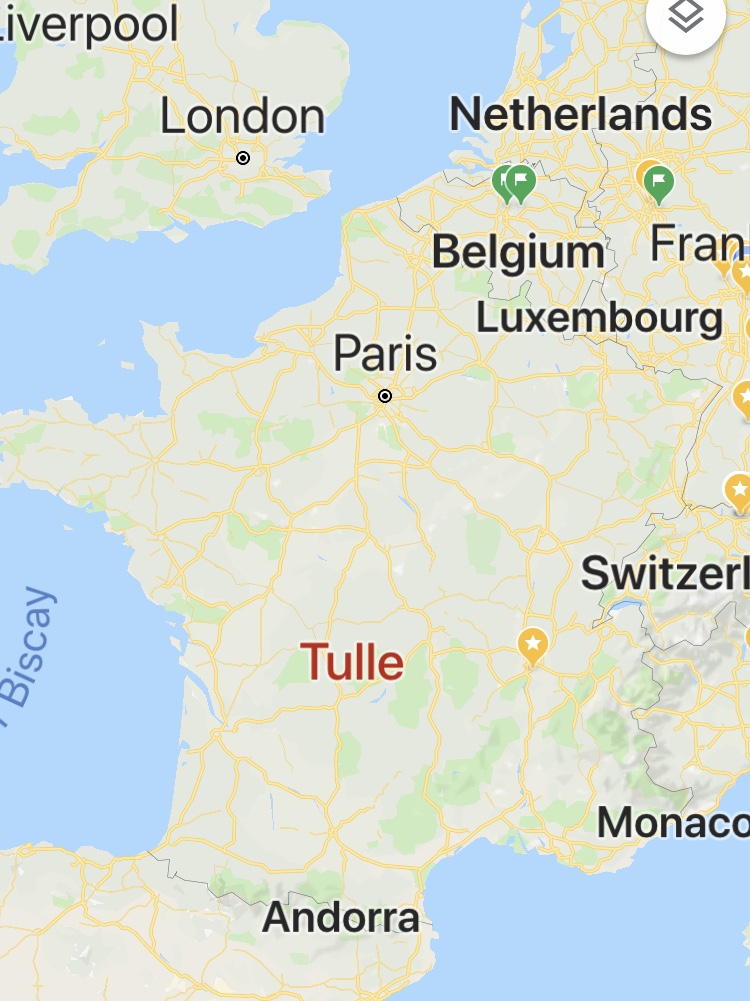
“A glance at the alumni directory shows that this talk was not followed by action.” What if France did not rebuild? Should they flee afar? Brazil, Argentina

1568

“In the absence of a well-defined set of rules to play by, the very notion of precocity ceases to make sense.”

Posted in Mandelbrot | Tagged | Comments Off on Mandelbrot’s The Fractalist Chapter 08: Paris: Exam Hell, Agony of Choice, and One Day at the École Normale Supérieure, 1944–45

Mandelbrot’s The Fractalist: Part 1, “How I came to be a Scientist” – Surviving World War 2

Chapter 1 Highlights

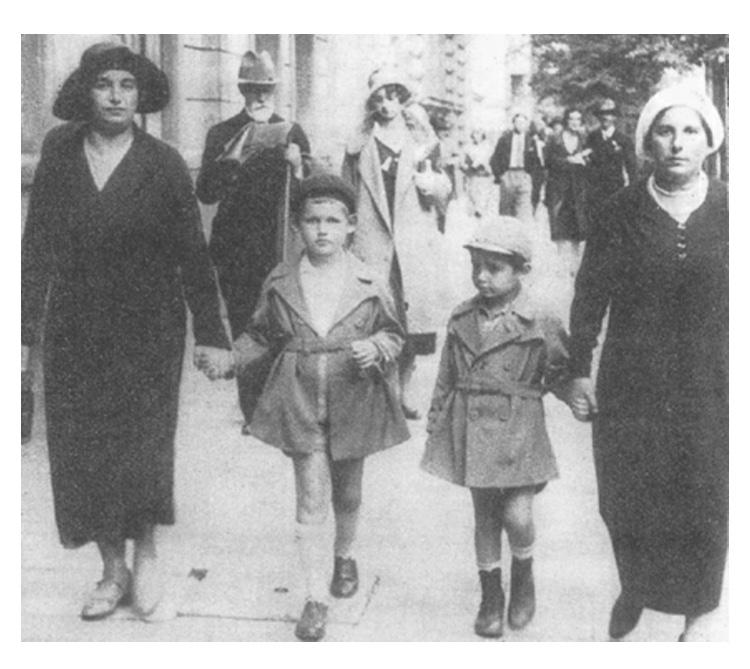
Mandelbrot’s book tells the story in a fractal nature – bouncing big and small and returning to reinforce important topics.  From this first family photo Mandelbrot introduces us to the adults that shaped his young life, helped him survive World War II, and put him in position to excel when life provided him with options.  What a family!

Best Quote(s)

“As observed by a writer native to that part of Europe, Woe to the poet born in an interesting piece of geography in a violent time.”

Mandelbrot’s fractals visual replication of geographic features – coast lines and elevations, was one of the first clear victories of the new field.  Mandelbrot’s life would move about the globe, making big leaps and small.

“Other war survivors describe being in a herd on the way to the death camps, noticing a way out, and taking it instantly. That is the kind of man Father was.”

Little opportunities lead to big changes.  Mandelbrot’s family would face many opportunities where following the herd would have led to a very different life – or even death.  Instead, they found the way out.

“They never shouted at each other but argued constantly about strategy, and they taught me very early that before taking big risks, one must carefully figure the odds.”

Discussion of risks helps mitigate risks.  Identify risks, then address them.

“Like many social customs, it could be defied, but at a cost: not being part of a system of patronage that is pervasive in intellectual and professional groups.”

Mandelbrot’s career would lack the rudder of mentorship – but he made up for it by staying focused on finding a larger calling and harnessing his intellectual capabilities and breadth of interests with hard work.

Chapter 2 Highlights

Warsaw shaped Mandelbrot as his first home, site of his early education and as a way of life that would be completely erased.  His family focused on staying alive and ahead of the Nazi advance at a time when others who were less urgent were murdered.

Best Quote(s)

“For these and other truly unavoidable reasons, Polish history from 1919 to 1939 was rough.”

Rough – just like the fractals that Mandelbrot invented.

“Since diversity cannot be avoided, one may as well like it (as I came to) or at least learn to live with it.”

This is a delightfully modern approach to diversity that is all too common in more integrated, international cultures.

“Before everything they had dreaded became horribly concrete in Poland, my parents’ bold scheme had worked.” Chapter 2, Location 659

His parents craft successful strategies again and again, allowing their family to survive and innovate on behalf of mankind.

“Of the people we knew, we alone moved to France and survived. Most procrastinated—until times turned awful. Only two Warsaw friends survived:…” Chapter 2, Location 663

The eradication of this world is frightening and it pervades Mandelbrot’s view of the world for the rest of his life.  How could it not?

“Others had been detained by their precious china, or inability to sell their Bösendorfer concert grand piano, or unwillingness to abandon the park view from their windows. Mother was horrified by their stories but listened stone-faced.” Chapter 2, Location 668

When the Mandelbrot family needed to act, they did so – unencumbered by the weight of their past.  They moved with focus to achieve their goal, survival.

Chapter 3 Highlights

Pages – ; Locations 675 – 860

Mandelbrot’s youth is about promise and his family’s focus on survival.  In Chapter 3 we find our young student in France with a need to exceed in education, but with the reader knowing that war and atrocity lie in his future.

Best Quote(s)

“By pulling up their deep roots in a community that only a few years later vanished in smoke, my lucid and decisive parents saved us all and earned the utmost gratitude.” Chapter 3, Location 681

Chapter two told us of the wonderful upbringing, education and life lessons that Mandelbrot experienced in Poland – all of which were wiped away with the Nazi invasion and Holocaust.  The lessons of his parents’ focus on survival is repeated throughout the book.

“Each time I recall that successful exam, my heart rejoices. Lady Luck is blind and needs assistance. In 1936, my parents assisted by moving out of Poland. In 1937, I was called to assist—and I did.”  Chapter 3, Location 795

From Mandelbrot’s mind, “My parents kept us alive – and to make the most of it I had to nail that test.  What fortune!”

“A belated benefit from my years of Latin is that they helped me correctly coin new words—like “fractal.”” Chapter 3, Location 833

Mandelbrot’s writing follows his study of roughness – we know where the story is going, and still the book plays out like a mystery.  We know the ending – otherwise who would read this autobiography?  Throughout he foreshadows his contribution to science and math.

Chapter 4 Highlights

Mandelbrot’s family continues to survive as the violence of World War II escalates.  Hard work provides a way out.  Luck breaks for the family again.

Best Quote(s)

“Xenophobia lost, meritocracy won, and she deliberately misplaced my family’s files.” Chapter 4, Location 879

The family survived many challenging times in WW2 – and they did so with some lucky breaks and a commitment to hard work.

“When I was nearing forty, my work became devoted to the phenomenon called intermittence, present in both nature and the financial markets.” Chapter 4, Location 885

Again, we see Mandelbrot foreshadowing his focus on fractals and the study of roughness.

“The final examination included two very easy problems, which I saw instantly to be a single problem stated in two different ways. Apparently, few students noticed.” Chapter 4, Location 1030

Mandelbrot manages to describe his academic and scientific prowess directly without boasting – that is a communication skill to envy.

Chapter 5 Highlights

Mandelbrot continued to excel in his studies despite the oppression of the Nazi occupation of France.  He studied shapes, and used the basic of geometry in novel ways to solve problems more fitting for older students.

Best Quote(s)

“True to our antiherding instinct, our family decided it was best to split up: the boys on their own, and the parents on theirs.” Chapter 5, Location 1068

It is remarkable that parents would make this decision – it had to have been agonizing.  And it was the right one.

“Not unlike sports, the bulk of training consisted of mastering a single but extremely arcane gesture.” Chapter 5, Location 1079

When brilliant minds comment on sport and athletics, the observations are always fascinating.

“Oradour-sur-Glane is a little town where the Waffen SS committed a horrible massacre in 1944, herding 642 villagers into a church and setting it on fire.” Chapter 5, Location 1118

Referring back to the family decision by the Mandelbrot’s to split up – the acts of violence by the Nazis defy the civility of modern life.  As we will see in a later chapter, the Mandelbrot decision saved the lives of their children.

“In a way, I was learning to cheat.”  Chapter 5, Location 1197

By learning to think in shapes, Mandelbrot would teach himself ways to think that even he considered cheating.  His life’s great accomplishment is taking that way of thinking, using it to study roughness and sharing it with the rest of humanity.

Chapter 6 Highlights

Mandelbrot deploys his genius in order to help an aristocrat maintain the family horse farm while a war rages in the background.  Carnegie uses animals to endear the reader to people – and the olfactory descriptions of a young Dr. Mandelbrot amidst equestrians is powerful imagery.

Best Quote(s)

“Nobody ever listens to me, but you did. And you remembered everything. You can’t be altogether bad.” Chapter 6, Location 1242

Mandelbrot takes a page out of the Carnegie playbook from How to Win Friends and Influence People.

“Horse owning Gentry thought Germany would win, “I cajoled them, first to listen to Swiss radio in French, then to France Libre in London.”” Chapter 6, Location 1298

From a persuasion standpoint, Mandelbrot was pacing his gentrified hosts to understand there were more possibilities about what might happen with the war.

Chapter 7 Highlights 

Locations 1312 – 1347

We wrap up the first part of Mandelbrot’s life – with a wonderful preview of the 2nd and third parts.  The family made a bold bet to split up, and it was truly necessary based on the gruesome description of French resistance youths meeting their death hanging from street lamps.

Best Quote(s)

“The bold plan our parents had devised—bless their hard-won survivor skills—had let them and their sons cope with events separately. This bet, the riskiest of our complicated lives, worked better than any realist could have hoped.” Chapter 7, Location 1335

The plan had worked, all four were alive – while other families in similar situations were never to meet again.

“During this second, twelve-year stage of my life, I was not going to manage elegantly—as will be seen. So, in time, I deliberately provoked a belated third stage.” Chapter 7, Location 1347

Mandelbrot’s self reflection is impressive.

Posted in Mandelbrot | Comments Off on Mandelbrot’s The Fractalist: Part 1, “How I came to be a Scientist” – Surviving World War 2

Mandelbrot’s The Fractalist 07: Alleluiah! The War Moves Away and a New Life Beckons – Page by Page Review

Locations 1312 – 1347

We wrap up the first part of Mandelbrot’s life – with a wonderful preview of the 2nd and third parts.  The family made a bold bet to split up, and it was truly necessary based on the gruesome description of French resistance youths meeting their death hanging from street lamps.

Best Quote(s)

“The bold plan our parents had devised—bless their hard-won survivor skills—had let them and their sons cope with events separately. This bet, the riskiest of our complicated lives, worked better than any realist could have hoped.” Chapter 7, Location 1335

The plan had worked, all four were alive – while other families in similar situations were never to meet again.

“During this second, twelve-year stage of my life, I was not going to manage elegantly—as will be seen. So, in time, I deliberately provoked a belated third stage.” Chapter 7, Location 1347

Mandelbrot’s self reflection is impressive.

Page by Page, Screen by Screen, Swipe by Swipe

1317

“After just barely escaping the coming horrors in Poland, I had managed to survive the occupation of France, with its periods of astonishing “normality” alternating with hair-raising episodes.”

1329

“Deliriously happy family reunion with no one missing!”

“…the occupying forces that smashed Oradour also hanged nearly a hundred young people from lampposts and balconies of a square right next to where we lived. One victim had been a classmate. Both of his parents were schoolteachers. Nice, brilliant, and all too secure, he was often heard expounding in a loud voice classic left-wing ideas that I would not have dared even whisper.” Chapter 7, Location 1329

All of the fears that Mandelbrot’s family had harbored were right.

1335

“The bold plan our parents had devised—bless their hard-won survivor skills—had let them and their sons cope with events separately. This bet, the riskiest of our complicated lives, worked better than any realist could have hoped.” Chapter 7, Location 1335

1347

“During this second, twelve-year stage of my life, I was not going to manage elegantly—as will be seen. So, in time, I deliberately provoked a belated third stage.” Chapter 7, Location 1347

Posted in Mandelbrot | 1 Comment

Mandelbrot’s The Fractalist 06: Horse Groom near Pommiers-en-Forez, 1944 – Page by Page Review

Mandelbrot deploys his genius in order to help an aristocrat maintain the family horse farm while a war rages in the background.  Carnegie uses animals to endear the reader to people – and the olfactory descriptions of a young Dr. Mandelbrot amidst equestrians is powerful imagery.

Best Quote(s)

“Nobody ever listens to me, but you did. And you remembered everything. You can’t be altogether bad.” Chapter 6, Location 1242

Mandelbrot takes a page out of the Carnegie playbook from How to Win Friends and Influence People.

“Horse owning Gentry thought Germany would win, “I cajoled them, first to listen to Swiss radio in French, then to France Libre in London.”” Chapter 6, Location 1298

From a persuasion standpoint, Mandelbrot was pacing his gentrified hosts to understand there were more possibilities about what might happen with the war.

Page by Page

Locations 1226 – 1310

1230

“My boss, a kind old farmer, told me that he was better off without my help. I agreed.”

1242 – 46

“M. de Rivière again became animated: “In 1913, my horse Phoebus won the …” I interrupted and recited the horse’s pedigree without one mistake. “Ça, par exemple! Nobody ever listens to me, but you did. And you remembered everything. You can’t be altogether bad.”

“Jules knows everything about horses,” he said, “and you know nothing. But he is a thief, and you look honest. I take you, and you can continue to eat at the master’s table with us.”

The list of horse names at the farm where Mandelbrot worked:

  • Phoebus and the Sun.
  • Madelon- draft horse.
  • Rêveuse and Respectueuse – breeding mares.
  • Union Sacrée,
  • Aphrodite and Apollo – the foals

1264

Horses smell…

“Many horses brought together on a muddy field emit a stench—and neighing noises—that I still remember as I write.”

1298

“Horse owning Gentry thought Germany would win, “I cajoled them, first to listen to Swiss radio in French, then to France Libre in London.””

1304

“Incidentally, the patronymic de Gaulle is not aristocratic; in Flemish (the tongue of northern Belgium and France), it means “the horse.”

1310

“One final irony—our horses were either not broken in or too old, so I never learned to ride.”

Posted in Mandelbrot | 1 Comment

Mandelbrot’s The Fractalist 05: On to Lyon: Tighter Occupation and Self-Discovery, 1943–44 – Page by Page Review

Mandelbrot continued to excel in his studies despite the oppression of the Nazi occupation of France.  He studied shapes, and used the basic of geometry in novel ways to solve problems more fitting for older students.

Best Quote(s)

“True to our antiherding instinct, our family decided it was best to split up: the boys on their own, and the parents on theirs.” Chapter 5, Location 1068

It is remarkable that parents would make this decision – it had to have been agonizing.  And it was the right one.

“Not unlike sports, the bulk of training consisted of mastering a single but extremely arcane gesture.” Chapter 5, Location 1079

When brilliant minds comment on sport and athletics, the observations are always fascinating.

“Oradour-sur-Glane is a little town where the Waffen SS committed a horrible massacre in 1944, herding 642 villagers into a church and setting it on fire.” Chapter 5, Location 1118

Referring back to the family decision by the Mandelbrot’s to split up – the acts of violence by the Nazis defy the civility of modern life.  As we will see in a later chapter, the Mandelbrot decision saved the lives of their children.

“In a way, I was learning to cheat.”  Chapter 5, Location 1197

By learning to think in shapes, Mandelbrot would teach himself ways to think that even he considered cheating.  His life’s great accomplishment is taking that way of thinking, using it to study roughness and sharing it with the rest of humanity.

Page by Page, Chapter by Chapter

1068

“True to our antiherding instinct, our family decided it was best to split up: the boys on their own, and the parents on theirs.” Chapter 5, Location 1068

1074

“Few aspects of that time give reason for regret, but I forgot the names of the charity and the Angel.”

1079

“Not unlike sports, the bulk of training consisted of mastering a single but extremely arcane gesture.” Chapter 5, Location 1079

1085

“I acquired a lot of self-confidence, and when I became a homeowner, my experience as an apprentice toolmaker in wartime was a boon.”

1096

“My life was filled with potentially deadly situations that called for quick reckonings of odds.”

While in the train station overnight waiting to get back up forged papers after turning down the drink offer of a drunk.

“My life was not smooth.”

1118

Karl Marx Boulevard…

“After the alert, the “rightful” signs were quickly put back.”

“Oradour-sur-Glane is a little town where the Waffen SS committed a horrible massacre in 1944, herding 642 villagers into a church and setting it on fire.” Chapter 5, Location 1118

1136

“How nice to find you here. Do you remember me?”

Life and death at age —

1154

“The Lycée du Parc may be little known, but it is the keystone of the Mandarin system that seventeenth-century Jesuits had imported from China to France.”

1169

“… molding everyone to follow what was officially declared the straightest path to the best career.”

1186

“Learning mathematics from such books made me intimately familiar with a large zoo, collected over centuries, of very specialized shapes of every kind.”

A zoo of shapes. A zoo of constraints.

These shapes gave Mandelbrot a map – he could know his end goal.

1191

“This playful activity transformed impossibly difficult problems into simple ones.”

1197

“In a way, I was learning to cheat.”  Chapter 5, Location 1197

1207

“Both spent long evenings and weekends looking within the exams for old or new problems that I could not instantly “geometrize.” They never succeeded in stumping me.”

Teachers need great students.

1218

Art instructor at the Taupe, “It seems that this is a practical joke—a drawing by a virtual student from the outside. I would love to see the students in the arts program do as well.”

Posted in Mandelbrot | 1 Comment

Mandelbrot’s The Fractalist: 04 Dirt-Poor Hills of Unoccupied Vichy France, 1939–43 Chapter by Chapter Review

Mandelbrot’s family continues to survive as the violence of World War II escalates.  Hard work provides a way out.  Luck breaks for the family again.

Best Quote(s)

“Xenophobia lost, meritocracy won, and she deliberately misplaced my family’s files.” Chapter 4, Location 879

The family survived many challenging times in WW2 – and they did so with some lucky breaks and a commitment to hard work.

“When I was nearing forty, my work became devoted to the phenomenon called intermittence, present in both nature and the financial markets.” Chapter 4, Location 885

Again, we see Mandelbrot foreshadowing his focus on fractals and the study of roughness.

“The final examination included two very easy problems, which I saw instantly to be a single problem stated in two different ways. Apparently, few students noticed.” Chapter 4, Location 1030

Mandelbrot manages to describe his academic and scientific prowess directly without boasting – that is a communication skill to envy.

Page by Page, Chapter by Chapter

869

874

“We were in the most literal sense saved by devoted friends of Szolem—descendents of hardscrabble farmers and teachers from a village school, who valiantly helped Lady Luck.”

879

“Xenophobia lost, meritocracy won, and she deliberately misplaced my family’s files.” Chapter 4, Location 879

885

“My parents’ systematic efforts at acculturation having worked, Léon and I sounded and looked almost native.”

““Intermittence” is a word for the old quip that army service consists of endless boredom punctuated by scary, irregular, and unpredictable interruptions.”

“When I was nearing forty, my work became devoted to the phenomenon called intermittence, present in both nature and the financial markets.” Chapter 4, Location 885

896

“But after we broke down the wall of distrust, they became the most generous of hosts and helped us survive the war.”

935

“Just before Paris fell in June 1940, my parents joined us—with slim savings, as Father’s business partner had fled with the cash box and the bank balance.”

941

“Eternal thanks.”

958

“We settled there into a life of the most extreme parsimony, managing with a level of ingenuity that my brilliant and resilient parents—rich in experience from previous catastrophes—could contrive when forced into inactivity.”

963

“He was extremely skilled with his hands and the tools he scrounged. Watching and helping him taught me to be handy as well. He read voraciously, always taking notes.”

969

“Mother just shrugged.”

The family China was shattered – she didn’t care, because it wasn’t her priority.

985

“But I wanted to write for an audience that was mixed and not known in advance, so writing skills mattered.” Chapter 4, Location 985

1002

“Invariably, they included masses of illustrations of shapes that later books omitted as a matter of principle.”

Like Tufte…

1013

“I had performed as expected.”

Summa cum laude – 1st in school history.

1019

“I never saw my parents celebrate. They may have never done so, or forgotten how—certainly they did not teach me anything along those lines.”

1030

“The final examination included two very easy problems, which I saw instantly to be a single problem stated in two different ways. Apparently, few students noticed.” Chapter 4, Location 1030

1041

“Sadly, on a bike tour, they stopped for a swim and Laurent watched Martin be killed by a powerboat.”

Tragedy flows throughout Mandelbrot’s book.  It does not determine his fate, but it paints his outlook on the world.

Posted in Mandelbrot | 1 Comment

Mandelbrot’s The Fractalist: 03 Adolescent in Paris, 1936–39 – Chapter by Chapter Review

Pages – ; Locations 675 – 860

Mandelbrot’s youth is about promise and his family’s focus on survival.  In Chapter 3 we find our young student in France with a need to exceed in education, but with the reader knowing that war and atrocity lie in his future.

Best Quote(s)

“By pulling up their deep roots in a community that only a few years later vanished in smoke, my lucid and decisive parents saved us all and earned the utmost gratitude.” Chapter 3, Location 681

Chapter two told us of the wonderful upbringing, education and life lessons that Mandelbrot experienced in Poland – all of which were wiped away with the Nazi invasion and Holocaust.  The lessons of his parents’ focus on survival is repeated throughout the book.

“Each time I recall that successful exam, my heart rejoices. Lady Luck is blind and needs assistance. In 1936, my parents assisted by moving out of Poland. In 1937, I was called to assist—and I did.”  Chapter 3, Location 795

From Mandelbrot’s mind, “My parents kept us alive – and to make the most of it I had to nail that test.  What fortune!”

“A belated benefit from my years of Latin is that they helped me correctly coin new words—like “fractal.”” Chapter 3, Location 833

Mandelbrot’s writing follows his study of roughness – we know where the story is going, and still the book plays out like a mystery.  We know the ending – otherwise who would read this autobiography?  Throughout he foreshadows his contribution to science and math.

Page by Page Review

675

“At age fifty she had chosen to be a lonely housewife living in a foreign slum.”

681

“By pulling up their deep roots in a community that only a few years later vanished in smoke, my lucid and decisive parents saved us all and earned the utmost gratitude.”

687

“The small number of horses and the large number of cars made me realize that cars retired in Paris began a new life in Warsaw.”

693

“When Greek and Roman statuary began to be dug out and long-reigning dynasties started collecting great art, the pope chose first, followed by the king of France, then by English, Russian, and German royalty and amateurs.”

699

“The first bicycle (low, wooden, and with no pedals, propelled by feet pushing the road), the first motorcar (a monster powered by steam that arguably inspired the creator of thermodynamics, physicist Sadi Carnot), the first airplane to actually, if very briefly, fly (Clément Ader’s batlike contraption), the first plane to cross the English Channel (Louis Blériot’s)—these and many comparable marvels of human ingenuity were hidden under thick soot in this dark Gothic-era abbatial church.”

704

“Its name, the Conservatoire National des Arts et Métiers (CNAM), is old-fashioned but tells it all: here the nation preserves the originals of its greatest practical thinkers’ greatest achievements.”

717

“Who would dare begrudge a man who, compared to his youngest brother, had achieved so little.”

“He must have also felt the need to reintroduce himself to his sons and his wife of twenty years.”

733

“We knew hardly anyone in Paris, so our social life dropped overnight from that of a big extended family to almost nothing.”

754

“Parents and sons were forbidden to speak Polish, and it worked beyond belief.”

765

“Larousse Encyclopédie, together with decades of bound volumes of its updates. In no time, I read them from cover to cover.”

771

“a gold twenty-franc coin used during the reign of Emperor Napoléon III (1852–70). Had the previous tenant taken it along, he might have purchased his survival.”

777

“A classic slum dweller named Repkowski, he was to stay in Paris and vanish during the Holocaust.”

795

“Each time I recall that successful exam, my heart rejoices. Lady Luck is blind and needs assistance. In 1936, my parents assisted by moving out of Poland. In 1937, I was called to assist—and I did.”

818

“…the kinds of people who today would supervise Ph.D. dissertations were teaching eleven-year-olds. They lavished on me far more than any rightful share of their time,…”

833

“A belated benefit from my years of Latin is that they helped me correctly coin new words—like “fractal.””

860

“My parents were trained to hope and work for the best—but also to be ready to manage the worst.”

“I complied, and this is the first time I bring up this episode.”

Frédéric Joliot-Curie (1900–58),

“On another of Szolem’s visits, Father made a point of telling him in my presence that to survive and help his siblings, he had abandoned study and instead he became an apprentice. Must I follow the same path?”

Posted in Mandelbrot | 1 Comment

Mandelbrot’s The Fractalist: 02 Childhood in Warsaw – Chapter by Chapter Review

Warsaw shaped Mandelbrot as his first home, site of his early education and as a way of life that would be completely erased.  His family focused on staying alive and ahead of the Nazi advance at a time when others who were less urgent were murdered.

Best Quote(s)

“For these and other truly unavoidable reasons, Polish history from 1919 to 1939 was rough.”

Rough – just like the fractals that Mandelbrot invented.

“Since diversity cannot be avoided, one may as well like it (as I came to) or at least learn to live with it.”

This is a delightfully modern approach to diversity that is all too common in more integrated, international cultures.

“Before everything they had dreaded became horribly concrete in Poland, my parents’ bold scheme had worked.” Chapter 2, Location 659

His parents craft successful strategies again and again, allowing their family to survive and innovate on behalf of mankind.

“Of the people we knew, we alone moved to France and survived. Most procrastinated—until times turned awful. Only two Warsaw friends survived:…” Chapter 2, Location 663

The eradication of this world is frightening and it pervades Mandelbrot’s view of the world for the rest of his life.  How could it not?

“Others had been detained by their precious china, or inability to sell their Bösendorfer concert grand piano, or unwillingness to abandon the park view from their windows. Mother was horrified by their stories but listened stone-faced.” Chapter 2, Location 668

When the Mandelbrot family needed to act, they did so – unencumbered by the weight of their past.  They moved with focus to achieve their goal, survival.

Page by Page

“A tree’s roots are important, but less important than its fruit, and describing them is slippery territory. With age, even half-successful people favor family and social friends over truly formative events. I shall try to be fair to both.”
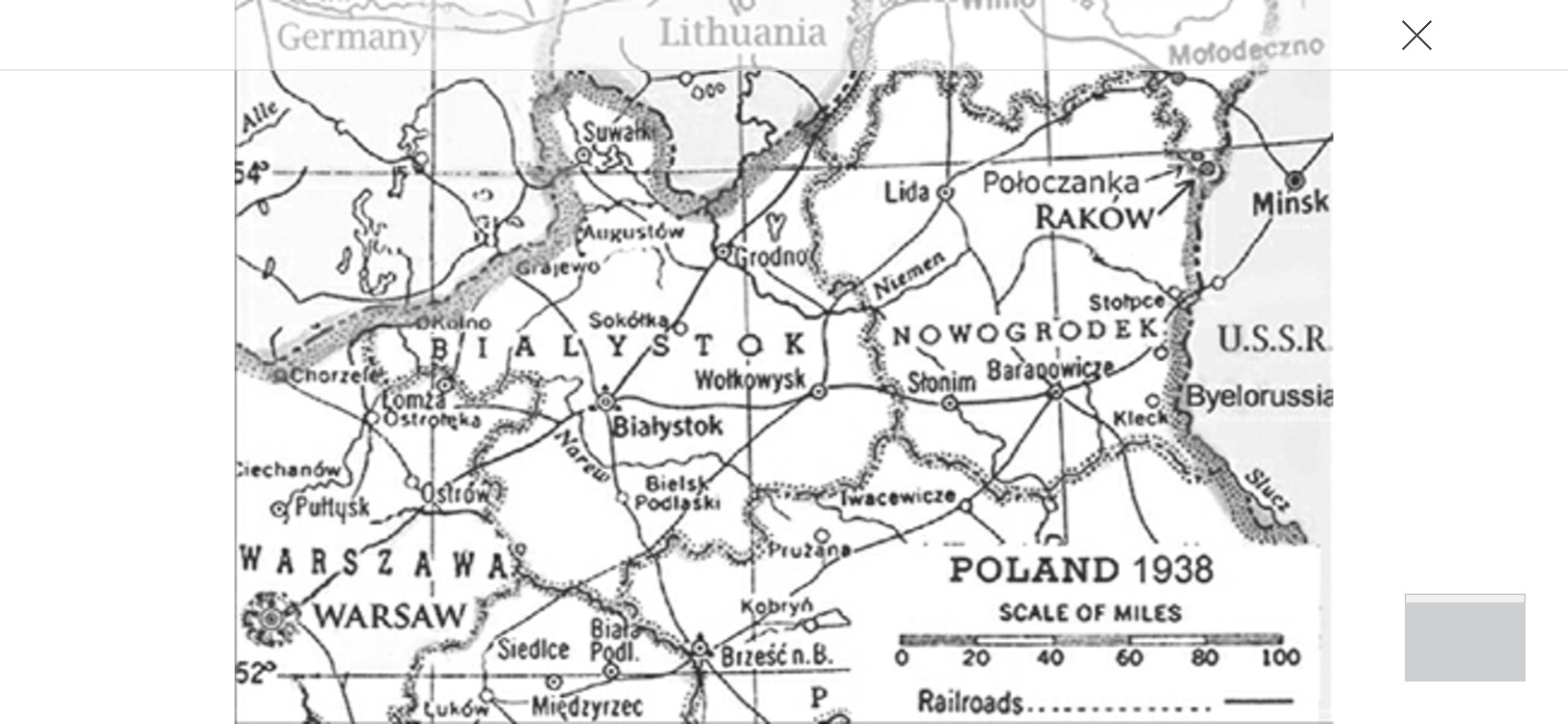
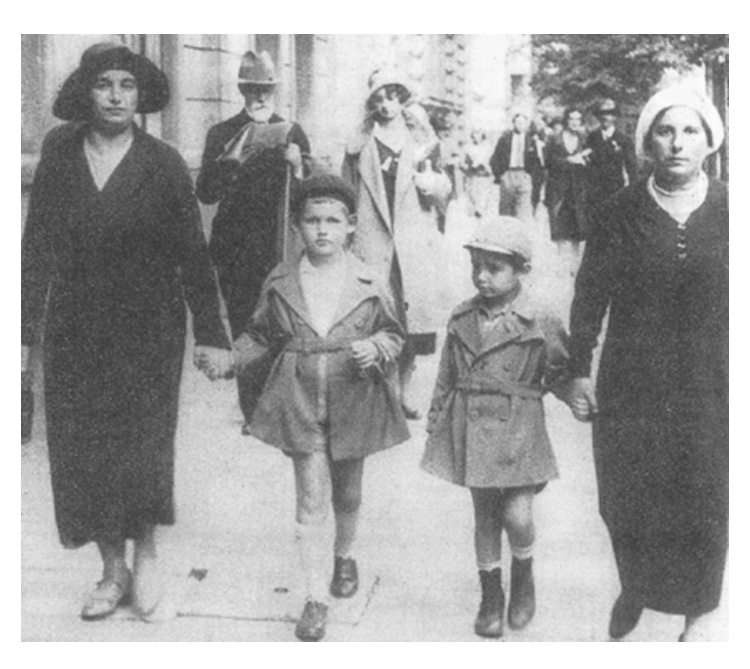
“We wore custom-made shoes—a sign of prosperity, but only relative to the cobblers’ notorious poverty.”

“Patients came only when the pain was unbearable—with one memorable exception.”

“I remember my initiation to the mystery of the value of money.”

“When we moved to Paris, I vividly recall Mother being flabbergasted by the variety of foods available even in the slum where we lived.”

“That letter was not written at home, and the error was pointed out by sweet and cultured Uncle Loterman.”

“He was a chronically unemployed intellectual who—unlike other men we knew—did not escape idleness by earning several useless doctorates. He despised rote learning, including even the alphabet and multiplication tables; both cause me mild trouble to this day. However, small countries breed broad curiosity. He made me a skilled speed-reader.”

“Fortunately, the gaps in my formal education proved less deadly than feared.”

“For these and other truly unavoidable reasons, Polish history from 1919 to 1939 was rough.”

Teachers read aloud, “Poland is a happy multinational country where all the ethnic problems of the past have been solved.”

“Since diversity cannot be avoided, one may as well like it (as I came to) or at least learn to live with it.”

“The four years I spent in the class of Mrs. Goldszlakowa were one of the “normal” periods in my schooling, which alternated with highly “abnormal” ones. They were a breeze, a pleasant experience that left few memorable impressions.”

Summer in Belarus

“Its meandering rivers and deep marshes are an obstacle to both conquest and progress.”

“There, the tiny remainder of Napoléon’s Grande Armée that had escaped from Moscow in 1812 was hit by the lowest temperatures (–30 ° C) of that thoughtless adventure—as I noted years later on Minard’s classic graph of its thinning ranks.”

Town of Mołodeczno.

“Given the nature of the roads, there was a summer verst and a winter verst.”

594

“And my feet have frozen several times, and my toes fell off.”

619

“1600.”

“On arrival at the big, noisy station in Warsaw, the young woman was in full meltdown.”

623

“A child cannot make life decisions, but I knew how to listen and watch.”

638

Mirka goes to France. “Informed, Szolem spoke to colleagues in Paris.”

How did she get in?

“Poland’s most political and powerful mathematician, Wacław Sierpiński,…”

649

“But Mirka’s experience was the last straw: Poland was not the country my parents wanted for their sons.”

659

“Before everything they had dreaded became horribly concrete in Poland, my parents’ bold scheme had worked.”

663

“Of the people we knew, we alone moved to France and survived. Most procrastinated—until times turned awful. Only two Warsaw friends survived:…”

668

“Others had been detained by their precious china, or inability to sell their Bösendorfer concert grand piano, or unwillingness to abandon the park view from their windows. Mother was horrified by their stories but listened stone-faced.”

Posted in Mandelbrot | 1 Comment

Mandelbrot’s the Fractalist 01: Roots: Of Flesh and the Mind – Chapter by Chapter Review

Mandelbrot’s book tells the story in a fractal nature – bouncing big and small and returning to reinforce important topics.  From this first family photo Mandelbrot introduces us to the adults that shaped his young life, helped him survive World War II, and put him in position to excel when life provided him with options.  What a family!

Best Quote(s)

“As observed by a writer native to that part of Europe, Woe to the poet born in an interesting piece of geography in a violent time.”

Mandelbrot’s fractals visual replication of geographic features – coast lines and elevations, was one of the first clear victories of the new field.  Mandelbrot’s life would move about the globe, making big leaps and small.

“Other war survivors describe being in a herd on the way to the death camps, noticing a way out, and taking it instantly. That is the kind of man Father was.”

Little opportunities lead to big changes.  Mandelbrot’s family would face many opportunities where following the herd would have led to a very different life – or even death.  Instead, they found the way out.

“They never shouted at each other but argued constantly about strategy, and they taught me very early that before taking big risks, one must carefully figure the odds.”

Discussion of risks helps mitigate risks.  Identify risks, then address them.

“Like many social customs, it could be defied, but at a cost: not being part of a system of patronage that is pervasive in intellectual and professional groups.”

Mandelbrot’s career would lack the rudder of mentorship – but he made up for it by staying focused on finding a larger calling and harnessing his intellectual capabilities and breadth of interests with hard work.

Page by Page

“As observed by a writer native to that part of Europe, Woe to the poet born in an interesting piece of geography in a violent time.”

“To the contrary, one wanted to sacrifice oneself for science.” The author of these words was my uncle Szolem (1899–1983).”

“On gifted youngsters, this environment bestowed absolutely no feeling of entitlement and offered no encouragement by flattery.”

Mandelbrot was born November 20, 1924.

“At the place of honor to Grandfather’s right sits the most senior guest, Jacques Hadamard (1865–1963).”

Photo is from June 1930.

“He was a lifelong self-improver and an extremely widely read, clear-minded, and scholarly person. He was fascinated with how machines worked and very handy with tools—in wartime, he taught me many tricks.”

“Other war survivors describe being in a herd on the way to the death camps, noticing a way out, and taking it instantly. That is the kind of man Father was.”

Collapse of credit early in his life would lead Mandelbrot back to finacial markets later in life.

“None have been paid because everybody is bankrupt; that is what happened.”

“As Father was fighting his final illness, increasing general prosperity destroyed his niche profession.”

“As confirmed by several cousins of Mother who scattered around the world, he pioneered by insisting that all his granddaughters become doctors.”

“Mother was the kind of person who witnessed her world collapse around her six times, regained her composure in no time, and soon resumed full steam.”

“This photo shows me in Świder in 1930 with my brother, Léon, fifteen months younger than I.”

“Father was bold and Mother was cautious. They never shouted at each other but argued constantly about strategy, and they taught me very early that before taking big risks, one must carefully figure the odds.”

“Mother sobbed and I am still ashamed.”

“My high level of self-confidence had its roots at home.”

“They reestablished themselves, only to be ruined a third time by the Depression, a fourth by World War II, and a fifth and final time by a nonpolitical event, Father’s cancer.”

“Like Poincaré and Hadamard, and Isaac Newton long before them, Szolem viewed mathematics as almost real, but with a crucial difference. They were fascinated by profound issues of physics and the actual world, but Szolem was not.”

“Like many social customs, it could be defied, but at a cost: not being part of a system of patronage that is pervasive in intellectual and professional groups.”

Posted in Mandelbrot | 1 Comment

Mandelbrot’s Fractalist: 00 Beauty and Roughness, Introduction – Chapter by Chapter Review

Introduction: xi – xvii

This is the fourth page-by-page review I’ve published, and it is the first where I was reading the book for the first time.  Mandelbrot’s Misbehavior of Markets is one of my favorite finance books and his work on power laws and other non-Normal distributions are powerful tools for explaining the modern world.

His autobiography The Fractalist– published posthumously – is a masterpiece.  The writing is clear and direct.  The information is valuable.  His voice is unique, and his study of roughness – which came to be called fractals – is used as a tool in his storytelling style shining brightest in Chapter 23.

The introduction functions like most writer’s introductions, setting up the reader with the story they are about to encounter.  Mandelbrot introduces his tone, scope and field of study from the outset and it is their unique combination that make the chapter, the book, and his life so interesting.

Best Quote(s)

“NEARLY ALL COMMON PATTERNS IN NATURE are rough.”

Could this be the best opening sentence of any book ever?

“For centuries, the very idea of measuring roughness was an idle dream. This is one of the dreams to which I have devoted my entire scientific life.”

Mandelbrot’s commitment to (i) finding a deep life-long problem that was novel, and then (ii) once determining it was roughness, seeing it through to resolution.

“Could some other number measure the “overall roughness” of rusted iron, or of broken stone, metal, or glass?”

Mandelbrot found a field of tremendous value and novelty – then committed to quantifying it.

“Kepler used his knowledge of two different fields—mathematics and astronomy—to calculate that this motion of the planets was not an anomaly.”

Kepler serves as Mandelbrot’s North Star, the scientist that found a new field and resolved it for humanity by combining two previously disparate fields.

“Within the purest of mathematics, my unabashed play with abandoned “pathologies” led me to a number of far-flung discoveries.”

Play, combined with the inherent roughness of life, led Mandelbrot down this path.  Let’s follow and enjoy his delightful narration.

Page by Page

“NEARLY ALL COMMON PATTERNS IN NATURE are rough.”

“For centuries, the very idea of measuring roughness was an idle dream. This is one of the dreams to which I have devoted my entire scientific life.”

“Could some other number measure the “overall roughness” of rusted iron, or of broken stone, metal, or glass?”

“Kepler used his knowledge of two different fields—mathematics and astronomy—to calculate that this motion of the planets was not an anomaly.”

“For a thinking person, the most serious mental illness is not being sure of who you are. This is a problem you do not suffer from. You never need to reinvent yourself to fit changes in circumstances; you just move on. In that respect, you are the sanest person among us.”

“All those contributors to different fields were easiest to study when recognized as “peas in a pod,” pearls of all sizes from a very long necklace.”

“Every key facet of fractal geometry suffers from a quandary that physicists of the early 1900s called a “catastrophe.””

“He found fulfillment as a sharply focused establishment insider, while I thrived as a hard-to-pigeonhole maverick.”

“There I was introduced to a world of images through outdated math books filled with illustrations.”

“Half a century before I was born, Georg Cantor (1845–1918) claimed that the essence of mathematics resides in its freedom.”

“Within the purest of mathematics, my unabashed play with abandoned “pathologies” led me to a number of far-flung discoveries.”

“It appears that, responding to that ancient invitation of Plato, I have extended the scope of rational science to yet another basic sensation of man, one that had for so long remained untamed.”

Posted in Mandelbrot | Comments Off on Mandelbrot’s Fractalist: 00 Beauty and Roughness, Introduction – Chapter by Chapter Review