Medical PPE and Corona Virus: The Ideal and Improvisation

I am not an expert in this space, but my credentials are reasonable. This is my personal outlook, not that of any employer.

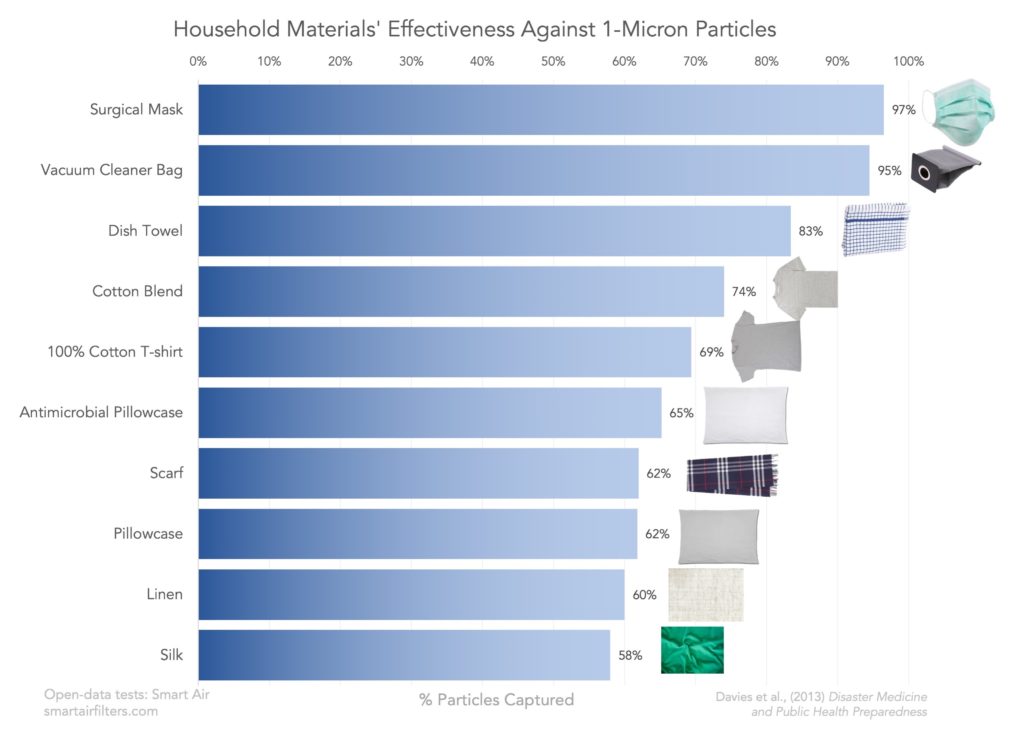
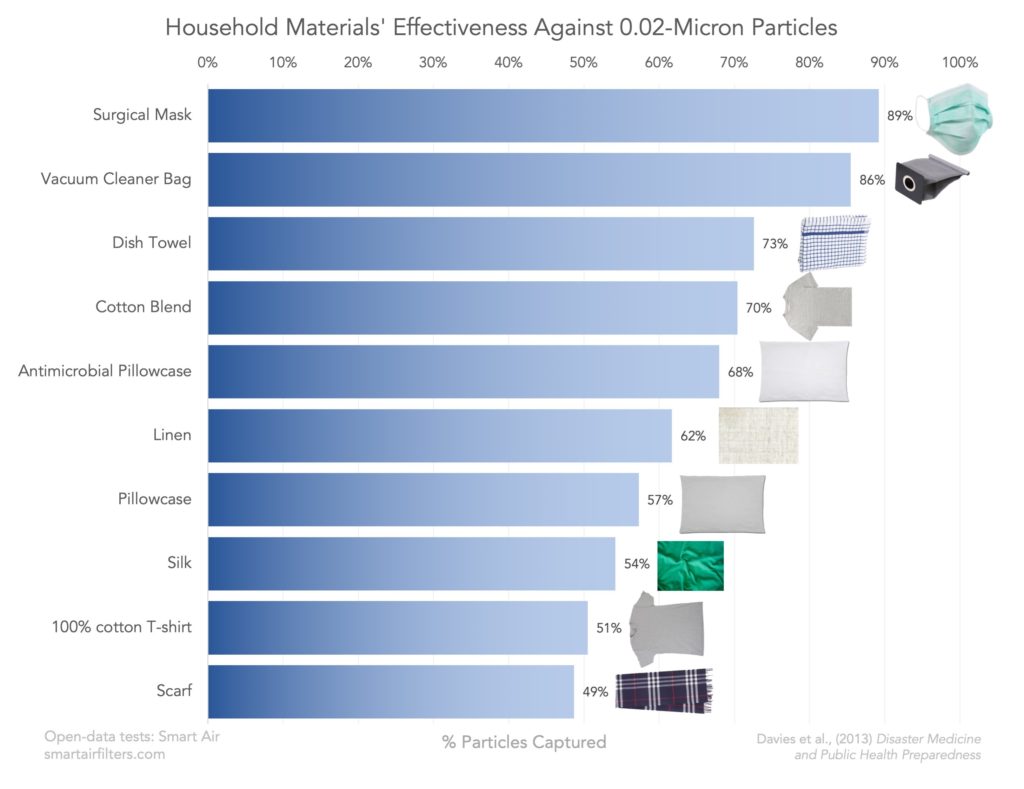
There are heartbreaking stories of hospitals calling for PPE – especially facemasks – and courageous stories of people cobbling together devices to reduce the likelihood that a healthcare provider could get ill while treating a patient with COVID19. This post leans heavily on information from the Smart Air Filters website written by their CEO, Paddy Robertson. I summarize those documents here.

Step 1: Reduce the Danger of the Environment; Declare War on the Droplet

The virus dies as an aerosol. It lives in droplets. When there are enough coughing patients in the room, the likelihood of infection grows because the air is full of droplets.

Before being concerned with PPE, address this issue as much as possible:

  • Increase air turn over.
  • Filter the air.
  • Change the filters often.
  • Put out specific air treatment technologies – such as room-air cleaners, ionizers and UV-C light, that are known to kill the virus.
  • Add room air cleaners (DysonCamfilAustin Air, etc.)

Before Improvisation – How do Masks Work?

Masks involve several layers of technical fabrics (often nonwovens or other porous materials). The performance of the mask comes from the combined performance of the materials.

Types of Masks

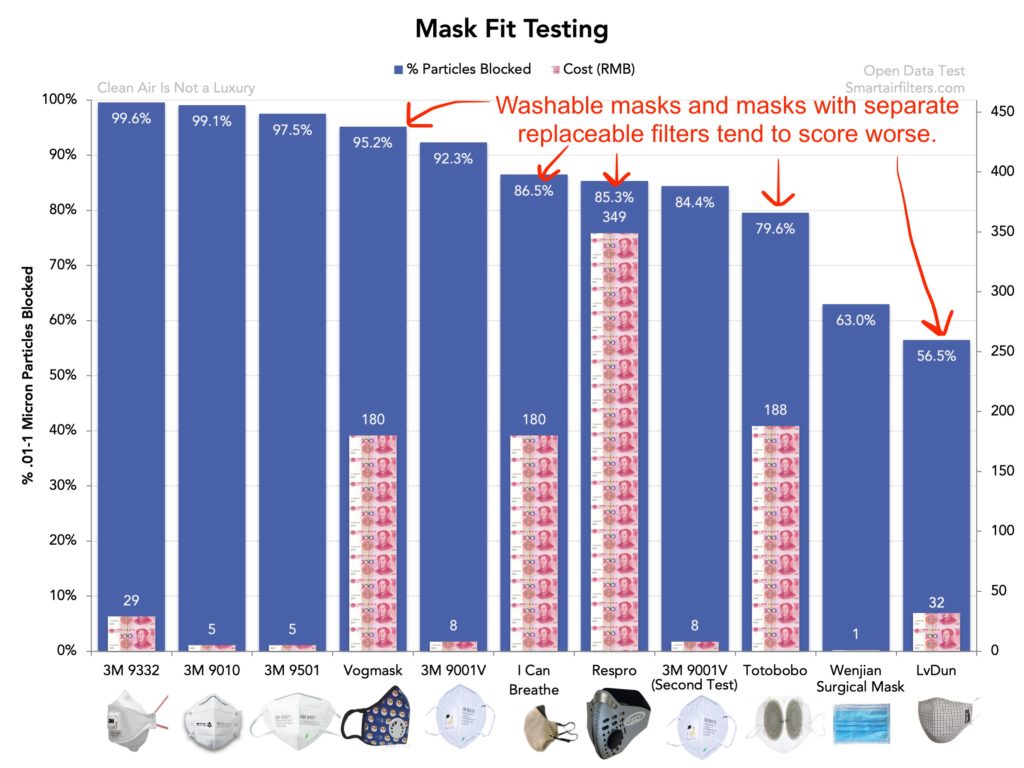
N95 or NIOSH masks (also N99, N100) are designed to capture particulate. They fit snug to the face, but they are not necessarily droplet proof.

Surgical masks are droplet proof, but they are exposed on the sides, so that an aerosol could get around them.

Surgical N95 Masks, or S95, have the best of both worlds. They have high capacity of an N95, but have also been through the droplet testing of the surgical standards. (Nelson Labs is the dominant provider of testing to these standards, including ASTM-F2100.)

The Ideal Mask & PPE For Corona Virus

Given the dangers of COVID19, the ideal mask would appear to be an S95 mask, that is changed out on a regular basis. All of these masks are designed to be disposable. It would be reasonable to wear more extreme protective gear – protective shielding – and perhaps even have a powered air purifier attachment.

Performance

Masks work because they have the right amount of breathability (air flow), efficiency (what % of particles do they catch), and life. Life is the easiest – masks are designed to be disposable with short lives.

Efficiency is harder. Small particles – those below 0.3 micron – the formal cut off of HEPA measurement, are often captured with charge. In filtration particles can get caught primarily by making physically small holes (mechanical filtration, where there is a physical mechanism that stops the particle), and electrostatic filtration (where the filter media – the facemask) has a charge, that is used to attract the particle. For small particles, especially below 0.3 micron, that electrostatic force is powerful enough to have a big impact on filtration. Charged filter media is widely used in facemasks.

Filtration has a lot of bad jokes – this one is about breath-ability and air permeability. A table is 100% efficient at filtering your dinner from hitting the floor. Get it? However, the breath-ability is awful. Likewise, if you make a facemask that is too efficient, it is hard for the wearer to breath. When the air flow gets too low, or when the resistance is too high, this hurts the wearer’s compliance. Healthcare workers start to slide the mask over, which defeats the whole point of the mask in the first place.

The layers of a surgical and also S95 masks, are also going to have a hydrophobic treatment to prevent droplets from passing through, and therefore be able to slow down the passage of bacteria and viruses. They do not stop the water flow forever. If we run a water hose over a surgical mask, the mask becomes inundated, and its useful life is over.

Thoughts on Mask Cleaning

There are two characteristics of the mask that are important to preserve in cleaning:

  1. DRY. If the mask is wet, it is likely easier for bacteria and viruses to get through the existing fluid. Make sure the mask is dry!
  2. CHARGE. Charge is part of the efficiency. This improves also by drying the mask out, but also look to give it some static charge. Rub it on wool, run it over an incandescent lightbulb, etc.

My personal priority would be to focus on not getting the mask too wet. I’d rather have multiple masks that I’m swapping out often, making sure that no liquid ever gets through, than to have one ‘new’ mask that I wear all day.

Article 3: Is Washing Masks Effective After Virus Exposure?

Is Washing Masks Effective After Virus Exposure_ – Smart Air FiltersDownload

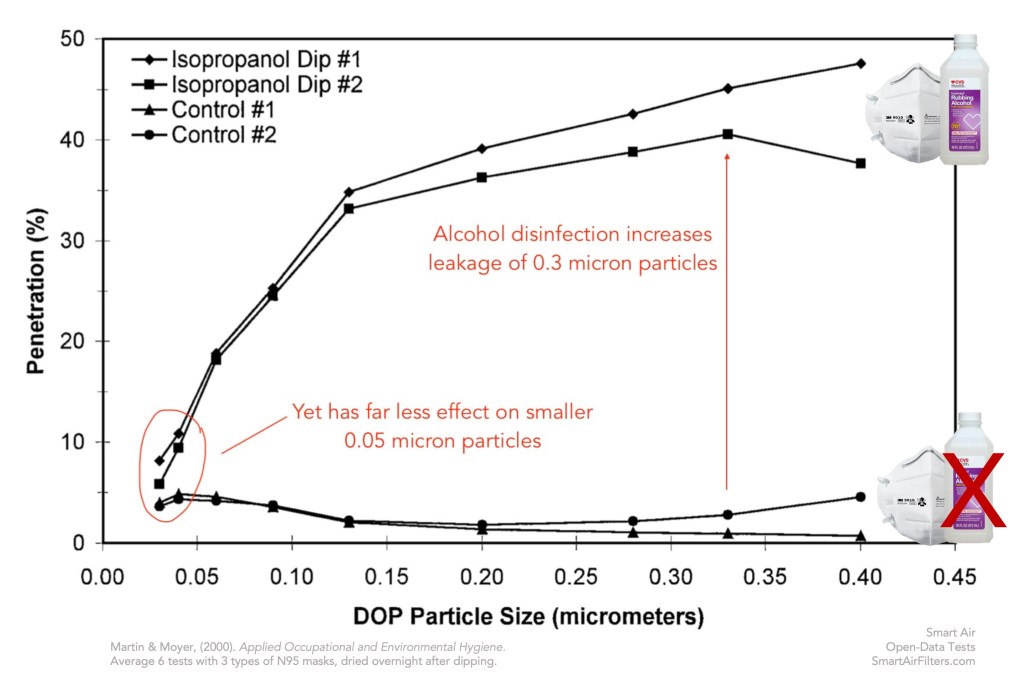
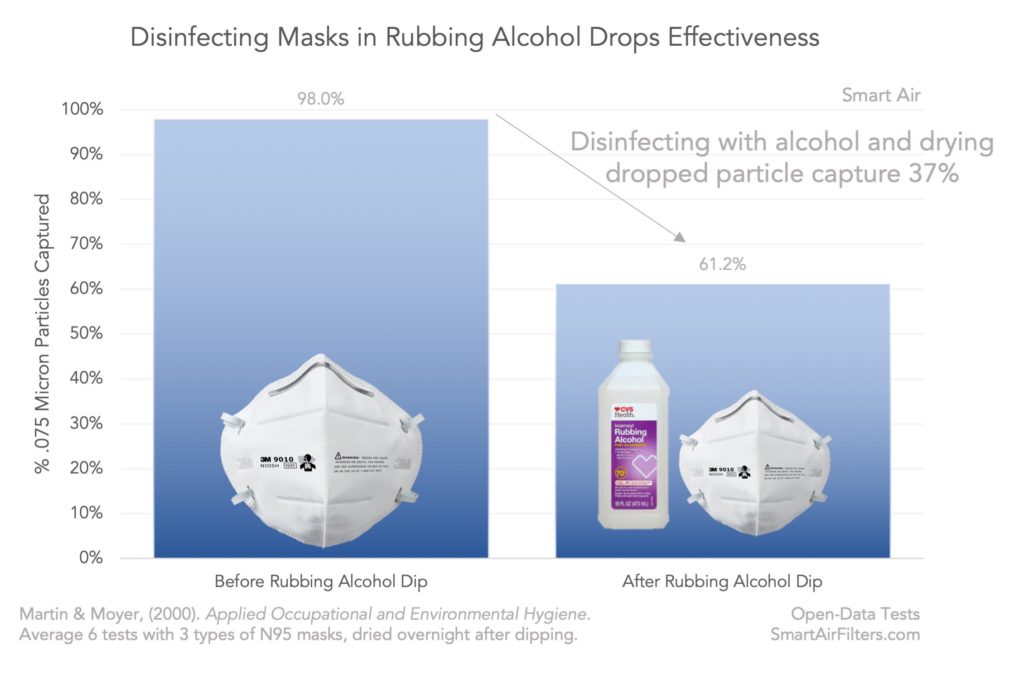
Masks work worse after washing. Don’t wear a wet mask! Masks depend on charge to work. Find ways to add back charge.

List of Improvisation

If I had to, I’d:

  • Use a form fitting mask design.
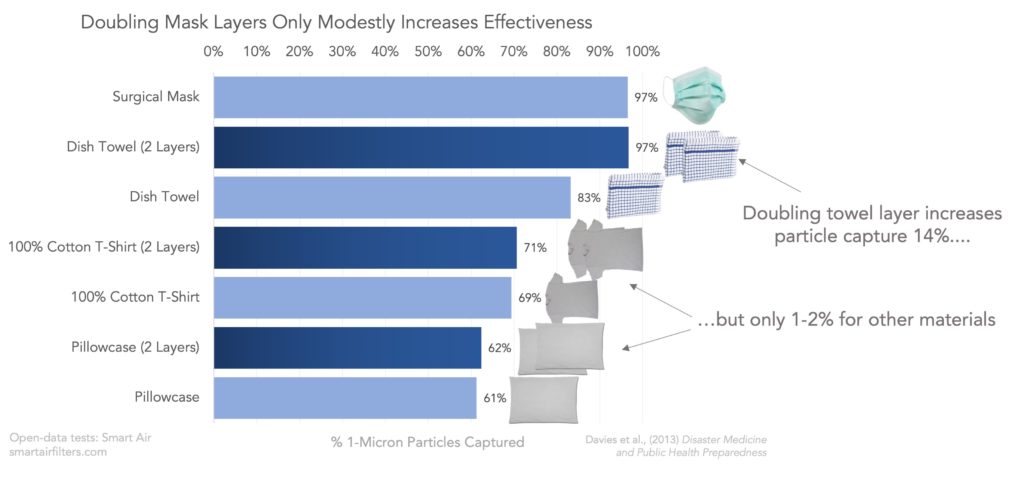
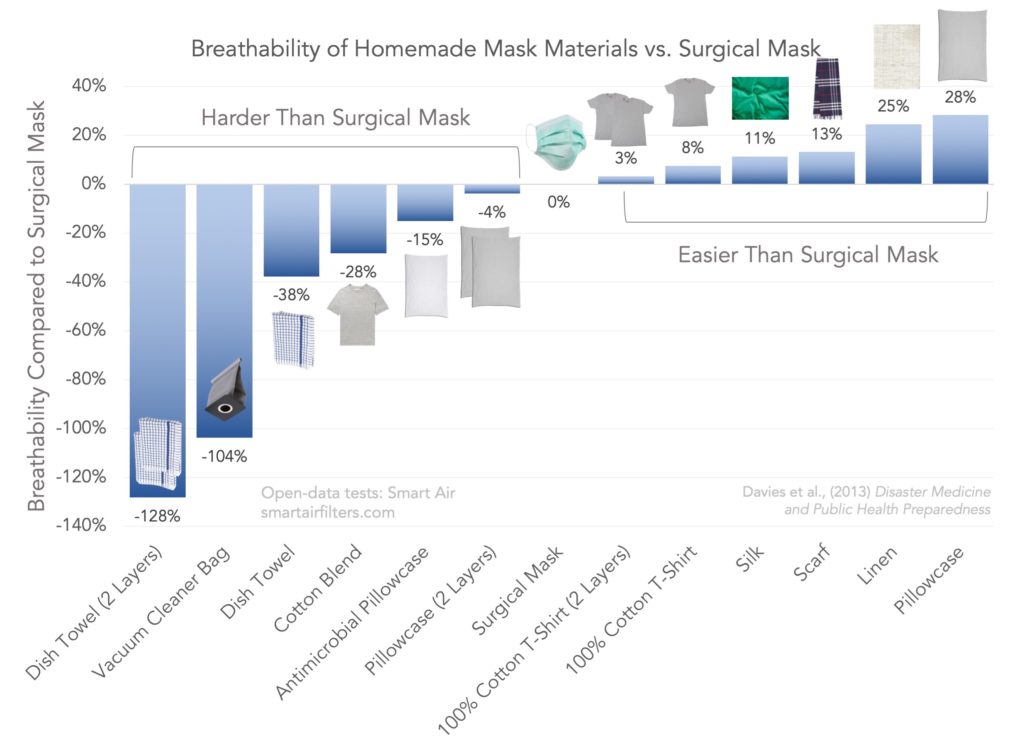
  • Use two pillow cases from the research above.
  • I’d add in a pocket to put in a high air perm insert, and would use something like a swiffer dryer sheet. Modern masks work based on charge.
  • I’d never wear a wet mask. A saturated mask gives disease a faster path to travel.
  • I’d do everything possible to reduce the droplet danger in the room.
Posted in Uncategorized | Comments Off on Medical PPE and Corona Virus: The Ideal and Improvisation

DIY Face Masks, Homemade Masks, Facemask Cleaning, and N95 vs Surgical for Corona Virus; The Excellent Paddy Robertson Posts from Smart Air Filters

I am not the author of these posts – they are from the Smart Air Filters website by their CEO, Paddy Robertson. With the COVID-19 and Corona Virus emergency, many are struggling to download these articles to make use of their information. I’m only providing them here until his website is back up or the current quarantines in the US and Europe are over. (Thank you, Mr. Robertson.)

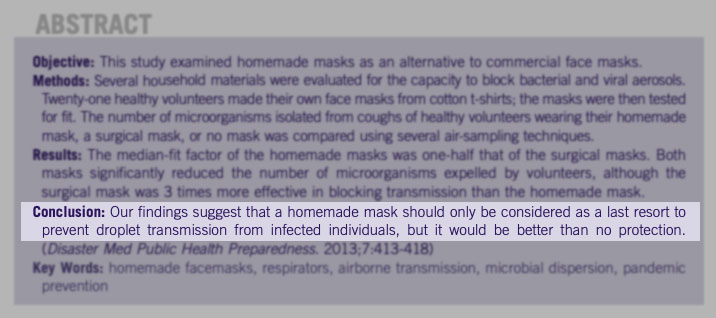
These articles cite a primary source as their inspiration: (2013) “Testing the Efficacy of Homemade Masks: Would They Protect in an Influenza Pandemic?”

Article 1: What are the Best Materials for DIY Masks?

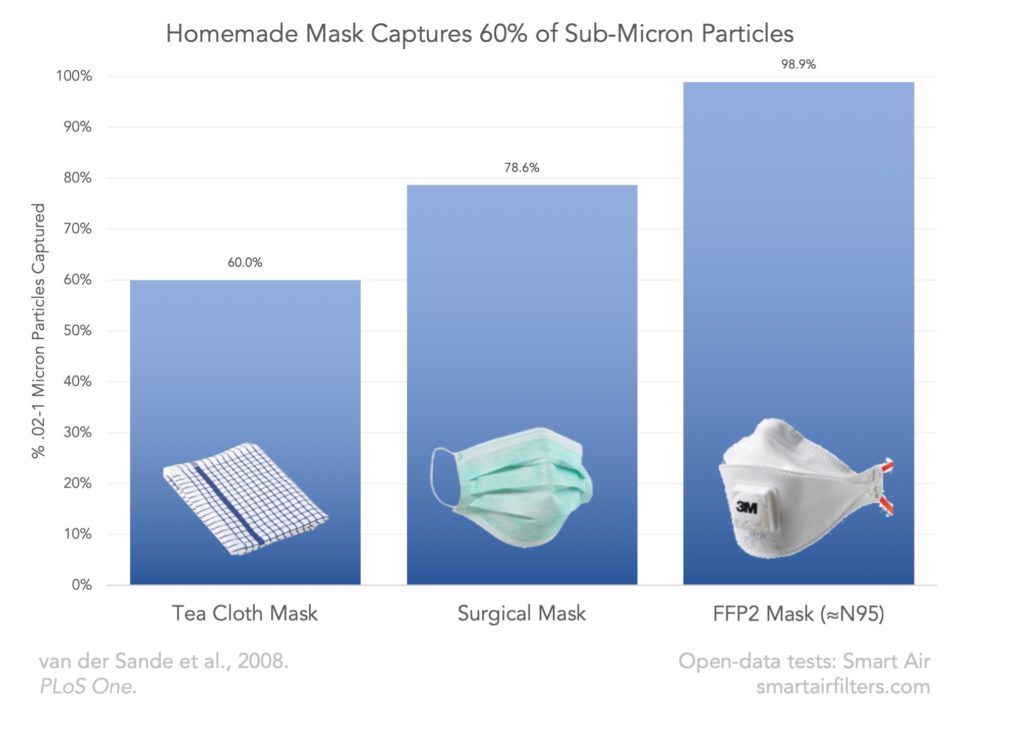
Use two pillow cases, that works well enough. From a personal standpoint, I’d add a swiffer dry sheet to get some electrical charge.

Article 2: Can DIY Masks Protect from Corona Virus?

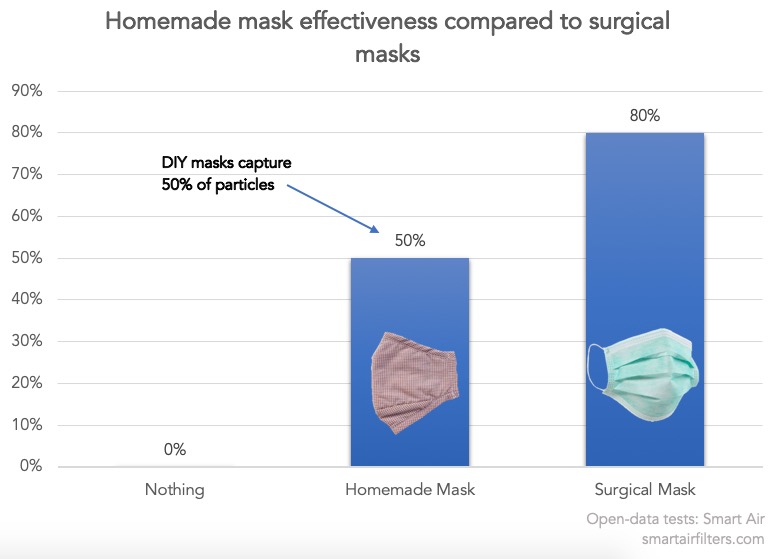
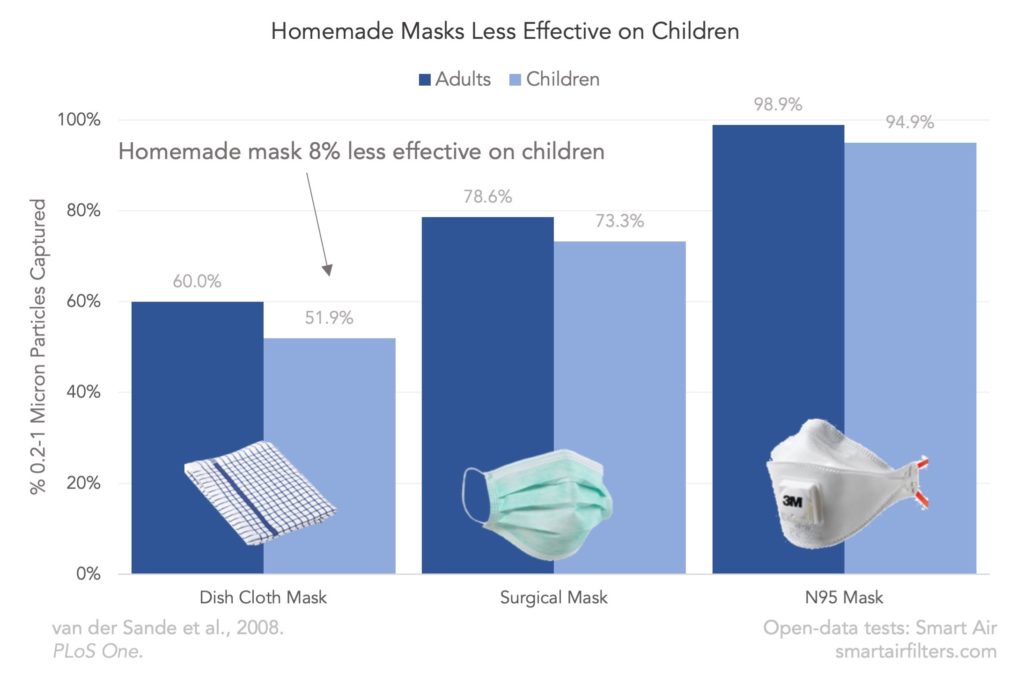
They are about 50% as efficient as a surgical or N95 mask.

Article 3: Is Washing Masks Effective After Virus Exposure?

Masks work worse after washing. Don’t wear a wet mask! Masks depend on charge to work. Find ways to add back charge.

Article 4: N95 vs Surgical Masks – Which is Best for Corona Virus?

It depends. In a room with lots of droplets, N95 has a better seal. Surgical protects against droplets.

Article 5: How Long do Pollution Masks Last?

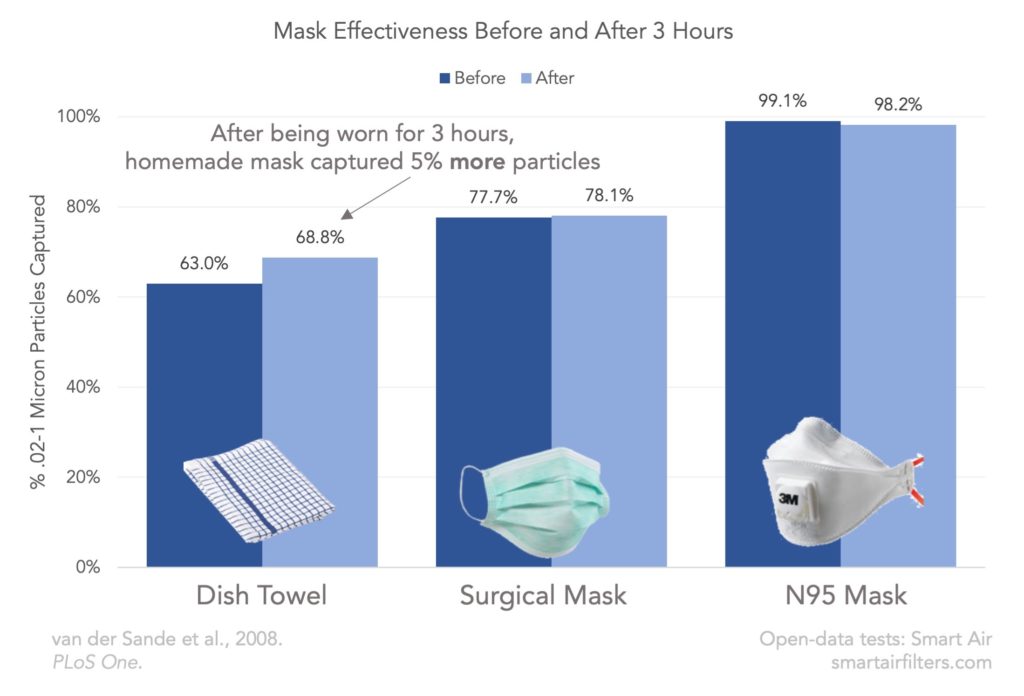
Get 3 hours out of your mask!

Best Illustrations

Posted in Uncategorized | 2 Comments

ICU, IAQ and COVID-19: Hospital and Intensive Care Unit (ICU) Indoor Air Quality (IAQ) and Corona Virus

[I’m not an expert, but based on the degree of panic and activity and Corona Virus, I’m writing this in an attempt to be helpful.]

Assumptions:

  • The virus does not survive as an aerosol like measles, but it does appear to survive longer as a droplet than rhinovirus. I believe the reports of Dr. Ian Mackay (Flight of the Virus), that the virus does not survive outside of a droplet.
  • Physicians who have treated this disease have died from exposure to the virus. (Dr. Marcello Natali in Italy, and Dr. Li Wenliang in China.)
  • PPE shortages – facemasks, etc. – are putting physicians at risk.
  • However, before addressing the PPE shortage, how can we reduce the risk of the ICU?

Airborne Droplet Dangers of the ICU with Corona Virus

Patients are coughing.

The patient is putting droplets – laden with corona virus – into the air.

If inhaled in sufficient volume, that virus is a danger to infect anyone in the environment.

All of the previous dangers of the ICU still exist – the extreme nature of this airborne droplet danger changes how safety should be approached.

Safety Approaches to Air Quality Danger

If a production site works with particulates that can explode, there are clear OSHA guidelines for how to work with that material. In a similar fashion, from working with industrial mix stations – if there is explosion risks, there are basic guidelines from Europe as well in how to manage that risk. For certain flammables under low concentration, the air in a room must turn over 6 times per hour. As those concentrations increase, the air turnover per hour increases – as high as 10 or more times per hour.

If there are enough cough droplets in the air from corona, there is risk for anyone in the room. To reduce that risk, follow established standards:

  • Turn the air over. Keep the air moving.
  • Reduce the life of droplets by reducing the humidity.
  • Filter the air to capture droplets on filter media.
  • Change out air filters as often as possible.
  • Put out specific air treatment technologies – such as room-air cleaners, ionizers and UV-C light, that are known to kill the virus.

If I was running an ICU and was Concerned About Corona Virus Exposure

I would do everything possible to reduce the indoor air quality risk, which would include:

  • Making sure there was lots of air turnover.
  • Make sure that air turnover is filtered.[1]
  • I would change the filters often for the ICU area. Daily would not be too much.
  • I would add room air cleaners (Dyson, Camfil, Austin Air, etc.)
  • I would add UV-C lights (and appropriate eye protection when using them)
  • I’d do everything I can to make a hostile environment for droplets.
  • I’d open windows and try to let in as much sunshine as possible (UV, new make-up air that is uninfected, air flow, and improved evaporation).

1: Question – Do Cruder, Non-HEPA Filters Work?

Yes, they are better than nothing. Fibers in filters have capacity. They catch dirt. Many types of filters only work when they are loaded with dirt – this dust-cake is what creates the actual filter layer.

The virus is also traveling in droplets which can be as large as 100 micron. A MERV 5 filter is 20% efficient, and at MERV 7 is 80% efficient, and it only gets better as it gets higher. If the air is being turned over multiple times per hour, then the there is a high probability that droplet – and the related virus get trapped.

Posted in Uncategorized | 1 Comment

Personal Credentials on Porous Materials, Facemasks, Indoor Air Quality, Hospital ICUs, and Infectious Disease

I’ve spent nearly 15 years working with porous materials – helping companies develop improved porous material products, designing the production systems that deliver membranes and nonwovens, and overseeing these supply chains. I am not a facemask expert – but I’ve worked all around this space and led several facemask product development efforts. I am not an infectious disease expert. I am not an expert in the design of hospital ICUs.

I’ve served on the board of INDA, the US nonwovens trade association. Nonwovens are the primary materials used in facemask production. They are also the dominant material used in filters for indoor air quality (“IAQ”) worldwide. Through that, I’ve joined multiple ASHRAE committee meetings and been a featured speaker at filtration, fiber, aerosol particulates, and membrane trade shows.

The nonwovens and engineered materials industry plays a major role in producing materials essential to reduce the spread of COVID-19.  From disinfecting wipes to face mask material to Personal Protective Apparel and more, INDA member companies are providing products to help people be safer in difficult environments.

From the INDA website on Corona Virus

There are many standards relevant to how IAQ is measured, how filters work, and how to measure the capture of particulates – especially when those particles (or aerosols) may involve bacteria or viruses. Most of my time now is spent with the standards around liquid filtration – B. diminuta and S. marescens.

These are my personal opinions – not those of my employer. I currently work at H&V, where I am responsible for the liquid filtration portfolio at one of the world’s largest makers of porous materials, I was CEO of Elmarco, the leading global technology provider for nanofibers and electrospinning – in total I spent nearly 9 years pioneering the most advanced fibrous products globally.

My undergraduate degree is in biology. Prior to my time in porous materials, I’d worked in finance with private equity groups that invested in the healthcare, life science, drug development, biopharma and other supply chains.

Posted in Uncategorized | 2 Comments

Constraints, Corona & Covid: Update with Everlywell testing, Chloroquine and Plasma Treatments

Goldratt teaches that to improve a system, we must identify the constraints, and then systematically work to relieve them. There are several constrains in the global pandemic:

  1. Is the information about the Coronavirus accurate?
    • How does it spread? (It does *not* aerosolize.)
    • When do symptoms become evident?
    • How many people who get the disease require medical assistance?
    • How many die?
  2. Can we test and identify people that have the virus?
    • Everlywell, an Austin, TX start up that was on Sharktank, has announced a future personal test kit.
  3. If someone comes down with COVID19, is the right equipment available?
    • PPE for the physicians (facemasks, etc.)
    • Respirators and ventilators for treatment
  4. Are there medicines and therapies that can treat or prevent the spread of the infection?
    • Is there a vaccine?
    • Are there medicines which help those who are infected?

A third medicine has been identified – another anti-malarial drug, Chloroquine. It is sold by Aventis (formerly Rhone Poulenc) under the trade name Nivaquine. A less aggressive version, hydroxychloroquine is also shown to work.

It also appears as if blood transfusions from those who have had the disease may also help immunize and activate the immune systems of others.

Posted in Uncategorized | Comments Off on Constraints, Corona & Covid: Update with Everlywell testing, Chloroquine and Plasma Treatments

Constraints, Corona, and Covid: Treatments – Remdesivir and Camostat Show Promise

Goldratt teaches that systems should be judged by their output, addressed at the highest level, and constraints should be removed. For a patient that has the disease, some treatment options are emerging.

Remdesivir: Nucleotide analog

Produced by Gilead, this class of drug has existed for some time and has been shown to perform well against RNA virsues.

Camostat: Serine protease inhibitor

A German research team found that a cell line was susceptible to Sars-2, and then showed that Camostat was capable of slowing and perhaps stopping the damage created by the virus.

Posted in Uncategorized | Comments Off on Constraints, Corona, and Covid: Treatments – Remdesivir and Camostat Show Promise

Corona Virus, Public Health, Goldratt, Goals and Global Health

As SARS-2 containment and COVID19 treatment increase in importance – many global, regional and national systems are activating, cooperating and working towards solutions. The complexity begs for an application of Goldratt’s principles:

  1. Pick a Goal.
  2. Identify constraints between the current setting and your goal.
  3. Remove the biggest known constraints.
  4. Achieve Goal.

The Life Science’s tradition of “First, do no harm” is a noble and well established goal. Do not diminish the public’s health. The virus does diminish health, so stopping its spread (while doing “no harm”), becomes important, as does treating those who have contracted COVID19.

Developing Data

In The Goal, Alex notably never has to deal with an absence of data or a resistance to data development and usage. Alex also exists in a world where there is a strong sense of community and teamwork.

Neither exist clearly in the global response to the new Coronavirus. In the US now, testing capacity is limited. Globally, nations are releasing ‘test’ data that has come under question and faces skepticism.

Testing for Corona

If testing and data are crucial to developing a response to the disease, then that is the current constraint. Goldratt teaches to remove the constraint; testing must be addressed.

Testing is currently performed with the polymerase chain reaction (“PCR”) a method widely taught in high school and college biology classes that breaks, copies and then measures DNA for comparison. Specifically, a reverse transcriptase PCR is used, and there has even been success in using a chest CT scan as a diagnostic tool.

Conclusions

Testing for Corona is the first step in creating an appropriate response. There is a lack of testing equipment;

  1. Create more testing equipment – reduce the constraint directly.
  2. Identify bypasses to the constraint – such as using Chest CT scans, as has been shown to be predictive of positive diagnosis of Corona.

Posted in Uncategorized | 1 Comment

Fluid Notes: Solar Power, Ceramic Pressure Exchangers and the Cost of Desalination

A group out of MIT made an announcement that they are able to harness solar power with a low cost – lower cost than a conventional desal plant – that was able to deliver 6 liters per hour per square meter of collector. Published in the Journal of Energy and Environmental Science, the paper outlines a device that functions as a multi-layer still, using several evaporation and condensation steps to produce water that exceeds current drinking water standards.

As users on a Hacker News thread pointed out – this is a very energy intense process that requires 173 kWh of solar energy, compared to the 3.2 kWh often used for all of the processes in a conventional desal plant like San Diego’s Carlsbad site. The MIT group isn’t radically altering how the current municipal distribution network for drinking water would work – it is instead providing a technology that would allow for a more off-the-grid (“OTG”) approach for desalination, in the same way that generators allow electricity in wilderness cabins. Depending on the setup costs, it’s easy to see a set up where intercoastal waterways and other marshy areas could support units like this that generate reliable small volumes of liquid to support a single household that might not otherwise be able to justify the cost of a desal situation.

Desalination Materials: Ceramic Pressure Exchangers

Looking at how an OTG situation could change how certain areas can create clean water at a lower cost calls back to past technologies that allowed the centralized growth of desalination. Desal occurs at high pressures – this is one of the biggest differences between air and water filtration.

Salt ions are tiny, and even with cross-flow or tangential filtration, it takes very fine pores (~2 nm or less) and high pressure to create potable water from a saline source of water. The energy required to create that pressure was costly and couldn’t be easily recaptured.

The invention of a specialized ceramic pressure exchanger by Richard Stover allowed desalination plants to conserve and recycle that energy, dramatically lowering the cost to create drinkable water.

Energy Recovery Inc’s (“ERI”) ceramic pressure exchanger made a major impact on the energy requirements to create drinking water using desalination.
Posted in Fluids, Uncategorized | Tagged , , , , , , , , , | Comments Off on Fluid Notes: Solar Power, Ceramic Pressure Exchangers and the Cost of Desalination

Fluid Notes: PFAS and the Water Supply

PFAS is the new emerging pollutant of concern. It is the big bad in industrial waste. Nearly every session at NEWEA 2020 addressed the topic, and it was the leading buzzword from the event. The EPA has given PFAS its own page.

PFAS – Per- and Polyfluoroalkyl Substances (PFAS) – gets a lot of attention for several reasons:

  1. It still isn’t clear what a ‘safe’ level is.
  2. Testing for it is difficult.
  3. It’s man made.
  4. It appears to be nearly everywhere.
  5. It appears to be conserved at each step where other materials would be destroyed or reduced.

Dr. Linda Lee of Purdue University appeared on WEFTEC’s “Words on Water” podcast, and her review covered how PFAS is affected by most modern water treatment technologies.

Water Treatment and Filtration Processes and their Impact on PFAS

Advanced Oxygen Processes (AOPs) – have no effect.

Membrane Processes – can obstruct the PFAS, but then serve to concentrate the PFAS in the retentate. The resulting biosolids are then full of PFAS.

Reverse Osmosis – RO, like other membrane processes, can create PFAS-free water for drinking. However, the retentate then has concentrated PFAS.

Carbon Bed – carbon can capture the PFAS, but the PFAS remains caught in the carbon. The carbon can be incinerated, but care must be taken to ensure that the PFAS are destroyed.

RO creates clean drinking water, and it concentrates PFAS
Posted in Filtration, Fluids | Tagged , , , , , , , | Comments Off on Fluid Notes: PFAS and the Water Supply

Fluid Notes: From Sea to Shining Sea – US Water Infrastructure from Boston’s Deer Island to San Diego’s Carlsbad

20,000,000 passengers per year fly over the 12 giant anaerobic digester eggs of Boston’s Deer Island. In April 2020, thousands of the world leaders in filtration will visit San Diego, 30 miles South of the Western Hemisphere’s largest desalination plant which provides water to the hotels and beaches that they’ll visit. Nearly 3,000 miles apart these two plants show the diversity of municipal water needs, the economics of water investment, the role of geography and rain fall, and how technology drives water supply and demand.

Deer Island is designed to process waste water and release it far off shore. The Boston metropolitan area has sufficient water supply – the challenge is handling storm water run off in a way that does not pollute the harbors, bays and surrounding wildlife. To halt 10 billion gallons of annual pollution overflow into the bay, nearly $4 billion has been invested by the Massachussetts Water Resource Authority (“MWRA”) to be able to process up to 470 billion gallons of waste per year. Like a mall parking lot designed for the Christmas season – Deer Island must be able to handle flows on the highest days and anticipated future growth.

Deer Island, MA Water Treatment Facility

Carlsbad provides a very different story – at a cost of nearly $1 billion, the desalination plant is capable of processing up to 18 billion gallons per year. About 80% of that water volume is purchased by San Diego, providing 7% of the city’s water needs. The city pays a premium for the security of water supply – on a per acre foot basis, Carlsbad compares well to its competition, but is not cheap:

  • $2500 – Cost to import water from other areas in CA
  • $2200 – Cost of Carslbad water
  • $2000 – Cost of recycled / re-used water (water re-use is the future)
  • $1200 – Area reservoir water
  • $700 – Upstream access when possible

San Diego chose water security over water cost – a wise decision based on the volatility of water rights and access in the Colorado River basin.

Drivers in Water Investment

These plants represent nearly $5 billion in investment in two very different water situations with very different regional needs.

Boston’s Deer Island: Hygiene, Disease and Growth

Boston’s harbor has been the source of constant investment since settlement. Dams were built causing sewage to foul the bay. Million dollar homes cannot look out on raw sewage and smell of the same. Boston’s investment in Deer Island is a long term commitment to managing the city’s hygiene, controlling for disease outbreak, and is ultimately an investment in the area’s future growth.

San Diego: Water Security

Reisner’s Cadillac Desert – the most well known book on water planning – takes place on the Colorado River, the same river on which provides San Diego with water. The Colorado no longer reaches the sea – with upstream water rights, ranching, and agricultural diversions robbing it of the needed flow. In years with low rainfall, San Diego does not have sufficient water.

Investing in the plant put San Diego at the front of the learning curve about how RO and desal can be implemented in the US, and there are already plans for a sister plant further North in Huntington Beach to service Los Angeles. By investing in this technology, San Diego is in a better situation to negotiate with other sources of water, and to understand how the cost of water can be impacted by technology.

Size, Impact and Investment

Mankind creates about 330 km^3 of wastewater per year, and converts over 50 km^3 of saltwater to fresh water via desalination. [Source: Global Fluid Volumes] This puts the 1.7 km^3 (0.5%) max treatment capability of Deer Island and 0.7 km^3 (1.4%) desalination capacity of Carlsbad in context.

Reversing those numbers, we can start to see the scale of investment required:

  • $4 Bn / 1.7 km^3 (0.5%) * 330 km^3 = $800 billion to treat all global waste.
  • $1 Bn / 0.7 km^3 (1.4%) * 50 km^3 = +$70 billion to recreate current global desalination infrastructure
Posted in Fluids, Uncategorized | Tagged , , , , | 1 Comment