Sun Tzu’s The Art of War: Chapter 04 Tactical Dispositions

Wilderness-Battle-Hero

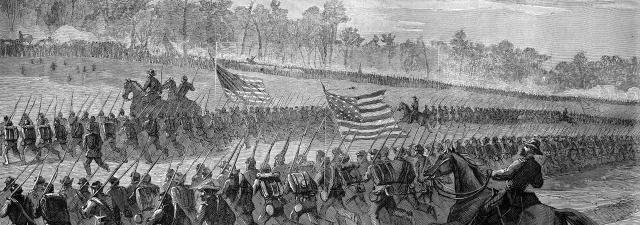
Ulysses Grant’s victories led to the end of the Civil War through great strategy and sound tactics.

Screens 190 – 217

In ‘Waging War‘ Sun Tzu told us that the point was to win, and to win quickly.  In ‘Attack by Stratagem‘ the primary point of strategy was to know your own capabilities and that of the opponent.  Strategy was the exploitation of that knowledge – and without that knowledge no strategy could be effective.

“You want to talk about waging war?”  The point is to win – not to wage a war.

“You want to talk about strategy?” Know your capabilities and that of your opponent.  Strategy falls from this knowledge.

The reader is now finding a similar pattern.  “You want to talk about tactics?”  Put yourself in a position where tactics don’t matter.  Choose the ground.  Choose the weapons.  Win the battle.

Be practiced. Be patient.  Operate within your capabilities – and when the chances arise to win, then win.  Many times an opponent will not have the same discipline and focus and their mistakes become your victories.

Best Quote(s)

“14. Hence the skillful fighter puts himself into a position which makes defeat impossible, and does not miss the moment for defeating the enemy.” Screen 202

“15. Thus it is that in war the victorious strategist only seeks battle after the victory has been won, whereas he who is destined to defeat first fights and afterwards looks for victory.” Screen 202

From a leadership standpoint, Sun Tzu counsels again that morality and ethics are fundamental to a leaders success:

“16. The consummate leader cultivates the Moral Law, and strictly adheres to method and discipline; thus it is in his power to control success.”

Page by Page, Screen by Screen

190

“The good fighters of old first put themselves beyond the possibility of defeat, and then waited for an opportunity of defeating the enemy.”

This has direct relevance to quality in a manufacturing organization.  Put yourself beyond loss in service of the account – know your quality is supreme.  Then extend and win with innovation.  Trying to win with innovation before quality is addressed is like a fighter who allows the enemy to defeat him.

191

“2. To secure ourselves against defeat lies in our own hands, but the opportunity of defeating the enemy is provided by the enemy himself.”

“3. Thus the good fighter is able to secure himself against defeat, but cannot make certain of defeating the enemy.”

202

“11. What the ancients called a clever fighter is one who not only wins, but excels in winning with ease.”

“13. He wins his battles by making no mistakes. Making no mistakes is what establishes the certainty of victory, for it means conquering an enemy that is already defeated.”

“14. Hence the skillful fighter puts himself into a position which makes defeat impossible, and does not miss the moment for defeating the enemy.”

“15. Thus it is that in war the victorious strategist only seeks battle after the victory has been won, whereas he who is destined to defeat first fights and afterwards looks for victory.”

“16. The consummate leader cultivates the Moral Law, and strictly adheres to method and discipline; thus it is in his power to control success.”

217

“17. In respect of military method, we have, firstly, Measurement; secondly, Estimation of quantity; thirdly, Calculation; fourthly, Balancing of chances; fifthly, Victory.”

“19. A victorious army opposed to a routed one, is as a pound’s weight placed in the scale against a single grain.”

“20. The onrush of a conquering force is like the bursting of pent-up waters into a chasm a thousand fathoms deep. So much for tactical dispositions.”

campaign-map

Grant’s encirclement of Vicksburg was a great victory of tactics and strategy.

Posted in Sun Tzu, Theory | 4 Comments

Sun Tzu’s The Art of War: Chapter 03 Attack by Stratagem

Screens 148 – 191

Tzu has laid out the use of war in the first chapter, the necessity to focus on victory in the second chapter, and now lays out the fundamentals of strategy.  Strategy is framed as knowing the capabilities of your forces and those of your opposition.  Self knowledge is fundamental to strategy.

Best Quote(s)

“19. Hence the saying: If you know the enemy and know yourself, you need not fear the result of a hundred battles. If you know yourself but not the enemy, for every victory gained you will also suffer a defeat. If you know neither the enemy nor yourself, you will succumb in every battle.” 191/840

Know yourself and the enemy and a general will know what battles to pursue.  Overconfidence in yourself is a swift way to defeat.

Page by Page, Screen by Screen

148

“2. Hence to fight and conquer in all your battles is not supreme excellence; supreme excellence consists in breaking the enemy’s resistance without fighting.”

153

“3. Thus the highest form of generalship is to baulk the enemy’s plans; the next best is to prevent the junction of the enemy’s forces; the next in order is to attack the enemy’s army in the field; and the worst policy of all is to besiege walled cities.”

Think of this passage in terms of persuasion. How do we stop a bad idea from taking hold?

167

“11. Now the general is the bulwark of the State; if the bulwark is complete at all points, the State will be strong; if the bulwark is defective, the State will be weak.”

“12. There are three ways in which a ruler can bring misfortune upon his army:—”

Tzu identifies three ways a general can ruin the army:

  • Issuing commands that the army is incapable of being followed.  This is the failure mechanism that is most common in business leadership.  Asking a business to do something that it cannot do. Leaders must first assess the capability of the organization before they commit to a customer what can be delivered.  Leadership is the act of repeatedly growing the organization’s capabilities in a profitable way.
  • Ruling the army like it is a kingdom.  Armies are not kingdoms.  Armies are for war and victory.
  • By being a bad leader, not adapting to circumstances and not showing a knowledge of command.

“13. (1) By commanding the army to advance or to retreat, being ignorant of the fact that it cannot obey. This is called hobbling the army.”

“17.

• He will win who knows when to fight and when not to fight.

• He will win who knows how to handle both superior and inferior forces.

• He will win whose army is animated by the same spirit throughout all its ranks.

• He will win who, prepared himself, waits to take the enemy unprepared.

• He will win who has military capacity and is not interfered with by the sovereign.”

191/840

“19. Hence the saying: If you know the enemy and know yourself, you need not fear the result of a hundred battles.

If you know yourself but not the enemy, for every victory gained you will also suffer a defeat.

If you know neither the enemy nor yourself, you will succumb in every battle.”

Image note:

Grant’s siege of Vicksburg showed masterful tactics towards a strategic objective.  Without Vicksburg the Union troops could not make use of the Mississippi and its forces could not unit.  Grant was both taking an object of value from the enemy and also uniting his forces – activities that Sun Tzu would endorse.

Posted in Sun Tzu | Tagged , , | 5 Comments

Sun Tzu’s The Art of War: Chapter 02 Waging War

This is a short chapter.  Tzu has established in the last chapter how war is to be framed, and now he discusses how war is to be waged.  The goal is not to be in the battle long – the goal is to win.  It is the general’s role to win the war.

Best Quote(s)

 “6. There is no instance of a country having benefited from prolonged warfare.” Loc 122

Violence is rarely the right answer, and even when it is – it should be used aggressively to bring itself to a halt.  If you’re in a fight – win the fight.  Don’t build a country – or a life – that depends on being in a state of prolonged warfare and battle.

“18. In war, then, let your great object be victory, not lengthy campaigns.” Loc 142

In Moore’s Crossing the Chasm, the book is oriented around the metaphor of an invasion fleet.  If you’re in a battle – win the battle.  If you stretch out the battle, let that be for the purpose of winning.

Page by Page, Screen by Screen

All numbers below refer to the Amazon Kindle location.

122

“6. There is no instance of a country having benefited from prolonged warfare.”

136

“14. Hence a wise general makes a point of foraging on the enemy.”

142

“18. In war, then, let your great object be victory, not lengthy campaigns.”

“19. Thus it may be known that the leader of armies is the arbiter of the people’s fate, the man on whom it depends whether the nation shall be in peace or in peril.”

Posted in Methods, Sun Tzu | Tagged , , | 3 Comments

Sun Tzu’s The Art of War: Chapter 01 Laying Plans

This book is stylistically similar Carnegie’s How to Win Friends and Influence People – but the topics could not be more different.  Both authors provide advice – but Carnegie is persuading and cajoling, whereas Sun Tzu deals with situations when physical confrontation is required.

In this first chapter, Sun Tzu is not telling how plans are created – but rather talking about the role of planning and the role of everyone involved with planning.  He’s not telling the reader “How to plan”, but instead is saying, “Planning is important because of all these reasons.”  Further, he elaborates dimensions of planning, violence and warfare and sets up the rest of the book – even if that was not necessarily the historical structure of the text.

Best Quote(s)

“Thereupon Sun Tzu said: “The King is only fond of words, and cannot translate them into deeds.”” Location 55

Those in power are not necessarily those who understand how to act with power.

“25. Now the general who wins a battle makes many calculations in his temple ere the battle is fought. The general who loses a battle makes but few calculations beforehand. Thus do many calculations lead to victory, and few calculations to defeat: how much more no calculation at all! It is by attention to this point that I can foresee who is likely to win or lose.” Location 105

Preparation can lead to victory, a lack of preparation will certainly lead to defeat.

Page by Page / Screen by Screen

All numbers refer to Amazon Kindle locations – not page numbers.

055

“Thereupon Sun Tzu said: “The King is only fond of words, and cannot translate them into deeds.””

064

“3. The art of war, then, is governed by five constant factors, to be taken into account in one’s deliberations, when seeking to determine the conditions”

077

“10. These five heads should be familiar to every general: he who knows them will be victorious; he who knows them not will fail.”

084

“13. By means of these seven considerations I can forecast victory or defeat.”

084

“14. The general that hearkens to my counsel and acts upon it, will conquer:—let such a one be retained in command! The general that hearkens not to my counsel nor acts upon it, will suffer defeat:—let such a one be dismissed!”

090

“16. According as circumstances are favourable, one should modify one’s plans.”

098

“20. If he is secure at all points, be prepared for him. If he is in superior strength, evade him.”

“23. Attack him where he is unprepared, appear where you are not expected.”

105

“25. Now the general who wins a battle makes many calculations in his temple ere the battle is fought. The general who loses a battle makes but few calculations beforehand. Thus do many calculations lead to victory, and few calculations to defeat: how much more no calculation at all! It is by attention to this point that I can foresee who is likely to win or lose.”

Posted in Sun Tzu | Tagged , , , , | 1 Comment

How to Win Friends and Influence People: Carnegie’s Persuasion with Winning Writing

Carnegie has a distinctive writing style.  I can feel him smiling as he types each word.  Reading his history on Wikipedia it’s easy to imagine him presenting this material time and again, then finally realizing that his notes are worthy of a book.

Without his personal memoirs or interview notes – we can’t know Carnegie’s intentions – but we can see and feel how his words come across the page.  His books are built like his chapters, which are built again like the vignettes from which they are built.  He uses a staccato type cadence, loading the reader with stories which all point towards the teaching and reinforcement of the principles loaded throughout the book.  With the straightforward writing and simple themes, dismissing the brilliance of the book’s structure is easy.  The book works.  The writing is effective and persuasive.

The principles are consistent and self-similar to each other, just as the vignettes which they build up to.  So too the chapters, so too the book.  We watch and hear character after character support or refute the principles and see how it impacts their lives.

Chapters

If we count the two forewards (and a case could be made that there are 3), then “How to win Friends and Influence People” comes in at 30 chapters.  The chapters are structured in a similar fashion – even the two pre-amble chapters which are more prescriptive and big picture with, “How and Why was this book written?” and “9 Ways to get the Most out of this Book.

The chapters are mostly 8 – 15 pages long.  Some are quite short, as few as 3 pages.

Chapter Structure

Each chapter consists of an opening question and closes with a Carnegie Principle.  The question poised in the ‘Chapter Title’ is often answered right away in a short story or vignette.  Each chapter is a collection of vignettes.  As many as three vignettes can occur in a single page!

These vignettes are the atomic structure of Carnegie’s persuasive writing style.

Vignette Structure

At the heart of each vignette, Carnegie is supporting the Principle at the close of each chapter, and also answering the question posed at the outset of each chapter.  The Vignette involves a character – often a real person that Carnegie has met – whose name is clearly stated, as well as their home location.

The character encounters a situation that almost always involves just a single other person – there are few three person stories in the book, and almost none that involve a group setting.  The person faces a scenario and responds in a way that is in support of or opposition to the main thread of the chapter.  The response either validates or invalidates the actions.  Everything is tied to the central point.

Carnegie loads vignette on top of vignette to create a pile of persuasion.

A Basic Carnegie Vignette

Specific Name (calling out Principle 3 – Names have Power) of Person, from Specific Name of Place came from nothing, and Carnegie met them at a course or through Specific Name’s abundance of success.  SN faced a challenge, and they had several ways to respond.  SN responded in a way that supports the theme of the chapter, and got the desired result.  OR, SN responded in a way that contradicts the theme of the chapter, and didn’t get a good result.

Recurring Carnegie Vignette Themes

The lead character is a famous person. Abraham Lincoln – about whom Carnegie wrote a book is mentioned 72 times.  Pets – especially dogs are common (25 times).  Carnegie is often the subject of the story.  The subject is often a course attendee – they have specific knowledge of the themes of the book, and they explicitly decide to test the validity of the method.  The methods always work.

Advanced Carnegie Methods

Carnegie will go ‘inception’ style in his writing.  He can start with a character, who them throws back to another quote or character.  An example is in Chapter 11, “Principle 2: Show Respect for Other’s Opinions, Never say ‘You’re Wrong’” – when Ben Franklin is praised as a person, but then there are quotes from adults to a young Franklin redirecting his behavior.

An Outline of Carnegie Vignette Methods

  • Clear, direct and short.  As little as 1/3 of a page.
  • Positive / Negative – Push/Pull
  • Anecdote types:
    • Personal – especially parenting, family, pets
    • Everyman – always successful, but still common
    • Famous – Lincoln, Napoleon, Roosevelt, Twain,
    • Religious – Sayings and Wisdom
      • Buddha, Zoroaster, Lao-tse , Jesus, Hindu, Judaism
  • Tangible, visible, sensorial
  • Reinforcement, consistency
  • Lead with the title – resolve with the close
    • The vignettes reflect the chapter structure.  The character has a question, an action is pursued – and the result highlights the effectiveness (or ineffectiveness) of the action.
  • Call back / Look ahead
    • The stories are often flipping back to a Principle from an earlier chapter or foreshadowing another chapter to come later.
  • Common vignette tropes – youth, anger, inherit a bad situation “it’s not fair”
  • Techniques:
    • he will often identify an objection, validate it – and then remove it.
Posted in Books, Carnegie, Methods | 2 Comments

How to Win Friends and Influence People: Carnegie’s 12 Ways to Win People to Your Way of Thinking from Part 3

PART THREE How to Win People to Your Way of Thinking

10.3.01: You Can’t Win an Argument

Pages 143 – 150.

PRINCIPLE 1 The only way to get the best of an argument is to avoid it.

“As wise old Ben Franklin used to say: If you argue and rankle and contradict, you may achieve a victory sometimes; but it will be an empty victory because you will never get your opponent’s good will.” Page 146

11.3.02: A Sure Way of Making Enemies—and How to Avoid It

Pages 151 – 163.

PRINCIPLE 2 Show respect for the other person’s opinions. Never say, “You’re wrong.”

An adult to young Ben Franklin on his difficult nature, “Ben, you are impossible. Your opinions have a slap in them for everyone who differs with you. They have become so offensive that nobody cares for them. Your friends find they enjoy themselves better when you are not around. You know so much that no man can tell you anything. Indeed, no man is going to try, for the effort would lead only to discomfort and hard work. So you are not likely ever to know any more than you do now, which is very little.” Page 157

12.3.03: If You’re Wrong, Admit It

Pages 164 – 171.

PRINCIPLE 3 If you are wrong, admit it quickly and emphatically.

“There is a certain degree of satisfaction in having the courage to admit one’s errors. It not only clears the air of guilt and defensiveness, but often helps solve the problem created by the error.” Page 167

13.3.04: A Drop of Honey

Pages 172 – 181.

PRINCIPLE 4 Begin in a friendly way.

“They can’t be forced or driven to agree with you or me. But they may possibly be led to, if we are gentle and friendly, ever so gentle and ever so friendly.” Page 175

14.3.05: The Secret of Socrates

Pages 182 – 189.

PRINCIPLE 5 Get the other person saying “yes, yes” immediately.

“Begin by emphasizing—and keep on emphasizing—the things on which you agree.” Page 183

“Get the other person saying “Yes, yes” at the outset.” Page 183

“The skillful speaker gets, at the outset, a number of “Yes” responses.” Page 183

15.3.06: The Safety Valve in Handling Complaints

Pages 190 – 195

PRINCIPLE 6 Let the other person do a great deal of the talking.

“I know I would have lost the contract if I hadn’t lost my voice, because I had the wrong idea about the whole proposition. I discovered, quite by accident, how richly it sometimes pays to let the other person do the talking.” Page 191

16.3.07: How to Get Cooperation

Pages 196 – 201

PRINCIPLE 7 Let the other person feel that the idea is his or hers.

“The reason why rivers and seas receive the homage of a hundred mountain streams is that they keep below them.” Lao-tse

17.3.08: A Formula That Will Work Wonders for You

Pages 202 – 208

PRINCIPLE 8 Try honestly to see things from the other person’s point of view.

Dr. Gerald S. Nirenberg commented: “Cooperativeness in conversation is achieved when you show that you consider the other person’s ideas and feelings as important as your own.” Page 203

18.3.09: What Everybody Wants

Pages 208 – 216

PRINCIPLE 9 Be sympathetic with the other person’s ideas and desires.

“Three-fourths of the people you will ever meet are hungering and thirsting for sympathy. Give it to them, and they will love you.” Page 208

19.3.10: An Appeal That Everybody Likes

Pages 217 – 222

PRINCIPLE 10 Appeal to the nobler motives.

“J. Pierpont Morgan observed, in one of his analytical interludes, that a person usually has two reasons for doing a thing: one that sounds good and a real one.” Page 217

20.3.11: The Movies Do It. TV Does It. Why Don’t You Do It?

Pages 223 – 227

Hap Klopp once told me, “You can invite people to a ballet or a rock show – and they’ll have a good time at either.  But you can’t invite them to one and give them the other.”  People like a show – but tell them what show you’re inviting them to.

“This is the day of dramatization. Merely stating a truth isn’t enough. The truth has to be made vivid, interesting, dramatic. You have to use showmanship. The movies do it. Television does it. And you will have to do it if you want attention.” Page 223

21.3.12: When Nothing Else Works, Try This

Pages 228 – 231

PRINCIPLE 12 Throw down a challenge.

“That is what every successful person loves: the game. The chance for self-expression. The chance to prove his or her worth, to excel, to win. … The desire to excel. The desire for a feeling of importance.” Page 231

Posted in Books, Carnegie | Comments Off on How to Win Friends and Influence People: Carnegie’s 12 Ways to Win People to Your Way of Thinking from Part 3

How to Win Friends and Influence People: Chapter by Chapter Review of Dale Carnegie’s Best Book

Carnegie’s work is masterpiece of self-help and persuasive writing.  This book is short – and I highly recommend reading it directly if this summary and review piques your curiosity.  His story telling and educational skills are so great that he bends the rules of conventional authorship, making it a little tougher – and therefore more rewarding – to do a pure chapter-by-chapter review.

Preface & Pre-amble

0a. How this Book Was Written and Why?

Pages 9 – 16

“The sole purpose of this book is to help you discover, develop and profit by those dormant and unused assets.” Page 15

If the reader isn’t interested in this message – then the book is not a fit.  If you aren’t bought in to the value of these lessons and rules after the first chapter, then put it down and come back when you’re in the right frame of mind.

0b. Nine Suggestions on How to Get the Most out of This Book

Pages 17 – 22

“So, if you desire to master the principles you are studying in this book, do something about them.” Page 20

In grad school (2003 – 2005) – and I’ve always found this story a little embarrassing – I made a summary of these rules and would write it down every day.  Part of my success in leading diverse global teams is that the rules work – but to work you must remember them.  I’m writing this summary now – and did all the chapter by chapter work – as part of re-committing to these lessons, and also thinking about how to codify some of the other leadership and people lessons I’ve learned.   Carnegie is a master – my goal here is to help expose people to just how good the book is.

In one of our moves I must have gotten rid of the notebook that I’d filled with all of those hand written pages recounting the rules.  It’s important to move on and not hold too tight to the past – I think fondly of that personal lesson and the impact it has had on my life.

Part One: Fundamental Techniques in Handling People

01.1.1 If You Want to Gather Honey, Don’t Kick Over the Behive (Carnegie Video Short: Don’t Criticize or Complain)

Pages 25 – 40.

PRINCIPLE 1 Don’t criticize, condemn or complain.

“Don’t criticize them; they are just what we would be under similar circumstances.” Abraham Lincoln Page 25

Lincoln is a favorite of Carnegie’s – he wrote a completely separate book just detailing the president’s life.

02.1.2 The Big Secret of Dealing with People

Pages 41 – 55.

PRINCIPLE 2 Give honest and sincere appreciation.

Lincoln once began a letter saying: “Everybody likes a compliment.” Page 42.

03.1.3 He Who Can do This Has the Whole World with Him, He who Cannot Walks a Lonely Way

Pages 56 – 73.

PRINCIPLE 3 Arouse in the other person an eager want.

“So the only way on earth to influence other people is to talk about what they want and show them how to get it.” Page 55

Carnegie uses a poorly written mailer as an example of how companies fail when they focus on what they want, rather than what the customer wants.  He reproduces the mailer – along with his humorous feedback.  His point below has stuck with me:

“[Who cares what your company desires?]” Page 61

Part Two: Six Ways to Make People Like You

04.2.1 Do This and You’ll be Welcome Anywhere, Pages 77 – 90

PRINCIPLE 1 Become genuinely interested in other people.

“I love my audience. I love my audience.” Pg. 80

05.2.2 A Simple Way to Make Good First Impression, Pg. 91 – 99 (Carnegie Video Shorts, Smile!)

PRINCIPLE 2 Smile!

Professor James V. McConnell, a psychologist at the University of Michigan, expressed his feelings about a smile. “People who smile,” he said, “tend to manage, teach and sell more effectively, and to raise happier children.”

06.2.3 If you Don’t do this You’re Heading for Trouble

Pages 100 – 108

PRINCIPLE 3 Remember that a person’s name is to that person the sweetest and most important sound in any language.

“We should be aware of the magic contained in a name and realize that this single item is wholly and completely owned by the person with whom we are dealing … and nobody else.“ Page 108

07.2.4 An Easy to Way to Become a Good Conversationalist

Pages 110 – 120

PRINCIPLE 4 Be a good listener. Encourage others to talk about themselves.

“And so I had him thinking of me as a good conversationalist when, in reality, I had been merely a good listener and had encouraged him to talk.” Page 111

08.2.5 How to Interest People

Pages 121 – 125

PRINCIPLE 5 Talk in terms of the other person’s interests.

‘Mr. Funkhouser, I believe I can make money for you.’

09.2.6 How to make People Like you Instantly

Pages 126 – 138.

PRINCIPLE 6 Make the other person feel important—and do it sincerely.

“What was I trying to get out of him!!! What was I trying to get out of him!!!” Page 127

Carnegie’s point here is that he is not pandering, and that he had sincere interest.  He didn’t want to know the other person in order to gain – he just wanted to know them.  Why not?  Life is short.  Say hello to the person next to you.

PART THREE How to Win People to Your Way of Thinking

10.3.01: You Can’t Win an Argument

Pages 143 – 150.

PRINCIPLE 1 The only way to get the best of an argument is to avoid it.

“As wise old Ben Franklin used to say: If you argue and rankle and contradict, you may achieve a victory sometimes; but it will be an empty victory because you will never get your opponent’s good will.” Page 146

11.3.02: A Sure Way of Making Enemies—and How to Avoid It

Pages 151 – 163.

PRINCIPLE 2 Show respect for the other person’s opinions. Never say, “You’re wrong.”

An adult to young Ben Franklin on his difficult nature, “Ben, you are impossible. Your opinions have a slap in them for everyone who differs with you. They have become so offensive that nobody cares for them. Your friends find they enjoy themselves better when you are not around. You know so much that no man can tell you anything. Indeed, no man is going to try, for the effort would lead only to discomfort and hard work. So you are not likely ever to know any more than you do now, which is very little.” Page 157

12.3.03: If You’re Wrong, Admit It (Carnegie Video Short: If You’re Wrong, Admit It)

Pages 164 – 171.

PRINCIPLE 3 If you are wrong, admit it quickly and emphatically.

“There is a certain degree of satisfaction in having the courage to admit one’s errors. It not only clears the air of guilt and defensiveness, but often helps solve the problem created by the error.” Page 167

13.3.04: A Drop of Honey

Pages 172 – 181.

PRINCIPLE 4 Begin in a friendly way.

“They can’t be forced or driven to agree with you or me. But they may possibly be led to, if we are gentle and friendly, ever so gentle and ever so friendly.” Page 175

14.3.05: The Secret of Socrates

Pages 182 – 189.

PRINCIPLE 5 Get the other person saying “yes, yes” immediately.

“Begin by emphasizing—and keep on emphasizing—the things on which you agree.” Page 183

“Get the other person saying “Yes, yes” at the outset.” Page 183

“The skillful speaker gets, at the outset, a number of “Yes” responses.” Page 183

15.3.06: The Safety Valve in Handling Complaints

Pages 190 – 195

PRINCIPLE 6 Let the other person do a great deal of the talking.

“I know I would have lost the contract if I hadn’t lost my voice, because I had the wrong idea about the whole proposition. I discovered, quite by accident, how richly it sometimes pays to let the other person do the talking.” Page 191

16.3.07: How to Get Cooperation

Pages 196 – 201

PRINCIPLE 7 Let the other person feel that the idea is his or hers.

“The reason why rivers and seas receive the homage of a hundred mountain streams is that they keep below them.” Lao-tse

17.3.08: A Formula That Will Work Wonders for You

Pages 202 – 208

PRINCIPLE 8 Try honestly to see things from the other person’s point of view.

Dr. Gerald S. Nirenberg commented: “Cooperativeness in conversation is achieved when you show that you consider the other person’s ideas and feelings as important as your own.” Page 203

18.3.09: What Everybody Wants

Pages 208 – 216

PRINCIPLE 9 Be sympathetic with the other person’s ideas and desires.

“Three-fourths of the people you will ever meet are hungering and thirsting for sympathy. Give it to them, and they will love you.” Page 208

19.3.10: An Appeal That Everybody Likes

Pages 217 – 222

PRINCIPLE 10 Appeal to the nobler motives.

“J. Pierpont Morgan observed, in one of his analytical interludes, that a person usually has two reasons for doing a thing: one that sounds good and a real one.” Page 217

20.3.11: The Movies Do It. TV Does It. Why Don’t You Do It?

Pages 223 – 227

PRINCIPLE 11 Dramatize your ideas.

Hap Klopp once told me, “You can invite people to a ballet or a rock show – and they’ll have a good time at either.  But you can’t invite them to one and give them the other.”  People like a show – but tell them what show you’re inviting them to.

“This is the day of dramatization. Merely stating a truth isn’t enough. The truth has to be made vivid, interesting, dramatic. You have to use showmanship. The movies do it. Television does it. And you will have to do it if you want attention.” Page 223

21.3.12: When Nothing Else Works, Try This

Pages 228 – 231

PRINCIPLE 12 Throw down a challenge.

“That is what every successful person loves: the game. The chance for self-expression. The chance to prove his or her worth, to excel, to win. … The desire to excel. The desire for a feeling of importance.” Page 231

PART FOUR Be a Leader: How to Change People Without Giving Offense or Arousing Resentment

22.4.1: If You Must Find Fault, This Is the Way to Begin

Pages 237 – 242.

PRINCIPLE 1 Begin with praise and honest appreciation.

“Beginning with Praise is like the dentist who begins with Novocaine.” Page 242

23.4.2: How to Criticize—and Not Be Hated for It

Pages 244 – 248

PRINCIPLE 2 Call attention to people’s mistakes indirectly.

“Gentlemen,” he started, “you are leaders. You will be most effective when you lead by example.”

24.4.3: Talk About Your Own Mistakes First

Pages 249 – 253.

PRINCIPLE 3 Talk about your own mistakes before criticizing the other person.

“Admitting one’s own mistakes—even when one hasn’t corrected them—can help convince somebody to change his behavior.” Page 253

25.4.4: No One Likes to Take Orders

Pages 254 – 256

PRINCIPLE 4 Ask questions instead of giving direct orders.

“Asking questions not only makes an order more palatable; it often stimulates the creativity of the persons whom you ask. People are more likely to accept an order if they have had a part in the decision that caused the order to be issued.” Page 255

26.4.5: Let the Other Person Save Face

Pages 257 – 259

PRINCIPLE 5 Let the other person save face.

“Whereas a few minutes’ thought, a considerate word or two, a genuine understanding of the other person’s attitude, would go so far toward alleviating the sting!” Page 257

27.4.6: How to Spur People On to Success

Pages 261 – 266.

PRINCIPLE 6 Praise the slightest improvement and praise every improvement. Be “hearty in your approbation and lavish in your praise.”

“He pointed out exactly why it was superior and how important the young man’s contribution was to the company.” Pg 264

“Let me repeat: The principles taught in this book will work only when they come from the heart.” Pg 265

“Compared with what we ought to be, we are only half awake.” Pg 266

28.4.7: Give a Dog a Good Name

Pages 267 – 271

PRINCIPLE 7 Give the other person a fine reputation to live up to.

“Shakespeare said, “Assume a virtue, if you have it not.”” Page 268

29.4.8: Make the Fault Seem Easy to Correct

Pages 272 – 276

PRINCIPLE 8 Use encouragement. Make the fault seem easy to correct.

“He gave you confidence, inspired you with courage and faith.” Page 273

30.4.9: Making People Glad to Do What You Want

Pages 277 – 282

PRINCIPLE 9 Make the other person happy about doing the thing you suggest.

“Always make the other person happy about doing the thing you suggest.” Page 277

30.4.9.1: Changing Attitudes or Behavior

The highlight here is Rule #2: 2. Know exactly what it is you want the other person to do.

Posted in Books, Carnegie, Methods, Trust | Tagged , , , , , | Comments Off on How to Win Friends and Influence People: Chapter by Chapter Review of Dale Carnegie’s Best Book

Carnegie 30.4.9.1: How to Win Friends and Influence People – Changing Attitudes or Behavior

Carnegie closes out the book with the following list of ways to make it easy for the other person to change their behavior.  #2 – “Knowing exactly what it is wanted” is a common sticking points in relationships.  It is easy for people to know they are unhappy, but it is hard to know what to change to.

Within teams – noting that every Carnegie example is a 1-on-1 interaction – individuals can have very different goals and interpretations of what should be done.  Two people may each want the other to make ill-defined changes creating gridlock to changing behavior.

Carnegie 30.4.9.1: Necessary to change attitudes or behavior

1. Be sincere. Do not promise anything that you cannot deliver. Forget about the benefits to yourself and concentrate on the benefits to the other person.

2. Know exactly what it is you want the other person to do.
3. Be empathetic. Ask yourself what it is the other person really wants.

4. Consider the benefits that person will receive from doing what you suggest.

5. Match those benefits to the other person’s wants.

6. When you make your request, put it in a form that will convey to the other person the idea that he personally will benefit.

Posted in Carnegie | 1 Comment

Carnegie 30.4.9: How to Win Friends and Influence People – PRINCIPLE 9 Make the other person happy about doing the thing you suggest. – Making People Glad to Do What You Want

Carnegie 30.4.9: How to Win Friends and Influence People – PRINCIPLE 9 Make the other person happy about doing the thing you suggest. – Making People Glad to Do What You Want

Pages 277 – 282

This is our final chapter, and the guidance ties together many lessons.  We’ve listened to the other party, and we are focused on their wants.  Now, we’re going to use our understanding of their needs to help them achieve their goals and simultaneously us achieve ours.  Carnegie is foreshadowing the ‘win-win’ negotiation style.

Best Quote(s)

“Always make the other person happy about doing the thing you suggest.” Page 277

Page by Page

Page 277

Avoiding WWI with diplomacy.

“I replied that the President thought it would be unwise for anyone to do this officially, and that his going would attract a great deal of attention and people would wonder why he was there. …”

“Always make the other person happy about doing the thing you suggest.”

Page 278

President Wilson talks with the Secretary of Treasury, “…He had a delightful way of putting things; he created the impression that by accepting this great honor I would be doing him a favor.”

Page 279

“No, after expressing his appreciation of the invitation and regretting his inability to accept it, he suggested a substitute speaker.”

I suspect that person was Carnegie!

Page 280

Napoleon was criticized for giving “toys” to war-hardened veterans, and Napoleon replied, “Men are ruled by toys.”

Carnegie goes on to say that toys are, “necessary to change attitudes or behavior:”

Page 281

“Probably not very happy, but happier than if you had not pointed out the benefits.”

Page 282

“It is naïve to believe you will always get a favorable reaction from other persons when you use these approaches, but the experience of most people shows that you are more likely to change attitudes this way than by not using these principles—and if you increase your successes by even a mere 10 percent, you have become 10 percent more effective as a leader than you were before—and that is your benefit.”

PRINCIPLE 9 Make the other person happy about doing the thing you suggest.

Posted in Carnegie | 1 Comment

Carnegie’s Six Ways to Make People Like You from Part 2 of How to Win Friends and Influence People

Part Two: Six Ways to Make People Like You

04.2.1 Do This and You’ll be Welcome Anywhere, Pages 77 – 90

PRINCIPLE 1 Become genuinely interested in other people.

“I love my audience. I love my audience.” Pg. 80

05.2.2 A Simple Way to Make Good First Impression, Pg. 91 – 99

PRINCIPLE 2 Smile!

Professor James V. McConnell, a psychologist at the University of Michigan, expressed his feelings about a smile. “People who smile,” he said, “tend to manage, teach and sell more effectively, and to raise happier children.”

06.2.3 If you Don’t do this You’re Heading for Trouble

Pages 100 – 108

PRINCIPLE 3 Remember that a person’s name is to that person the sweetest and most important sound in any language.

“We should be aware of the magic contained in a name and realize that this single item is wholly and completely owned by the person with whom we are dealing … and nobody else.“ Page 108

07.2.4 An Easy to Way to Become a Good Conversationalist

Pages 110 – 120

PRINCIPLE 4 Be a good listener. Encourage others to talk about themselves.

“And so I had him thinking of me as a good conversationalist when, in reality, I had been merely a good listener and had encouraged him to talk.” Page 111

08.2.5 How to Interest People

Pages 121 – 125

PRINCIPLE 5 Talk in terms of the other person’s interests.

‘Mr. Funkhouser, I believe I can make money for you.’

09.2.6 How to make People Like you Instantly

Pages 126 – 138.

PRINCIPLE 6 Make the other person feel important—and do it sincerely.

“What was I trying to get out of him!!! What was I trying to get out of him!!!” Page 127

Carnegie’s point here is that he is not pandering, and that he had sincere interest.  He didn’t want to know the other person in order to gain – he just wanted to know them.  Why not?  Life is short.  Say hello to the person next to you.

Posted in Carnegie | Comments Off on Carnegie’s Six Ways to Make People Like You from Part 2 of How to Win Friends and Influence People