The Breeze iOS App for iPhone 5s is Great

The Breeze iOS app by RunKeeper is amazing and very disruptive towards the personal pedometer / intelligent fitness tracker space within wearables.

Software Only = No New Hardware

I’ve looked at FitBit and other devices many times.  My wife has tried several similar products.  I’ve been more partial to Suunto or Polar heart rate monitors than I have been to pedometer and activity tracking events.  With Breeze there is no new hardware.  I just downloaded the iOS app and the software is able to make use of the chipset and sensors that are standard on iPhone 5s.  Not having to get new physical hardware, with all of its charging and other needs, is a huge advantage.

Loads with Data

Your iPhone’s hardware already has this data on you and keeps it on a rolling 7 day basis.  When you first load up Breeze, it starts with your last seven days of activity right away.  That FitBit you ordered by mail can’t do this – no other hardware product can do this.  You’ve been carrying the device with you already, the software simply unlocks new potential.

photo 3

The app loaded with seven days of history; this just isn’t possible with newly purchased hardware – user feedback arrives right away.

Never Forget Your Device

When I get to work, the iPhone goes into a charger near my PC.  There’s a similar storage spot at home.  Not anymore though – putting the device down prevents me from getting credit for all of those steps.  This is particularly true if I’m working at a standing desk (which may or may not count).  This is the first time I’ve had an app that makes me want to be sure that the phone is always physically on me – that’s something Apple will want to promote and encourage, even if it is a bit creepy.

Pricing = Free

The basic app now is free.  Premium services make a lot of sense and can go in many, many previously explored directions.  Sharing?  Exercise recommendations?  Scoreboard for you and your peers?  All of these have potential as add-on features that could command premium pricing.

If I’m FitBit or another similar physical product maker, the need to have an app in this space right away is big.  This is a large user base (iOS with iPhone 5s and future releases) with reverse compatibility into their device who now have no reason to buy one of your devices.  Congratulations to the team at RunKeeper for releasing a good app quickly that makes use of the hardware’s capabilities.

Posted in Business, Disruption | Tagged , , , , , , , | Comments Off on The Breeze iOS App for iPhone 5s is Great

Doing the Math: Munitions & Nonwovens Production

Running numbers is crucial to understanding where you are with a new technology, especially if it is a physical product or tied to heavy industry.  Even if you’ve only got three numbers in that initial .xls sheet, your ability to follow those assumptions over time and measure performance is important.  Further, you’ll get better at your forecasting if you keep a record of what your past estimates were.

Munitions

I’ve been reading / listening to three books that deal a lot with estimates of munition sizes, payloads and other constraints from World War II;  The Making of the Atomic Bomb by Rhodes, Dam Busters (14 hours), by Holland, and To Kingdom Come by Mrazek. The math that went in to planning the equipment and raids was similar to what would go into current manufacturing planning.

The six-engine British Victory bomber; arrived at through iteration and working the math.

  • Scope: What was the size of the target
  • Munition size: How big were the munitions needed to destroy the target
  • Delivery mechanism:  What size aircraft was needed to deliver the payload
  • Probability: How many attempts would be required

Throughout these three texts there are multiple examples of the right engineers, scientists and operations personnel sitting together to talk through how they achieve their common goal. Often times their early math wasn’t right.  Often, their goal in engineering and R&D was to enable the math to occur.  However, in all of these examples, having done the math they were able to work towards the needed goals.

Production and Plant Capacity

Working with a typical filter maker or nonwovens manufacturer benefits from working similar math.  Often times we know a target unit cost, but we are working with a customer through a long and complex product development cycle.  Penciling out some rough numbers early on in the development cycle can help put any known issues on the table sooner rather than later.

1-NS8S1600U 009

Installing a turn-key production line is easier if you do the math earlier.

  • Unit cost – this is a great place to begin and usually helps flush out a lot of issues.  By looking at the costs of the benchmark material, making some margin assumptions and cost estimates, you can understand a lot about what you’ll need.
  • Line speed – line speed is often an area of importance, it obviously feeds into your unit cost assumptions, and depending on the geography different buyers may run in different shift configurations.  Not everyone has 24x7x365 capabilities, which is good to know early.
  • Volume – For nonwovens and rolled goods, this is easy; take my line speed, my usuable width, my operating time less downtime and you’ve got your annual volume capacity for a given line.
  • Capex – Spend more money and you can get a line that makes more.  This is especially true in electrospinning where it is always possible to go faster (our current fastest installation is 50 m/min – we could take that recipe faster with a more expensive line).
  • Market demand – This is the greatest sanity check to apply and one we are always quick to look for.  We once had a customer that was requesting a line speed we thought was very aggressive.  In the meeting I couldn’t figure out why it made me so uncomfortable – looking at industry reports later that evening I realized that at that speed they would be making 7x current market demand.  That was an important sanity check!
  • Others – there’s no shortage of metrics that are valuable.  The earlier you take a look and use them in a conversation with a customer, the easier it is to understand what it takes to succeed.

There’s another reason it is a good idea to have the math available earlier rather than later. Learning the potential red flags early in an engagement is helpful for everyone. If there are unrealistic expectations or if a production partner doesn’t know an answer to an important question, or isn’t willing to share, then being able to put those issues out front leads to a healthier long term relationship.

Posted in History, Industry, Innovation | Tagged , , , , , , , | 1 Comment

Policy and Innovation History (Radar, Manhattan Project and Apollo)

Innovation is a newborn baby that politicians love to kiss – regions and municipalities want more of it, but are uncertain of how to proceed.  Metrics are challenging – for the politician and bureaucrat it isn’t clear whether they should measure GDP impact, jobs created, or any of a dozen other metrics.  Determining the right time frame for measurement (other than the time to the next election) is equally difficult.

Working with industrial technology provides occasions to interact with many in government who struggle with identifying what they should be promoting and determining what tools are best suitable to the task.  Standing in 2014, there are several technologies that were furthered by innovation policy that are clear in retrospect.  While these are older technologies that saw their early development in a time of war, their lessons hold true today and serve as a framework for what can work now.

World War II and Radar

The military needs of World War II forced an alignment of incentive and ruthless focus that accelerated the development of computers, radar, nuclear technologies, and rocketry. The programs that prioritized and developed radar and nuclear weapons are fascinating and increasingly available for study.

Bush’s 1945 writings on innovation policy hold true today.

Vandevar Bush ran the US Office of Scientific Research and Development (“OSRD”) and at the close of the war submitted Science, the The Endless Frontier to the President as a template for how organized, systematic innovation could be pursued over the coming decades.  Bush had understood how the scientific industrial complex he had helped organized could continue to deliver new innovation to science over the coming decades. Anyone currently interested in innovation policy would be pleased to see how his words hold true over time and serve as the framework for much of what we know works in this field.

Tuxedo Park tells the story of Alfred Lee Loomis, an influential financier who in the early days of World War II worked to consolidate the resources of the civilian population to understand what was possible and prioritize those nascent R&D efforts.

The title of Buderi’s The Invention that Changed the World makes it clear how important radar was to stopping Nazi aggression.  With radar, the British could more accurately and efficiently deploy their smaller fighter fleet against incoming raids.  As radar improved in performance and shrunk in size it could be deployed in aircraft, something that enemy researchers had thought impossible.  This allowed for improved defense against aircraft and improved bombing accuracy.  Radar in World War II would serve the same function as strategic reconnaissance in the Cold War; it allowed the deployment of smaller forces to exactly match the capabilities of the opposing force, rather than requiring a huge force that anticipated any possible threat of attack.

Munitions and the Manhattan Project

To understand the munition needs of the time, it is helpful to know what was being targeted.  The Conquest of Nature: Water, Landscape, and the Making of Modern Germany by David Blackbourn tells the story of how the energy producing dams of Germany were built, the rivers which had their course changed and the impact it had on Germany’s industrial capacity.  These dams themselves were the result of industrial policy that dates back to the time of Frederick the Great.  This creates the interesting scenario where the innovation policy of the Allies had to first set out to reduce the advantages that Germany had developed over previous generations from their own innovation policy.

Hager’s The Alchemy of Air is a biography of the inventors of the Haber-Bosch process that describes the heavy industry which consumed the power of the dams. Their achievements would serve as the backbone of the German chemical industry leading into World War II.  Dam Busters (14 hours), by Holland, describes the innovative weapon system designed pursued by the British to destroy these dams and deprive Germany industry of the power they provided.

Rhodes is the first and best text on the subject.

The most significant munitions development in World War II was obviously the Manhattan Project and the resulting nuclear weapons that were developed.  The authoritative book on this topic is The Making of the Atomic Bomb by Rhodes.  The paperback edition is nearly 900 pages, the notes are extensive and his approach to the history of all of the characters is thorough.  His writing on the history of Judaism in Europe and Germany in particular are very thorough.

The technical leader of the Los Alamos team and facility, Robert Oppenheimer, would go on to become a conflicted person in US history.  Vilified by the very government he served and helped lead to victory, his story is well told in the 28 hours of American Prometheus by Bird and Sherwin.  The authors explore his early life, brilliance as a physicist and surprising success as an administrator not just at Los Alamos but also after the war at the Institute for Advanced Studies in Princeton, NJ.

The leadership that developed the atomic bomb was wise enough to listen to the likes of Loomis, Bush and Oppenheimer – but at the same time committed the resources of the government in order to ensure its success.  Jean Edward Smith’s FDR (32 hours) is a thorough biography of the President that led the country into the war and contains significant material on his motivations and relationship to innovation policy.  Equally extensive is David McCullough’s Truman (54 hours), which details the role he played in enforcing honesty among military contractors as the US was just beginning to mobilize for the war.  Truman was handed the results of the innovation policy – a weapon of previously unimaginable scale that was ready for deployment.

Apollo Program

Rocketry saw its origin in the aggression of World War II and would see its use for a peaceful demonstration of might following the insights of Eisenhower and JFK about the costs of competing head to head against a Russia with unknowable resources.  The Apollo program is the most successful example of innovation policy – it combined government, military and civilian resources to accomplish a goal so far ahead of its time that is not achievable today.

All three of these technologies had clear goals.  Radar needed to improve performance and shrink in size.  The Manhattan project had munitions targets it had to achieve.  Apollo had to deliver mankind to the moon.  With clear goals in place and with the appropriate balance between government objectives and civilian ingenuity, those objectives were met.

Posted in Disruption, History, Industry, Invention, Theory | Tagged , , , , , , | 1 Comment

Wearable Technology and the State of the Art in Fabrics

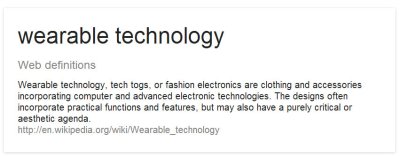
1-Fullscreen capture 4122014 60152 AMWearable technology, as defined by Wikipedia to the right, integrates electronics into a wearable item, often into conventional apparel. There is often an electronic device, housed in hard plastic shell, that is then combined with conventional fabrics to achieve its function.  Classic examples include; (i) calculator watch, (ii) a chest-strap heart rate monitor integrated with a watch, (iii) Google Glass, and (iv) an electrically powered warming jacket.

Most of the products which catch popular attention involve either ; (i) making the intelligence of the device less noticeable – such that it isn’t in a bulky plastic housing, or (ii) using the existing clothing form factors to deliver new performance.  Fabric technology is a likely method of delivering on these desires.  There are three main rolled-good fabric types; traditional wovens & knits, nonwovens, and membranes.  These can be used on their own or combined to form composites – composites have been a significant area of innovation in apparel and they are the likely source of future innovation in fabric technology.

Traditional Wovens & Knits

The seating fabric on an Aeron chair or the Nike Flyknit shoe are great example of the state of the art in traditional wovens and knits.  These technologies take base yarns (which can have quite elaborate origin stories of its own), and then mechanically integrate them to create a fabric.  Woven carbon fiber is an example of how new performance was brought to this field.  Given many yarns have biological origins (cotton, wool, hemp, etc.), wovens and knits tend to the baseline for ‘environmentally friendly’ measures in this industry.

From an innovation standpoint, novel yarns can be a source of significant improvement – as woven carbon fiber, and the revolution brought on by nylon and other synthetic fibers, has demonstrated.  Combining that capability with continued improvement in the complexity that can be achieved in weaving and knitting, and there is a roadmap for continued improved performance.  For example, take N advanced technology yarns, and then combine them with a novel knitting or weaving process, and the sum of the parts could easily be greater than they were individually.

Nonwovens

This is a highly engineered single-use nonwoven product.

Nonwovens aren’t well known in the general population, but serve as the basis for the explosion in demand of consumer wipes, diapers, and other inexpensive polymer based materials.  Historically, nonwovens haven’t fared well when launched as the true basis of apparel – they have lacked the hand and drape (textile-speak for ‘feel’) that is needed to succeed.

Nonwovens shouldn’t be overlooked as a potential
source of wearable technology innovation for a few reasons:

  • Nonwovens are already widely used as ‘B’ surfaces in many sophisticated garments – high end suits, cold-weather jackets, gloves and
  • Those inexpensive wipes, diapers and hygiene products are very sophisticated and have dramatically improved in performance since their introduction.
  • Because of the many ways nonwovens are made, there are many points of insertion for new technology.
  • Nonwovens manufacturers have a history of technical innovation and engineering.

    Nonwovens_Table

    Nonwovens combine the fast production speeds of paper with the durability of traditional wovens.

Membranes

gore-tex

Gore fabrics in The North Face apparel.

Gore defined and pioneered the use of membranes in apparel with their high water barrier PTFE membrane Gore-Tex branded composite fabrics, which were made most popular through their end customer, The North Face.  Membranes are largely developed for materials science applications first, then cross-applied into apparel where volumes (measured in area) can be higher, but more fickle.

Advanced membranes can provide performance in many ways – their primary use so far has been to provide a degree of breath-ability while preventing the wearer from getting wet.  Membranes are crucial to battery technology – they form the separator that prevents the anode and cathode from reacting together too quickly.  It could be here that they bring the quickest benefits to wearable technology.

Composites

Gore-Tex doesn’t sell just a fabric – it sells a fabric composite consisting of two membranes (one PTFE, one polyurethane) that are laminated between an outer layer, which is often a woven, and an inner layer, which can be a tricot (fancy knit) or even a nonwoven.  Creating this composite requires significant art and manufacturing experience – it also enables the manufacturer and user to get the best of all the individual layers.

Rather than having the performance of a single fabric, a portfolio of characteristics is brought to the user.  This makes the composite the most likely enabler of advanced performance: Take a woven with an advanced yarn, brought together with a purposely designed weave, attach a high performance membrane and combine with a novel nonwoven and you should be the right technology to bare.


Posted in Disruption, History, Industry | Tagged , , , , | Comments Off on Wearable Technology and the State of the Art in Fabrics

Nanofibers: Textiles Fourth Great Gift to Medicine

Sprayable bandages with super-wound healing capabilities.  Dialysis components small enough to be worn by the patient.  These are just two of the life science product concepts using nanofibers (“NF”) which have captured the attention of the popular scientific press – and this doesn’t include many of the more near term uses of nanofibers in life science applications such as tissue scaffolds, improved performance wound care bandages and higher performance facemasks and garments for physicians and other care providers.

Gartner's Hype Cycle is a well known framework for understanding technology adoption.

Nanofibers industrial foundation should reduce the impact of Gartner’s Hype Cycle for life science applications.

The number of applications that can use NF in life sciences is growing quickly.  With a century of scientific research behind it, electrospun nanofibers are actually well prepared to grow with demand – the industrial infrastructure already exists such that industry can keep pace with the needs of the medical industry. As it grows, it looks increasingly like the significance of nanofibers will be on par with two previous significant technological advancements introduced to the world of medicine after having been pioneered by the textile supply chain.

Gift 1: Dyes and stains

With Leeuwenhoek’s improvements to the microscope, new challenges emerged as scientists began to explore the newly revealed structures.  It was hard to tell what was what.  Fortunately, scientists were able to pull from the existing textile toolkit and evaluate the growing library of dyes.

“I have therefore published the method, although I am aware that as yet it is very defective and imperfect; but it is hoped that also in the hands of other investigators it will turn out to be useful.”  Hans Christian Gram (1853-1938)

Gram’s original goal was to determine whether or not lungs were infected – it would evolve into a way to separate different strains of bacteria.  Dyes were a well known art and an early driver for advanced forms of chemical synthesis.  Different dyes had a wide variety of chemical structures, giving the early microscopists many potential options.  Once Gram had introduced the concept, the art would flourish and eventually lead to antibiotics, where sulfa would then emerge as the second gift from textiles to medicine.

Gift 2: Antibioitcs & sulfa

When Gerhard Domagk and his colleagues at Bayer first determined the potential medical benefits of antibiotics in fighting disease and began development of what became Prontosil, the first Sulfa drug in 1932, it was initially believed that the sulfa had to be tied to a dye.[1]  Eventually, it was determined that basic Sulfa was sufficient.  Sulfa was widely available, used as part of textile processing and had expired patents.  The process had been originally developed in 1908 by Austrian Chemist Paul Gelmo and patented by Bayer – providing the recipe to the public domain and providing them with an expired patent for defense.

The medical impact was huge, anyone could make sulfa and the manufacturing process was well established.  For these first two gifts there are several similar traits; (i) significant medical impact, (ii) a large library of components already developed, (iii) there was an existing industrial supply chain, (iv) there was little barrier to competition.   The gift made a difference, it came in many, trust-worthy flavors, and anyone could get it.  Electrospun NF share many of these characteristics.  So does the third gift – the nonwoven.

Gift 3: Nonwovens

Walk into a modern hospital room and you are surrounded by nonwovens.  The care-givers, physicians and nurses, are covered in nonwoven garments to protect themselves and the patient.  The filters, both air, blood and other liquid that keep a patient alive are made possible with nonwoven layers.  The MERV 16 filters commonly used are also nonwovens.

Nonwovens_Table

Nonwovens have the resilience of traditional wovens and the low cost of papers.

Nonwovens emerged with significant investment from the polymer and fiber industries and they found a home throughout the hospital.  They were; (i) low cost, (ii) available in many flavors, (iii) disposable and recyclable if needed, and (iv) robust and dependable. Again, all characteristics which made their adoption inevitable.  Their impact is more along the line of the dyes, rather than the medical revolution caused by sulfa and the following antibiotics, but their impact is no less important.

Gift 4: Nanofibers?

NF adoption in life science applications is growing.  Solution electrospinning does not damage live cells and works with many polymers which have widely characterized behavior in the human body.  The webs formed have very uniform, and very fine, pores. This allows small things to flow and stop bigger things – further the pore size has demonstrated its attractiveness as a bed for growing cells.  The NF web can be coated with other known components used in biology –receptor proteins used in chromatography or even antibiotics delivered in specific doses.

Individually this list of performance criteria is significant – in combination the performance that will be enabled is over whelming.  There is over a 100 years of history in electrospinning – it is a well characterized process with known performance and theoretical underpinnings.

Industrial nanofiber production installations are common and lab scale equipment can be purchased easily at market-based prices.  There is considerable literature in academia, intellectual property and industry about what methods are practiced, what recipes are used and their commercial and performance implications.

It is not yet a given that nanofibers are the clear fourth gift from textiles to medicine, but many of the signs are there.

Notes

[1]  This is best covered in Hager’s excellent book, The Demon Under the Microscope.

Posted in Disruption, History, Industry | Tagged , , , , , , , , , , , , , , , , | Comments Off on Nanofibers: Textiles Fourth Great Gift to Medicine

NanoH2O Acquisition: The Product

1-IMG_0935

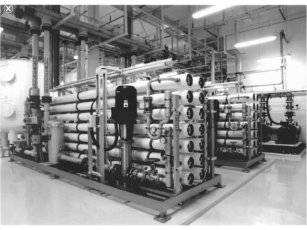
Membrane housings in a Reverse Osmosis facility.  From Baker’s Membrane Technology and Applications, 2nd Edition

On Friday, March 14, Korean industrial concern LG Chem announced they were purchasing NanoH2O, an RO membrane maker that took its first external funding at the peak of the CleanTech bubble in 2005 for $200 MM.  Industrial technology has proven to have a much longer adoption cycle than these initial investors expected – looking at the dynamics of the current NanoH2O business can help us understand how the initial investment assumptions in 2005 led to the current state of affairs in 20104. As with any business, we must start with the company’s product to understand how their customers work with them (from the company website as of 3/16/2014):

NanoH2O, Inc. develops, manufactures and markets (1) reverse osmosis (RO) membranes that lower the cost of desalination. Based on breakthrough (2) nanostructured materials and industry-proven polymer technology, NanoH2O’s thin-film nanocomposite (TFN) QuantumFlux membranes improve desalination energy efficiency and productivity.

0.  The customer buys a membrane cartridge

The customer purchases a membrane cartridge from NanoH2O that they load into a housing in a multi-million (and often several billion) dollar reverse osmosis facility, from which they produce usable (either drinkable or industrial) water from saline water.  The customer pays per cartridge, but there may be service components, discounts based on large volume purchases, and long term supply commitments.  The customer’s goal is to get a cubic meter of water as cheaply as possible, and NanoH2O’s solution, in the form of that membrane cartridge, is part of their calculus in driving that cost as low as possible.

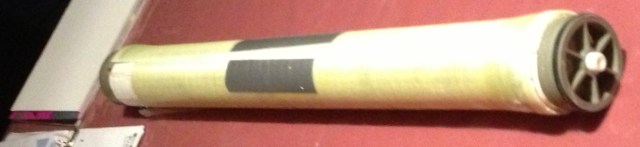
Membrane cartridge like those made by NanoH2O, and what would be loaded into the housings shown above.

Membrane cartridge like those made by NanoH2O, and what would be loaded into the housings shown above.

1.  Reverse osmosis (“RO”) and desalination (aka “Desal”)

There are three methods used in liquid filtration – RO is a special case of nano-filtration and is in general the most sophisticated and specialized.  The simplest is particle filtration – think of a metal sieve where we want to pull out pieces of gravel and then let water pass through.  Microfiltration is the same process, but at smaller scale.  The US FDA has clear guidance on how microfiltration can be used for the sterilization of medicines and therapeutics. In most micro-filtration activities, all of the liquid passes through the filter, and the filter after it is clogged is then scrapped/recycled.  This is very different than the process used in RO, where only some of the fluid passes through the membrane, and the fluid that does not pass through becomes more concentrated – in desalination, the more concentrated fluid has even more salt after than it did before, while a portion of the water flows through the membrane and has its salt removed.

Types of Liquid Filtration

Ultrafiltration is more sophisticated than microfiltration – the particulate we are looking to remove is much smaller, and in many circumstances may be considered ‘dissolved’ into the liquid.  Here the particles we are removing are 0.1 um and smaller.  In most filtration activities we look for pressure to improve the system’s performance – higher pressure across the filter media / membrane allows the process to occur more quickly, but it does so at the cost of more energy.  As we get into ultrafiltration, many processes require higher pressure in order to function at all. With those higher pressures, we encounter higher capex costs in our system.  The mechanical components of an ultrafiltration system start to increase – this is important in the case of NanoH2O, as it means the relative value of an improved membrane start to decrease as the CapEx of the system in which the membrane will function start to increase. Nano-filtration, of which RO is a special case, is the removal of small molecules from a fluid stream – some processes are separating nitrogen from oxygen – there are many, many flavors of commercially interesting nano-filtration processes and a bewildering array of technical approaches to achieve the needed economics.  RO is unique in that it is widely known by the public and the market for such materials has been growing since its initial invention.  For RO to work, water is put under pressure and pushed against a membrane – a small portion of that water passes through the membrane and is thus ‘purified’, while the remaining water, and all of the salt, is kept on the other side of the membrane and becomes concentrated. A water molecule is only 3 angstroms in size – and the salts we are pulling out are even smaller.  To do this best requires high pressure – again making the entire system cost much higher than the cost of the membranes across which the ions are separated.

2.  Nanostructured materials and industry-proven polymer technology

NanoH2O makes a membrane cartridge – the heart of their technology is the membrane that goes into that cartridge.  Industry-proven polymer technology simply states that the company isn’t attempting to introduce radically different chemistry into the membrane.  This makes sense.  If you’re spending $500 MM on a new facility, your desire to take a risk with a never-before-proven polymer is low.  The customer wants to improve performance, but they don’t want to make radical leaps to achieve that performance. When NanoH2O says, “Nanostructured materials,” they are doping the polymers used in their membranes with some type of structure that improves its performance once it is in the RO production facility.  This can be seen in their patent literature (example here is WO 2009129354 A2), which often calls out specific formulations of different nanoparticulate or additives to enhance performance.  This gets to be a blurry realm, when combining ‘nanotechnology’ (herein meaning nanoparticulate) and polymer chemistry – when the two components are often close to the same size.

1-IMG_09233.  Thin-film nanocomposite

This is an industry standard term for the type of membranes that are used in RO.  The membrane itself is a very thin, precisely made material.  It is often made on top of a conventional nonwoven or even on top of a lower grade microporous membrane.  While this term may sound advanced, it is commonly used in the industry.

All RO membranes are thin film composites – many of the newer water or desal start-up technologies try to get around the use of thin film membranes using other methods.  This may itself turn out to be the big debate about new water systems – are they able to move beyond thin film, or should they continue to invest in 10%, 20% or higher improvements.  This is similar to challenges in the semiconductor industry where challenges at both sides of the size continuum – fine scale lithography and larger 450 mm wafers, force the industry to make big, long term decisions on how they deploy capital.

Closing

The product is a membrane cartridge that an end customer buys in order to get clean water at a cheaper price per cubic meter than their other options.  NanoH2O doesn’t sell the water.  They don’t sell the RO system.  They sell a component that feeds into that industrial supply chain in order to help the customer get what they really want.  The performance delivered by NanoH2O helps deliver either more water, lower total capex, or cheaper water, but it is essential to understand that in an industrial supply chain NanoH2O doesn’t hold its fate in its hands – demand for its product must be fostered at multiple points in the supply chain.

All of these factors together make for a complex adoption process that takes time – time that initial investors in this space didn’t fully appreciate.

Posted in Business, Disruption, Filtration, History, Industry, Innovation, Membrane | Tagged , , , , , , , , , , , , , | Comments Off on NanoH2O Acquisition: The Product

Nonwovens in Tech News: Feminine Care & Apparel

Working with industrial technology often feels like being behind stage at a play – you’re able to see all of the behind the scenes action that enables modern life.  Often times articles in the popular press, and particularly tech news, will cover areas that reveal some of those special methods that go on which are hidden from view.  Often times the revelations aren’t 100% right.

Apparel


Charlie Stross is one of my favorite science fiction authors and bloggers and he recently covered some PR from Fabrican, which delivers a spray-can nonwoven.  The video says the can holds a suspension of polymers, fibers and glass fibers (I am cringing watching the models receive the spray without wearing a facemask) and uses some sort of solvent which dries when sprayed.

In Stross’s article, The Revolution will not be Hand Stitched, he talks about how this could revolutionize many parts of society – and indeed, nonwovens have had a huge impact on the modern industrial world.  The innovation of the Fabrican team is making the nonwoven a point of access product – rather than centralize production at a large PGI or Ahlstrom facility, they encapsulate the materials in a can and let the user determine where it will be used.

The argument being made is that miniaturization of nonwoven production methods will lead to greater comfort, and therefore greater use in garments.  Efforts to bring nonwovens into the apparel setting (beyond the common jacket liners and high end technical gear) have not yet met with success, but do continue in niche applications such as medical barriers.  I suspect that the primary drivers of comfort will come in the way that the nonwovens are made into composites, and that this ‘composite forming for comfort’ is more likelky to be driven in a conventional industrial manufacturing setting.

Spray-can nonwovens can have a big impact, which will most likely be driven in healthcare by applications such as wound care where custom fit bandages could improve outcomes and improve patient comfort.  This topic is even hit on in the fashion show video above.  Enabling point of use nonwoven application in industrial settings, which Stross discusses, could also be disruptive – but with the cost of a basic meltblowing line already very low, I feel that any wave of innovation done at the can level will only serve as a proof of concept for more sophisticated manufacturers.

Feminine Care in India

The Indian Sanitary Pad Revolutionary, covers an inspiring story of an Indian entrepreneur, Arunachalam Muruganantham, who has sought to bring low cost feminine care products to women in his home state by manufacturing locally, addressing significant stigma around hygiene products and focusing on how to sell the product.  What Muruganantham has accomplished from an entrepreneurial, public health and women’s rights standpoint is exceptional.

Photo is from the original BBC article – note the basic wetlaid and rolled good handling gear.

The founder is sourcing cotton and cellulose locally and using women to make the goods in low volumes.  That same labor force also works in distribution.  He has access to cheap raw materials and has done the work to find small scale methods of producing the goods.  Most importantly, he has addressed the social taboos around this market to create demand for a product.   His greatest success is on mastering the channel – whether or not he needs to maintain the manufacturing methods he has established remains to be seen.

The Hacker News commentary is very thorough, with user igul2222 outlining how the 2.5 rupee cost is a near 40% discount to conventional products on the market.  That’s still going to provide a very healthy margin to the large feminine care product makers, who have now read Muruganantham’s playbook and know how to access the market.  Empower individual sales people with a Mary Kay type angle – perhaps even directly using a multi-level marketing program.  As feminine care and nonwovens makers understand the economics and marketing needs of this market, they will invade with dedication and manufacture at scale otherwise not possible. This is like owning a general store in Rogers, Arkansas, prior to the opening of the first Wal-Mart in 1962.

Posted in Business, Disruption, History, Industry, Innovation | Tagged , , , , , , , , , | Comments Off on Nonwovens in Tech News: Feminine Care & Apparel

USA Soccer and Brazil FIFA 2014: Not Just Happy to Be There

Photo by John Shapley – grantland.com

ESPN’s football/soccer podcast, “Men In Blazers” interviewed USA Soccer head coach Jurgen Klinnsman at South by Southwest in Austin, TX. At about 30 minutes in, in a light-hearted manner he talks about the US having a fan base that publicly shames players when they lose. He talks about how it isn’t enough for the players to be happy to be there – they have to want to win.

It sounds similar to the challenges encountered by NASA during the shuttle era.  There accomplishments were significant, but there wasn’t a clear mission.

Driving a technology from concept to industrial scale deployment feels much the same way.  In the early days those small wins are significant – you’ve achieved things no one else has done before.  As time goes on and your experience grows, that just isn’t enough.  Those technical achievements have to translate to revenue – the focus of the team has to be on winning, not just showing up.

Posted in Aerospace, Industry, Innovation, Invention | Tagged , , , , , , , | Comments Off on USA Soccer and Brazil FIFA 2014: Not Just Happy to Be There

Nanofibers in Application: Dialysis using Zeolites in an Electrospun NF Web

The popular press has picked up on the publication of,  Fabrication of zeolite–polymer composite nanofibers for removal of uremic toxins from kidney failure patients by a team out of WPI-MANA.  Unfortunately, this article ties together many sensationalist components that are commonly seen with a new materials science.  The researchers have looked at high surface area zeolites to see if they might be effective in detoxifying blood.  They took some of those same zeolites and then used them in an electrospun nanofiber membrane to see if the performance persisted (it did – at 67% of the level of the zeolites out of the NF web).
The researchers then claimed that this would enable ‘wrist-mounted’ blood purification devices that would replace dialysis.  This is a big jump.

There are some gaps between the current state of the research and the wrist-mounted device.

Gap 1: Zeolite performance

I’m not a zeolite expert, but there is no doubt that the heart of this device’s performance lies here in the zeolite component, and not with the polymeric EVOH NF web.  The NF membrane is simply acting as the delivery scaffold to maintain the surface area of the zeolite and to ensure that the zeolites do not move about in the system.

The state of the art in electrospinning is more than sufficient to get the right zeolite into the right form factor – the challenge will be identifying the right zeolite and proving that authoritatively while addressing the other gaps listed below.

Gap 2: Spinning of the Zeolite-Enhanced Web

Scale-up of this process will be challenging, but the fact that it has been done already is a very positive indicator.  Often times, working with academic groups, the challenge comes in transitioning the recipe for its first runs in an industrial setting.  Many of the production and engineering variables that led to the the initial invention may not easily transition to production.

Ensuring that the zeolite mixes well with the EVOH in solution will be important – industrial scale agitation of the nanofiber precursor material will need to be used to keep it in suspension until it is electrospun.  Clumping of the zeolite would reduce the surface area and hurt performance.

Gap 3:  Device design.

bloodfilter

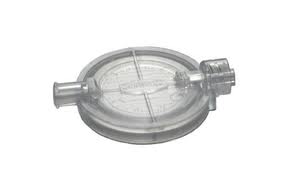
This may represent the appropriate form factor for such of a device – is there space available to do the jobs claimed by the inventors?

The device would have to take blood out of the human body, run it through the NF web, and then return it to the body at the same pressure it was taken out.  Maintaining the pressure of the fluid across the zeolite-enabled NF web will be important.  I am skeptical that this can be done naturally with the blood pressure provided by the human heart – precision pumping and fluid handling are core technologies to enabling the performance of a traditional dialysis unit.

The zeolite-enabled NF membrane may be pleated or deployed in some other setting in order to minimize surface area and begin to address the next gap – product life.

Gap 4: Device capacity.

If we assume that the research confirms that the zeolyte performs well (Gap 1), that we can scale production reliably and cost-effectively (Gap 2), and that we can then get the NF web into an appropriate device (Gap 3) – what will the life of that device be?  Capacity is something that is always a challenge to predict in filter design, and likewise it is difficult to anticipate how long the device here will function.

While there will be a lot of value in this product if it can get all the way to commercialization, it is crucial to evaluate the market opportunities for a 30 minute life device, where the user is frequently changing out cartridges, to one that can last for days or weeks.

Conclusion

As with any piece of scientific or academic research that is picked up by the mainstream media, there are always gaps in interpretation.  This is a product that is likely 3 – 5 years away from some kind of in vivo testing and likely 10 – 15 years away from being a practical application, if it is able to cross the gaps listed above.  The testing gap – in that there are unlikely common testing protocols for techniques that are so new, creates a series of challenges that will further slow adoption.

Posted in Disruption, Industry, Innovation, Invention, Textile | Tagged , , , , , , , , | Comments Off on Nanofibers in Application: Dialysis using Zeolites in an Electrospun NF Web

Interested in the Carolinas? 12 must read books

1-photo 1-001

This portion of the book shelf was perfectly organized for this photo.

North Carolina has been our adopted home since 2001 – I’ve lived here longer than anywhere else (despite all the time I’ve spent on the road for work).  It is an interesting state with a long political, commercial and technical history.

General History

North Carolina: Through Four Centuries is the most thorough conventional history of North Carolina.  Powell begins with the Native American population prior to the arrival of Columbus and takes the reader through the modern age.  

A New Voyage to North Carolina is featured in Powell’s text – written in the days of European settlement, it served as propaganda that led to mass immigration.  Many of the main characters in La Verre’s Tuscarora War below, were attracted to North Carolina by this book.

Looking for Longleaf, by Earley, tells the history of the whole Southeast and North Carolina through the story of one of its most unique native species – the longleaf pine.

The Great Dismal, by Simpson, is like Looking for Longleaf, but focused instead on the Great Dismal swamp found in the state’s NE corner along the coast.

War and Conflict

Tuscarora War, by David La Verre (10 hours) tells the story of a series of raids and battles in North Carolina beginning in 1711.  I’d also listed this book under a list on Revolutionary America.  Understanding the violence, roles of various immigrant groups and dependence on European resources for defense of the common purpose provides a framework for many of the dynamics that would lead to the revolution.

The Highland Scots of North Carolina tells the story of the settlement of North Carolina by the Scottish and brings the tale as far into the future as possible.  It has great detail on the Battle of Moore’s Creek Bridge, which is a must-visit site.

Guilford Courthouse 1781 – the Osprey series is well known for providing excellent detail of battles and military conflict.  For those who aren’t familiar with the Southern front of the Revolutionary War and Nathanael Greene, this is an excellent place to start.  The battlefield is also an excellent visit.

Future

North Carolina in the Connected Age, was published in 2008 and it is startling how dated it is already in 2014.  Written prior to the downturn, the book divides out North Carolina’s industries and tries to lay out a plan going forward.  Known for having both the technology of RTP and its sister states to the NE, North Carolina also has the low cost labor environment of the states to the South which have attracted a resurgence in manufacturing.

Luebke’s Tarheel Politics also helps understand the modern governance structure of North Carolina and the context in which these institutions developed.  There is a more up to date text on this trope, The Paradox of Tarheel Politics, which has a Kindle version available.  I found the sections on the founding and funding of the Microelectronics Center of North Carolina (“MCNC”) which was the progenitor of NC Idea and Unitive, a company I was with, to be very helpful.[1]

Notes:

[1]  MCNC has the honor of holding the sixth oldest .org URL, from January 1987 – only two weeks younger than DARPA itself.

Posted in History | Tagged , , , , , , , , , , , , | Comments Off on Interested in the Carolinas? 12 must read books