Reading and Listening to Revolutionary America

The American revolution is fascinating from a political, military, economic and social standpoint.  I didn’t fully appreciate its importance until moving to Virginia for college.  When reading, listening and learning about this time period, I look at things in three phases – the prelude to revolution, the revolution itself, and the final revision brought forward as Articles of Confederation gave way to the Constitution.  The collection of individuals from states of very different cultures that came together to win the war and stabilize the peace make for fascinating case histories given their very different experiences.

Prelude to Revolution

1-photo 4War on the Run, written by John Ross, is the story of Robert Rogers, the one English commander the Americans pre-emptively detained rather than face him in battle.  Washington himself learned the lessons taught by Rogers in the battles he won in the American theatre of the Seven Year’s War, known in the US as the French and Indian War.

Tuscarora War, by David La Verre (10 hours) tells the story of a series of raids and battles in North Carolina beginning in 1711.  Understanding the violence, roles of various immigrant groups and dependence on European resources for defense of the common purpose provides a framework for many of the dynamics that would lead to the revolution.

Founding Fathers

Benjamin Franklin.  Franklin was the world renown scientist and master of media who had personally attempted to let London know the scale of the schism with the colonies.  Isaacson’s biography (25 hours) covers his political, commercial and scientific achievements, as well as his tremendous shortcomings with his own family.

George Washington.  The most current popular biography of Washington is Chernow’s Washington: A Life.  The unabridged audiobook comes in at over 40 hours and was released in 2010.  Like Jefferson and James Madison, the original Washington home, Mt. Vernon, is a fascinating historical site to visit.

adamsJohn Adams.  The only Founder with a recent long form HBO mini-series to his name, Adams is best covered in the McCullough biography (30 hours).  This serves as the basis for the television effort.  Adams vs. Jefferson: The Tumultuous Election of 1800 by John Ferling (12 hours) shows the growth in political parties that came from Washington’s departure from office and how the increased use of methods developed by Burr during the Revolutionary War to maintain the peace were now crucial to attaining power.

Thomas Jefferson.  Dumas Malone‘s Pulitzer prize winning six volume history, Jefferson and His Time is available in text and audio.  Meacham’s more recent Jefferson: The Art of Power (19 hours), is less detailed and has more recent updates on the impact of Jefferson’s slave holdings and resulting family.  Stephen Ambrose’s Undaunted Courage, which details the Lewis and Clark expedition, outlining Jefferson’s role in commissioning and studying its findings, provides further context on his role in extending the country through the Louisiana Purchase and systematically studying those holdings.  A visit to Monticello, Jefferson’s home, is essential to understanding his strengths as an artist, his struggles with slavery and the challenges he faced with his personal finances.  As a graduate of The University of Virginia, my personal list of Jefferson readings is longer – touring the University is also a great way to understand his vision.

James Madison.  Madison, as the legal and constitutional expert, is the driest of the early group to follow.  From a wealthy family, his value came from his study historical precedent and ability to serve as an adviser to Jefferson – these are best covered in the Gutzman text James Madison and the Making of America (16 hours).  A visit to Montpelier compliments any study of Madison.

Alexander Hamilton.  This is most recently covered in Chernow‘s biography, but the earlier McDonald text is very readable and quotable.  Of the founders, Hamilton and Franklin rose from the least to achieve the most.

Aaron Burr, covered in Fallen Founder, by Isenberg (20 hours).  Often over-looked, the third vice president, who served under Jefferson and was close to being either the second or third president, teaches many lessons about the role of early political organization in the growth of American democracy.

Posted in Disruption, History, Innovation | Tagged , , , , , , , , , , , | 1 Comment

World of Bluegrass Should be Raleigh and Durham’s SXSW

World of Bluegrass + Real Technology = Good for all of NC

Raleigh, Durham and Chapel Hill have always had a bit of inferiority complex about our place in the tech world.  Texas’s booming economy and a greater number of early stage investors has helped Austin pass us as a region when it comes to innovation.  But it is the fact that they have a party – SXSW, and that everyone goes, that seems to hurt the most.

RTP is the kid who didn’t get invited to the party.  Let’s fix that.

World of Bluegrass was a hit, and it is committed to be in Raleigh for 2014 and 2015.  It looks like if the numbers continue, it could be here long after that.

Work with the NCSU school of agriculture to talk about food technology.  The world leaders in technical textiles already come to Raleigh twice a year to talk shop under the leadership of the Nonwovens Institute at NCSU’s College of Textiles – let’s do a one day seminar on wearable tech.

Work with the entrepreneurship programs at Carolina and Duke.  Host one day tech sessions off site (American Tobacco Campus springs to mind) and then bring in music and run buses.

People want a good time with good music. The world is hungry for real, industrial technology – let’s feed that hunger and do it with a side of Carolina BBQ.

Posted in Industry, Innovation, Textile | Tagged , , , , , , , , , , , , , , | Comments Off on World of Bluegrass Should be Raleigh and Durham’s SXSW

Insights from Aviation and Aerospace on Innovation and Disruption

February 16, 1965 launch.

There are no shortage of insights to be taken from the aviation and aerospace industry.  Any achievements are made in public – the Wright’s couldn’t hide their practice sessions in Ohio, Sputnik’s surface reflected in the night sky as it beeped overhead and the 110 meter tall Saturn vehicles could hardly be hidden.  The failures are also just as public, from the loss of the Apollo 1 crew to Langley’s failed efforts to fly before the Wrights.

Modern industry is built on the technical, industrial and scientific achievements of these pioneers.

The following lessons stand out the most.

That big problem may not be ‘the’ big problem

Form the time of the Wright’s first flight well into the 1920’s, many of those who mocked their invention did so on the basis that flying was too difficult.  Critics would point out that the demands on the pilot were too great.  The Wrights had to invent themselves as pilots before they could invent an aircraft to fly.  Early aviation pioneers though the ‘big’ problem was making take-off, flying and landing fool proof.

For decades competitors would pursue methods that would make it simple to effortlessly fly and land – none successfully.  Over 100 years later this sounds like a ridiculous idea.  Even with modern computing capabilities and navigation systems, the possibility of a self-controlled passenger aircraft is only now becoming possible.  Self-driving cars are just now emerging as a real probability.

Believe in the data not the theory

The Wrights were sponges.  They read all they could on flying theory, much like the Germans, Americans and Russians would do in pursuing background information on rocketry.  What the Wrights found was often at odds with their own experimental results.  Rather than shy from these issues, or trust academia, they developed their own methods.

By inventing the first wind tunnel, the Wrights were able to improve on the design of their wing and their propeller.  Many academicians decried their designs when they were first released, as theory showed it should not work.  Data and practice won the day over untested theory.

All up testing

At the time of Kennedy’s challenge to put a man on the moon, rocketry systems were tested and verified independently.  Given the tight time demands of the challenge he laid out, the US space program at the time could not fit all of the separate tests required into the time frame that had been laid out.  The Russian team pursuing Sputnik often faced the same challenges due to limited resources and budget.

“All up” testing required the entire vehicle, with all of its stages and components, to be tested together at once.  Individual systems were designed for quality and small tests were obviously required, but the goal of the program was to produce a moon landing, not a number of individual successful tests.  In doing the all up testing the time frame was rapidly reduced and it was found that trouble shooting of issues could be done more quickly – issues found in the all up configurations would not have been found individually.

Design for iteration and service

It was difficult for Langley to iterate with a water-logged aircraft. The Wright’s did not have that challenge.

Sutter’s book on the management of the design of the 747 really is one of the best product management books written.  He outlines the company’s success with the 737 – one of their major inventions was putting the engines under the wing.  In doing so they were easier for the airlines to service – an important criteria in the early days of jet engine adoption.

The 737 and 747 both launched with clear beachhead markets.  The aircraft were capable of servicing a set number of commercially valuable routes which airlines were eager to pursue.  But they did not serve every route.  That was addressed with subsequent iterations of the vehicles, which would add length, extended distance capabilities and cargo variations.

These vehicles were successful because they were designed early on for service and for their design to iterate over time.

Persistence Pays

A balance from the Wright’s wind tunnel. With this invention the Wright’s could get better at flying even when they weren’t flying.

The industry is binary in its outcomes:

  • The Wrights would fly or they would not.
  • Sputnik would orbit, or it would not.
  • Apollo would land on the moon or not.

The Wrights established a method to persist at their task over time.  They knew how to build light gear from their bicycle shop, they figured out where would be most advantageous to make early flights (an NC beach with strong winds, no trees, and soft sand to land on), they developed the wind tunnel to test in the off season.

The Sputnik team too figured out how to persist.  Their system was designed primarily for weapons, but when the opportunity arose to launch an artificial satellite, they were ready to do.

The Mercury and Apollo programs did not look to win their respective races on the first launch.  Instead, they were persistent systems with multiple opportunities to achieve their goal.  They didn’t expect to win on the first attempt – the goal was to persist as long as possible, learning and iterating until they were able to achieve their objective.

Posted in Aerospace, Business, Disruption, History, Industry, Innovation | Tagged , , , , , , , , , | 1 Comment

Facts are Stubborn Things: The CrossFit Open

“Facts are stubborn things,”
John Adams, Second President of the United States
(1735 – 1826)

crossfitopenThe CrossFit Open is a very honest assessment.  A few hundred thousand people do the same workout and you can see how you stack up.  You can sort based on geography, look at the age of those who beat you and get an overall feel for how you did.

Wrapping up the workout, you’ll hear a lot of, “I could’ve done [better, worse, the same] with [insert fix here].”

I’m very comfortable with my performance, even if I had wanted more – the numbers don’t lie.  The results are what they are.  Only 14 chest to bar pullups on 14.2?  I wish I could do more, but I didn’t.  After 13.3 I spent the past year getting better at double-unders [aka jumping rope] – and I still only got three rounds and change on 14.1 (I did it twice).

Facts are facts – 14 this year.  11 last year in 13.5.

Three rounds in 13.3 is 90 double-unders, whereas last year I only got eleven in 13.3.

By dealing with facts, we know where we are and we can set goals about where we want to go.

Posted in Uncategorized | Tagged , , , , , , | Comments Off on Facts are Stubborn Things: The CrossFit Open

Improving PodCast Episode Discovery

mzl.lzsnbijyPodcasting is a growing area of media which can provide real ad revenue to the producer and value to the listener.  Unfortunately, the ‘find a new podcast’ screen on the major podcast / podcatcher apps are disappointingly identical.  After hitting the ‘+’ icon, there are a few standard options from which we can search:

  • Popularity
  • Keyword
  • Genre

When we search, the results are uniformly displayed by Podcast Series (as opposed to by episodes of said series), sorted with the most recent episode at the top.  Solving this discover-ability problem at the podcast level will lead to solving the audio’s general problem of being tougher to share, and therefore tougher to go viral.

A few additions will really change podcast discovery.

1.  Make ‘Search by Friends’ an option.

Enable users to see what podcasts their Twitter, Facebook, G+ and/or LinkedIn contacts listen to.  Everyone’s got the college friend who still follows the university athletic program closely – they are already an expert, what do they listen to to stay in touch?  What about those industry technical contacts who are always on top of the newest developments – what do they listen to?

There are a stunning number of listening opportunities – using the current options constrains the market’s ability to grow.

2. Make ‘Keyword’ search smarter.

Keyword search is currently pretty naïve.  It is based on what the podcast creator submits.  We should look to include show notes and other sources of information.  In a perfect word, real time keyword results based on the audio content would be possible.

3. Increase options for looking at individual shows.

Show results are now thrown back at the Podcast level.  Any sorting is shown by release date – throwing back the most recent show, even if it isn’t the most popular.  Showing results based on popularity would be valuable and increase the likelihood that a new listener enjoys that first listening experience.

Combining ‘Keyword’ search with ‘Individual Show’ results would further improve the probability that a listener is able to find what they are looking for.  There are many ways the podcast listening experience can be improved – improving episode discovery is valuable for all parties involved in this growing industry.

Posted in Business, Innovation | Tagged , , , , , , , | Comments Off on Improving PodCast Episode Discovery

iOS App Store – Finding a Countdown Timer

1-Countdown Apps-001

Days To Go had an ability to import events from your calendar, a feature which made it the clear winner.

There aren’t too many variables when looking for a countdown timer.  In a recent search, I looked at five options in the appstore before settling on ‘Days To Go’ which won because of its innovative ability to import from current calendar entries.

The Apps were anywhere from free to a few dollars – my favorites were all $0.99.  I looked at Days to Go, DownCount, CountDown, T-Zero and another named CountDown.  Some of the older versions which had not upgraded to the look and feel of iOS 7 had very difficult methods of adding a new event.  The use of scroll wheels and dates was surprisingly difficult, but present in at least two apps.

1-Fullscreen capture 362014 81658 AM-001

Finding an App in the App store is a miserable experience.

Posted in Business | Tagged , , , , , , , , | Comments Off on iOS App Store – Finding a Countdown Timer

In 2008 We Never Expected Tesla’s GigaPlant

2013-Tesla-Model-S-front-1At the outset of the most recent financial downturn in 2008 enthusiasm grew for funding materials science research into energy storage.  The thought at the time was that manufacturing in this sector could ease employment concerns.  Concerns about global energy pricing could be alleviated with cheaper storage, which would reduce domestic US dependence on foreign resources.

With Tesla’s recent announcement around the ‘GigaPlant’, which if successful will effectively double global lithium ion battery manufacturing capacity, shows that our ability to forecast the development of this industry was significantly off.  Some of the beliefs that were held in 2008 include:

  • There will be many winners in the industry, from both a technology and commercial standpoint.
  • There will be many industrial winners (as opposed to consumer-facing winners) – companies will be created and exited that sell their technology to others, who then in turn sell to consumers.
  • We will be able to combine lab scale research much like Legos – this in turn will create a compounding effect leading to even greater technical achievements.
  • Demand will grow for batteries as they adopt new form factors.

What we find instead, six years later, is quite different:

  • There looks to be a single large winner (albeit they have numerous supply chain partners).
  • The winner has direct exposure to consumer desires – they are stimulating end demand for their product.
  • Research has not yet provided large ‘step-function’ improvement.  Rather, we see persistent improvement yielded from improvements in manufacturing and steady focus on small gains.
  • The dominant player focused on working with established form factors (PC sized cells).

In hindsight, maybe we shouldn’t be surprised.  Tesla’s ability to deploy such manufacturing capacity echoes that of Ford’s River Rouge Complex.  The addition of this capacity should have a positive impact on the industry and the communities in which it is based, even if we didn’t anticipate its scale or composition.

Posted in Business, Disruption, Industry, Innovation | Tagged , , , , , , , | Comments Off on In 2008 We Never Expected Tesla’s GigaPlant

Podcast Innovations RFP

mzl.lzsnbijyI’m at a truce with my podcast listening experience.  I’m very grateful to the show hosts – if anything I feel like I have a connection and personal relationship with them far beyond what I experince with other media.  However, when I start to think about the listening methods that stand between the artists and myself, it is easy to get a little frustrated.
Discovery

My initial subscriptions were found on an old PC where I’d downloaded the iTunes desktop client.  I looked for Tech News.  In the early days, there weren’t many options.  Many of my current subscriptions stem from those initial choices – I’ve listened to guest hosts who had their own podcasts and then followed them to their own shows.  With certain areas, a host I’ve followed on Twitter had promoted another show.  Barbell Shrugged was the top podcast in one of my hobbies, so that I found out through the community.

However, I don’t really know who of my friends listen to podcasts.  If they did, I wouldn’t know what are their favorite shows, and very importantly – what the best episodes are of those shows.  This lack of discover-ability is a rate limiter in the growth of podcasting, and is very similar to the challenges faced app discovery and finding YouTube videos.

Subscription

Podcasting is an activity that is used in transit.  Usage in areas with pore internet connectivity is common.  Any podcast app that requires wifi to simply listen to audio is fundamentally broken.  The app must be built such that the app is self-contained on the device and that when data is available it can be used quickly for sharing and downloading.  Much like how Dropbox and Google Drive can allow you to keep files on the device, an effective podcast app must start with the orientation that it is primarily used on the device, not via the cloud.

Library Management

The best framework I have for library management is what Audible does with its iOS app.  It should be easy for me to look at a podcast subscription and tell what episodes:

  • Are currently on my device
  • Have been released by the host, but are not yet downloaded
  • Have been downloaded to my device in the past, but are now no longer on the device
  • I have downloaded in the past and I have listened to them (and also what % of the show did I listen to)
  • I have listened to and what my rating of the episode is

Listening

Listening is at the core of any iOS app.  Most apps have the same functionality.

  • Episodes shold go back to where I left off listening once I have left the app, even if I’ve listened to another podcast (iOS music app is the only one I know of that doesn’t do this).
  • I should be able to speed up / slow down the speech of the program.
  • I should be able to skip forward or backward by 30s (and this amount of time should be adjustable).
  • I should be able to insert a note at a set point in an episode.  I don’t know of a podcasting app that does this – Audible is again the best reference point.  In addition to flagging that moment in time, I should be able to insert a text note, and if I’m really dreaming big, I should be able to convert that audio to text automatically.

Use History

Some of this is covered above, and understanding use history is tightly integrated into how an app lets you manage your library.  I would want to:

  • Be able to manage an ‘active’ vs no longer active set of subscriptions.  In most of the applications I’ve looked at now, once I delete a podcast or subscription it is totally gone.  This is unlike the Audible experience, where my history (including notes) is stored in the cloud and accessible via the internet, or even on my device if I re-download the content.
  • I’d like to see how many hours I’ve spent using the application – how much have I listened to?
  • How much have I listened to each subscription?  When and where did I listen?  What % of the episode do I listen to?  Audible has some badges, and it looks like Stitcher makes an effort here, but everything is very weak.  Further, I’d be willing to pay a modest monthly fee for this (I’m thinking $1 – $5, similar to BeyondTheWhiteboard.com).
  • What’s surprising about my interest in these features is that they appear as if they would be *very* valuable to advertisers.  Further, they seem as if they would be technologically easy to pursue.  I’m sure there those more knowledgeable have a feel for the context of why such options are not currently available.

Sharing & Social

Building ‘sharing’ and other social functionality into an app or product just for the sake of doing so is not something that interests me.  Blindly sharing doesn’t do much good, but with the challenges of discovering new podcasts being so great, and the payback being relatively high, this is an area where further work would be interesting.

  • Sharing to show you’ve listened to a show.  This is already done with hashtags on Twitter, but this seems a bit crude.  A search for Joe Rogan Experience #JRE throws back over 17,000 hits.  Downcast and PocketCast each have a simple button for this.
  • Rating an episode and ranking it.  Here the challenge is that ratings are done at the show level, not the episode level, and that the most common repository is iTunes.  Even writing a recommendation is a hassle.
  • Sharing a snippet from a show.  This could be either an audio clip or a text note – best would be an automatic audio to text conversion.
  • Subscribing to a show host – Twitter and Facebook pages fill some of this void, but there is a big gap between seeing that commentary out of context.
  • Links to chatrooms.  One of TWiT’s greatest assets is the ‘hive-mind’ of the chatroom – this is really lost when listening to a show a few days later.  The show holds its value, but it is difficult to see into those chatroom archives.
  • Links to other listeners.  With Audible and Yelp reviews you can occasionally stalk a fellow reviewer with whom you share an opinion – this would be a valuable way to find new content.  TWiT’s TechNewsToday show did a good job of this with their own subreddit.
Posted in Business, Disruption | Tagged , , , , , , , , , , | 1 Comment

Aviation and Aerospace Innovation

The history of aviation and aerospace is fascinating because the achievements were technically challenging and the impact on society has been so clear.  Through the major phases of the industry’s growth ideas evolved across the globe, with the pioneers taking risks that sometimes worked and many times did not.  It is an industry where innovation cannot be concealed – success results in a demonstration of your capabilities flying across the sky.  My favorite sources from books and audiobooks to learn more about this industry are listed below.

Wrights and the First Pioneers

This is a great place to begin.

This is a great place to begin.

This phase of history begins with the early understanding of physics and chemistry which led to systematic exploration of flight through balloons, kites, and culminated with the first powered flight.

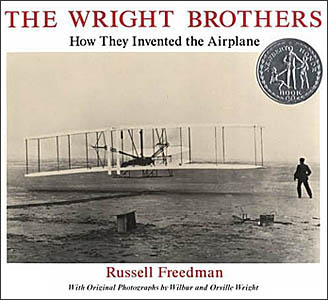
The Wright Brothers: How they Invented the Airplane, by Russell Freedman.  While noted as a children’s book, for which it won an award, this is a well researched book with excellent photography.  Finding this book and reading it to my son reinvigorated much of my own interest in this area.  The photos and reference guides have been valuable when reading through other texts.

The Wright Brothers by Fred C. Kelly (6 hours).

Wilbur and Orville: A Biography of the Wright Brothers, written by Fred Howard (21 hours).  This book covered more of the work that the Wright’s had done around pioneering not just the practical, but also the theory of aviation in the early days.  

Walter Isaacson’s Benjamin Franklin: An American Life has several chapters dedicated to Franklin’s participation in the early work with balloons while he was in France.  Not only did Franklin disseminate the early achievements, he served as a financial sponsor.  Balloons also serve a prominent role in The Greater Journey: Americans in Paris, by McCullough in his description of the German siege of Paris.

Commercial Expansion

From Lindbergh through the modern age, commercial aviation has made the world a smaller place.  In this phase, the technical challenges of the early pioneers now become commercial challenges.  New products are created – products such as a seat on the flight and also products like the 747 from which the seats are sold.

The Flight of the Century, which focuses on Charles Lindbergh’s flight across the Atlantic, is written by Thomas Kessner (11 hours).  The book details how Lindbergh’s technical approach to his solo flight was so different than his competitors – rather than over-engineer a heavy three engine plane, he focused on a high quality single engine approach. Lindbergh’s promotion of passenger aviation and pioneering navigation of routes for the airlines is also discussed in detail.

Turbulent Skies: The History of Commercial Aviation by T. A. Heppenheimer is part of the Sloan Technology series.  The book focuses on the history of commercial aviation in the US with a significant focus on the role of the US government subsidizing the industry through postal fares and the growth and collapse of Pan Am airlines.

Product management at a large scale.

747: Creating the World’s First Jumbo Jet and Other Adventures from a Life in Aviation is written by the chief engineer of the 747 program from Boeing, Joe Sutter (11 hours).  The book begins with an early history of Boeing through the lense of a young Sutter growing up in Seattle.  He charts the company’s growth, including its divestment of Pan Am, high risk pursuit of new models which enabled the pioneering of new routes.  This is a great book on the history of flight and an exceptional book on technical product management.  Sutter’s discussion of how they would release new models of the 737 and 747 to enable airlines to pursue new markets is a great example of listening to customers and focusing on specific problems in order to drive technical achievement.

I’ve just downloaded The Aviators: Eddie Rickenbacker, Jimmy Doolittle, Charles Lindbergh, and the Epic Age of Flight, but have not yet listened to it.

Sputnik, Apollo & the Space Race

17 hours on the growth and success of the US Space program.

17 hours on the growth and success of the US Space program.

The technical requirements and industrial investment required to put a satellite into orbit, put a human into orbit, and then to land and return a crew from the face of the moon are staggering.  The program management skills was successful and showed a skillful balance between focusing on safety and enabling risk-taking.

Rocket Men: The Epic Story of the First Men on the Moon, by Craig Nelson starts with the Mercury program and goes through the last of the Apollo missions.  Nelson focuses on the astronaut core and the mission control team but does not shy away from the fundamental scientific and engineering challenges.  

Failure Is Not an Option: Mission Control from Mercury to Apollo 13 and Beyond by Gene Kranz (19 hours).

Red Moon Rising: Sputnik and the Hidden Rivals That Ignited the Space Age, written by Matthew Brzezinski (12 hours).  This book focuses on the achievements of Russian aerospace pioneer Sergei Korolev, whose bold moves guided the Russian strategic missile development, launched Sputnik and lead to the Russian manned space program.

Final Countdown: NASA and the End of the Space Shuttle Program, written by Pat Duggins (7 hours).  I’ve just downloaded this in the past week, no feedback yet.

Conclusion

My favorite part throughout this aviation and aerospace history is seeing the great players interact.  The Wrights were highly dependent on Langley, whose own well-funded efforts met with failure.  Lindbergh talks of being awed in meeting Orville Wright.  Lindbergh then awes the Apollo 11 crew with a meeting upon their return to Earth.

Posted in Aerospace, Business, Disruption, History, Industry, Innovation, Invention, Vehicle | Tagged , , , , , , , , , | 1 Comment

Software Tools for Listening to Spoken Audio

I love podcasts and audio books.  They’re an educational and entertaining way to fill background time – unless work is involved, then Bob Dylan is best.  Getting that spoken word content in a repeatable, hassle-free way is another challenge.  There are several software tools involved, none of which is very easy to deal with.

iTunes / Desktop.  This program revolutionized the category, is a huge business, and the leader in its category, but it is a mess.  Finding audio programs, evaluating if you want them and ensuring they are downloading is very complex.  Going to iTunes is like going to a very large shopping center – it is likely what you want is there, but finding it will take some patience.

Audible.com / Website.  Audible’s website is a stark contrast to the desktop experience one gets from iTunes.  Searching the audio books is easy, listening to samples is straight forward, the wish list is a great way to save things for later and the purchasing process is very clear.  This is like most of Amazon’s sites.

photo

Audible’s quick-swipe screen is very handy. They’ve thought about multiple use cases.

Audible.com / iOS App.  Unfortunately, the major challenge to Audible.com’s iOS app is that it doesn’t let you purchase.  Provided I’m on a good wi-fi network, getting content from an Audible purchase from the server to my device is very straightforward.  Once I’ve got the content downloaded, I’ve got all of the features one would want for listening to content.

  • Library Management.  I can see all the books I’ve purchased.  I can quickly and easily tell what parts of my library are on my device and which ones need to be downloaded (this is really rare in podcast apps).
  • Listening Options.  I can configure the app to rewind 30s, fast forward 30s (or change the times).  I can also modify the speed of playback.  Audible not only gives you the right buttons, it lets you modify the settings of the buttons.
  • Quick Gestures.  There are quick gestures if I’m driving to allow me to pause.
  • Notes.  Audible will let you bookmark and then notes can be taken on the bookmark.  These functions are somewhat like what you experience with the Kindle.  There isn’t a way to easily share these notes, although they stay with the recording even if you delete it off of the device on which it was originally played.
  • WhisperSync.  I’ve not used it yet, but Amazon allows cross-device syncing between a Kindle and the Audible app.  Listen to a point, stop and then the Kindle will be ready from you to read from that point onward.  I regular use sync across various Kindle readers, but haven’t used the audio-written sync function yet.
  • Badges & Data.  Audible lets me have badges for accomplishments.  This is nice, but as a user, what I want is data.  I’d like to know more about my listening habits – how many listening sessions did it take to get through an 8 hour book?  What books led me to listen to multiple books at once?
  • Reviews.  What authors did I like best?  There are good review capabilities on the Audible site, but none are integrated with the iOS site.
  • Sharing.  Again, I take a lot of notes when I listen to a book – I do the same with written books.  I remember more when I am an active listener.  It would be very interesting to be able to share those notes, much like you can do on a Kindle.
  • Discover-ability.  Between the Audible website and the app functions, all of the pieces are there for me to easily figure out what things I should listen to.  It is still tough to find good things and it requires a lot more time than it feels like it should.

Apple Music Player / iOS App.  I just bought several of the older issues of Dan Carlin’s Hardcore History and the downloads automatically went to Apple Music Player, instead of the Podcast App.  It is terrible!  If I stop listening to the episode, it loses my place.  Maybe that’s okay with a 3 minute Ke$ha song, but if I’ve got a 90 minute long episode on the Punic Wars, losing my place is very frustrating.

This issue really highlights some of the challenges for this form of content.  Dan Carlin wants to make money off of his podcasts.  There is clearly money in podcasting, either through charging for episodes or through advertising.  He is unable to charge for episodes in the Apple infrastructure without using a method that hurts his users.  No one wins.

Apple Podcast Player.  Podcasts were once just a special set of audio files in the traditional music player.  Before that, I remember having to physically connect my iOS device to my Mac to download new episodes, as you couldn’t do this automatically via wifi (This was one of the key drivers for our first iPhone purchase).  I played with the dedicated player when it was first released, but struggled to get it to download regularly and the subscription rules were confusing.

RSSRadio7 is my favorite way to listen to podcasts.

RSSRadio7.  I used this same audio player prior to iOS 7.  I’d also looked at a number of bigger name players, such as Stitcher.  RSSRadio7 has the features I like and an easy to use UI:

  • Finding shows.  RSS uses a simple keyword search for episodes.  It isn’t fancy, but it works.
  • Downloads & Subscriptions.  I want to subscribe to a podcast and get those episodes when they are released.  I like to be able to avoid episodes with hosts or keywords that I’m not interested.  Space on my audio player is at a premium, so using that space on episodes I’ll never listen to is frustrating.
  • Trial-a-bility.  RSS requires me to subscribe to a podcast, even if I just want to get a single episode.  That requires a few more clicks than I’d like, plus it puts the onus on me to unsubscribe.
  • Library.  I have a hard time telling on RSS if an episode is on my device or if it has simply been seen by my device in the past.  I can’t tell real easily if I’ve listened to a podcast.
  • Past usage.  I don’t have any kind of rudimentary statistics.  There isn’t any ability to go out and see what podcasts I’ve subscribed to over time, when I unsubscribed, etc.  Audible covers this well in the way they treat purchases of audio books on their website.  They don’t try and cram this into an app experience.
  • Statistics.  Just like with Audible, it would be nice to have some actual user statistics.  At least RSS doesn’t have the patronizing badges that Audible uses.
  • Owner vs User.  At Audible I feel like a user with a dedicated back end that allows me to collect and do some basic sharing of information.  With RSS, I’m an owner of an app on a device.  It is like owning a hammer – I can do with it what I please but there isn’t much of an instruction manual.

[2014.03.12 – EDIT]

I just checked out Stitcher, as it shows up as a top app and I had used it a few years ago.  Back then I stopped after a few attempts at use, and after 30 minutes I’ve decided it still isn’t for me.  Fundamentally, this App starts by saying the user has wifi access.  My main use case for listening to podcasts is while in transit, so this just does not work for me at all.

It took a while to figure this out, and the app even has a guide for “click here, do this, do that,” and it will work in that scenario.  But that misses the point.  With these inexpensive or free apps, the cost is not in the purchase, but in the time investment required to make full use of the tool.  With a production like this, if it has a primary use scenario that is in conflict with my goals, that is a reason to stop all engagement.

Lastly, I was driven to re-evaluate Stitcher due to a problem I’d mentioned before.  I’ve got a few episodes of ‘Hardcore History’ that are under the regular Apple iOS music app.  Every time I pause it and turn away it goes back to the beginning!  I’ve now got a yellow sticky pad to write down the ‘time remaining’ if I pause it.  I’d been hoping for a software / technology solution – but perhaps the 3M sticky note is all I can do now.  I’ve been unable to move the episdoes into either RSSRadio, Sticher or the iOS Podcast app.  [Full disclaimer – that could be entirely due to user error!]

Posted in Uncategorized | Tagged , , , , , , | 1 Comment