The World Economic Forum’s ‘Top 10 Emerging Technologies’

Top_Ten_WEF_2016-08-31_14-13-52

From the World Economic Forum in Davos, Switzerland

Nanosensors!  Autonomous vehicles! [Yawn.]  We’ve seen these before.

Organs-on-chips? Optogenetics?!?  Now this is interesting.

The Davos-based World Economic forum released a list of 10 emerging technologies that made a tour of the press a few weeks ago.  There is no guidance for the list.  There is no set of recommendations or concerns.  Each technology’s one page write-up is in a different style.  Let’s look at the list in the same way we did past technology forecasts.

Questions to ask:

  1. How would we make this into a prediction with numbers and years?
  2. What scenarios could enable this future to happen?
  3. What challenges aren’t mentioned about this technology?

1. Nanosensors and the Internet of Things

Quantifying this prediction comes in the opening paragraph:

New IoT devices are announced almost daily, and analysts expected up to 30 billion of them to be online by 2020.

My challenge always with sensors has been; (1) what device or product will they be added to? (2) how will they get access to the Internet?  (3) how will they draw power, and I was concerned in the past with (4) how will the data be analyzed?  Any commercialization effort must address these constraints.  The technology and capability of sensors is significant.

Several scenarios could accelerate adoption:

  • Sensors for health.  Hospitals are already full of sensors and there is immediate benefit and a method for analysis.  Incorporation of more sensors on body, in hospital garments and beds could improve outcomes and alleviate pain and suffering for patients more quickly.  (5 years – 2022)
  • Smart vehicles.  Beyond autonomous vehicles, could a fleet of Google Maps cars tricked out with the right sensors reduce the cost of road maintenance?  Could integration of sensors reduce maintenance and downtime for aircraft?  GE’s use of sensors on engines is well known, could the same use allow for more advanced materials to be used in wings and elsewhere?  (15 years – 2032)
  • Infrastructure.  How would we sell ‘smart beams’ to contractors?  Could they be written in to state purchase contracts to avoid fiascoes like the Bay Bridge?  Would they be paid for over time with service and maintenance contracts?  (10 years – 2027)
  • With most products, the naive assumption is usually the right one – tomorrow’s sales will come from today’s markets.  Sensors are used in phones.  We’ve seen the Amazon echo achieve adoption in households.  Could the future live in our kitchens and pockets, but with a greater set of capabilities?  Many of the sensors in a phone are not now currently utilized.  What must change for them to see greater adoption?  (5 years – 2022)

2. Next Generation Batteries

Batteries are a source of personal interest and professional pain.  The promise is real, the development and commercialization process is long, complex and difficult to improve on.  A claim that a battery technology or use will become mainstream should achieve a benchmark of at least 1/3 of new installed capacity.

Batteries are hard to develop, require unique materials and novel manufacturing methods. For this technology to emerge, one of the following scenarios must occur:

  • Nylon moment.  A big company must pursue batteries with the same intent and dedication that DuPont’s Carothers used to pursue the development of Nylon.
  • Software and simulation.  Batteries require hours of tests, sometimes months, sometimes years.  They are a slow, controlled bomb.  To accelerate commercialization, there must be a way to short cut the testing and evaluation.  Predictive materials software would shorten the development cycle.
  • Pilot scale automation.  High performance batteries have depended on materials made with uniformity and scale that is tough to scale.  There are many battery technologies that made a splashy press release upon emerging from a lab, but never left a production site.  Using technologies with a clearer path to scale up will accelerate development.
  • Reverse compatible to supply chain.  For batteries to emerge, they must be easily integrated into whatever supply chain where they will be used.  The manufacturing must be easily done with existing processes.  The use must allow for easy and convenient charging.

3.  The Blockchain

I couldn’t understand what exactly was going to ’emerge’ from this discussion of practical application of bitcoin and etherium related cryptocurrency methods to areas like government and pharmaceutical development.

This portion could have been summed up with, ‘More honesty and transparency!’

4. Two-Dimensional Materials

The authors begin with graphene and list out all of the other “-phenes’; borophene, white graphene, germanene, phosphorene, silicene and stranene (from tin).  Perhaps we should re-label polymerous nanofibers as, “porous polymerenes.”

The list of applications is what is often seen for new materials – batteries, filtration, pollution control, structural composites and medical applications.  There are many scenarios for how these materials can be adopted, but they should all be measured at the end market level.

My forecast is that the -phenes won’t be used in more than 1/3 of the parts in a major consumer vehicle or passenger airplane within 20 years.  1/3 could be measured based on count or value.

A second forecast is that before this set of suffix-phenes achieve their goal, another set of materials will emerge with ‘wonderous’ properties.

5. Autonomous Vehicles

Autonomous vehicles are happening at a pace faster than anyone had expected.  Uber and Volvo are rolling out a fleet of for-hire vehicles in Pittsburgh.  Further, this timeframe beats my own past prediction that a fleet of self-driving vehicles would roll out by 2019.  (This is the first prediction like this I’ve been right on!)

Autonomous vehicles will happen.  Despite much discussion and warning, their impact will surprise many and disrupt major industries, economies and regions.

6. Organs-on-chips

The report contemplates the miniaturization and automation of pharmaceutical animal models such that they can be replicated in silica.

Scenarios where such devices become readily available and/or disruptive could include:

  • O-o-C use as sensors.
  • Challenges around toxicity where such sensors are important in health and safety.
  • Unfortunately, it is easy to see scenarios where use of such devices could enable new types of illegal drugs.  Such scenarios often accelerate adoption of new technologies.
  • Any device that aids in the reduction of obesity would show fast and immediate adoption.  If these devices enabled use of personalized medicines in a fast detection / production setting, they could enable such methods.
  • Lastly, any kind of pandemic or disease threat whose challenge was met with these devices would promote fast adoption.

7. Perovskite Solar Cells

This is a fancy name for solar cells made out of materials that are not silicon; not hard to make, not extensions of the semiconductor supply chain and hence not constrained by current systems and uses.

However, they are constrained by current systems.  It is a common forecasting and technology trap to believe that a ‘different’ or ‘better’ version of a current thing will totally change the use case.  The Perovskite solar cells will be subject to the same cost and use scenarios of current silicon based solar cells.  Further, that cost structure will raise the barrier on where the new cells will be used.  The performance:cost ratio will have to be much greater to achieve adoption.

Success would occur with annual production of 5% of the current silicon volumes.  The scenarios where these solar cells achieve adoption could include:

  • There must be a significant cost advantages throughout the supply chain for them to achieve adoption [1].  The first production plants must be very cheap [2].  The methods used must be very productive [3].  Conversion to end sites must be very easy [4].   If each of these methods is a factor of 10 or more better than current cells, then adoption could occur within 10 years of their first invention.
  • These cells could enable a country or entity to leapfrog existing technologies.
  • Lastly, any kind of unique advantage – use in orbit, use in the ocean, etc. could accelerate adoption.

8. Open AI Ecosystem

Russell and Norvig describe AI best – here the report discusses the value of an “Internet of AI”, where software systems are able to seamlessly interact with each other. The AI discussion starts to sound like the ways in which ‘Blockchain’ creates better honesty and transparency.  AI will make everything better.  In many ways AI is already here – in the guise of Excel, Minitab, and any other software that allows one persons work to scale and extend.

Could autonomous vehicles be our first mass adoption of independent AI?

An open AI ecosystem could be said to exist when; (1) 30% of the interactions are based on AI systems, (2) such that AI is clearly defined, and such that (3) those interactions happen in finance, personal management or food systems.

Scenarios where open AI will occur are in those arenas where they make a human operator better.  Any scenario where everyone can acknowledge that an individual operator could be overwhelmed is an area prime for this kind of AI disruption.  We find those in the areas where computers and the Internet were first developed – where there are (a) fast live operations, and (b) there are broad operations which can take a lot of time.

This includes:

  • Self driving vehicles.
  • Ocean going vessels.
  • Air traffic control.
  • Complex production operations.

This will prove true at any point if a single major site has adopted an ‘Open AI Ecosystem’ in daily operation.  That could be an industrial mine, a train station, some kind of crop harvesting – there are many examples.  The implementation of the first ‘ecosystem’ will be enough to count (just like AI with a single city installation).  In fact, the first ‘Open AI Ecosystem’ might be Uber’s Pittsburgh roll out.

9. Optogenetics

Optogenetics is the use of light based systems combined with modified cellular components to create fast-paced biological change and inputs.

This is similar to two-dimensional materials and organs-on-chips.  Cool ideas.  Lots of potential.  Measuring how such a concept makes it into routine use is difficult.  Adoption could be found by measuring;

  • The number of publications
  • The number of patent citations
  • The creation of a business focused in this area

10. Systems Metabolic Engineering

Our 10th and final concept looks at the evaluation of industrial supply chains in the same way we look at an ecosystem. The modern industrial supply chain is based on petrochemicals. Would a more sophisticated and nuanced approach allow greater use of recycled and engineered goods?

Could the use of specialty microbes at points in the supply chain improve yields?

Using materials across the supply chain other than petrochemicals enables the use of more diverse feedstock.  In many ways #10 is a combination of; (1) greater mapping of the industrial chemical supply chain and (2) more sophisticated use of bio-fuels and other feedstocks.

Measuring success in this area will be complex, but would happen when:

  • 1/3 of a top 20 material is made with this material.  (Top 20 as measured by volume, mass or $s.)
  • A new material enters the top 50 that is only possible with such an ecosystem.

This prediction is hard to see as *not* happening.  As businesses become more efficient, as data becomes easier to access, our ability to understand sourcing grows.  Why mine new material when it can be found in the recycling bin?

Conclusions

This is an interesting, diverse, difficult to systematically evaluate, list of technologies. Some were new to me. Some have already hit milestones that others on this list will never achieve.  Such lists help populate ideation sessions, but a great deal of work lies between a technology’s presence on this list and actual broad impact.

Posted in Disruption, Innovation, Invention, Theory | Tagged , , , , , , , , , , , , | 1 Comment

Project Planning: Stay out of the (San Francisco) Mud

San Francisco’s $350 MM Millennium Tower is sinking into the mud beneath it.  Finished in 2009, some now believe that it could sink as much as 3 feet – greater than initial estimates of ‘possibly an inch in the event of an earthquake.’

The exact same problem led to serious concerns in 2004 for a nearby project of similar size.  That was early enough to account for, plan around and possibly mitigate the risk of what was being pursued.  This was not done.  The mud again is winning.

Similar to another California capital project, the ill-fated vendor selection on an update to the Bay Bridge, there is much to learn from this failure of project planning.

1. Align incentives.

The inspector who found the 2004 mud issue has no incentive to publish their worries.  Nor is their incentive on the part of the city to stop new projects.  Builders want to build.  Tenants want their trophy building.  Throughout this process, there was no clear alignment of incentives on who is responsible for saying, “Stop.”

This type of publicly managed project has so many constituents that it is difficult to collect things together as  group.  Risks can slip through the cracks.  These risks can cost millions.

2. Have a process.  Persist.

The builders had a responsibility to evaluate the risk around mud.  It appears that was a one time assessment, rather than a persistent understanding of the soil conditions.  Ideally, the architect and/or soil management firm would be consistently looking, surveying and anticipating changes to the soil.

3. Share post project reviews.

Just as persistence matters from the project initiator, here our builder and architect, it matters from the public’s standpoint in the publication of past project results.  If the public has an interest in approving projects, it can be assumed there is also a benefit in understanding how well the projects were completed.  In many ways, this is similar to the public’s vested interest in seeing the publication of publicly funded research.

4. Manage risk actively.

Soil is a known risk in construction.  Mud is further known as a risk in San Francisco.  Just like the building owner actively managed his tenant list and minimized the vacancy rate, we must expect the same of those who were responsible for managing the public’s interest in mud.

Posted in Disruption, Industry, Innovation, Materials Science | Tagged , , , , , , | Comments Off on Project Planning: Stay out of the (San Francisco) Mud

5 Ways NBC Could Have Saved Olympic Coverage

peacock_by_deoroller-d3gpzkxCriticism of NBC’s coverage of the Rio Summer Olympics began early. Tear inducing back stories showing an Olympians inspiration and path to the games is a well known trope. The real tragedy that emerges from NBC’s blaming an entire generation of Americans for poor performance is that there was no attempt to modify the plan during the nearly two weeks of coverage.

We live in an era of endless media capabilities.  Everyone is a broadcaster.  Our ability to do video chats, follow stories, record and distribute has never been higher.

They saw there was trouble.  They had two weeks.  Two weeks!  They did nothing, despite this endless supply of flexible media.

  1. Be authentic. Focus on the sports and athletics – not the pageantry drama.  The US has a growing culture of participatory sport and fitness.  The swimmers and track and field were captivating.  Watching the way the swimmers pushed themselves down the pool, just like Usain Bolt around the track, was amazing.  These events garnered the most positive response because of the athletic performance, not because of the drama and pageantry.  These individuals at the peak of fitness demonstrated the best humanity can do.  What can really be added to that narrative?  Let the video and results stand for themselves.  If the negative feedback on Day 1 had been listened to, why could NBC not get out of their own way and reduce the amount of drama laden content they were showing?  The video editing of the home town athlete shots was sunk cost.  Just scrap it.  Show it online.  Instead, they rode this time-wasting, message killing content to the end.
  2. prewittrough300

    From Bill Preet’s, “The Spooky Tail of Prewit Peacock” – a wonderful kids’ book.

    More video out to YouTube.  The online app was awful.  Forced advertisements.  Poor search terms.  My daughter loves equestrian events.  These weren’t easy to find, forced us to watch a pre-roll and were hard to preview.  Put out daily highlights for each event!

  3. Use your local affiliates!  Our local affiliate out of Raleigh, NC did a montage on Sunday showing their crew down in Rio.  Why not hand more off to these groups early on when you see the scope of discontent in your plans?  If the states are the laboratory of democracy – why not trust your partners with some unique content avenues?
  4. Change the format of what you are showing!  Every chatboard shows the love of the BBC’s sport-centric coverage.  Just do that.  Stop with the constant cuts and jumps from sport to sport.  Take the teary-eyed Olympic biopics and put those out online.
  5. Change the distribution channel!  Everything was NBC owned and controlled, it was clear that the app did not get enough testing, and that the channels were constrained by the number already owned.  Why not put better content out on Facebook?  Put better sport content out on Facebook!  If you don’t put the sport content out clearly, then those other channels can only cover the sports-as-narrative conversation, because that is all they have access to.  This creates a negative feedback loop when someone goes on to FB, sees a silly story, but wants to watch the athletics, and then gets forced to watch a silly story, instead of the world’s best athletes.
Posted in Marketing | Tagged , , , , , , , , , , | Comments Off on 5 Ways NBC Could Have Saved Olympic Coverage

“I hate your plan. (But I won’t suggest alternatives.)”

image

Pirie’s book is an alphabetical list of rhetoric, argument and logical techniques.

Names can create power.  Finding an existing accepted name is even more helpful.  I encountered a management challenge that has been hard to name. After circling the problem for a few weeks, I opened up Pirie’s, How to Win Every Argument.  The book is an alphabetical list of logical and thought traps that I’d read prior to 2005 as part of a sales training class. This post started with me going through each possible logical fallacy and listing out whether or not it fit the behavior that was annoying me so much.  It was a bit disappointing with how many of them were relevant, so I just kept on going.  Now, with a name in hand, I have another ally in addressing the real issues.

Team members were circulating plans and not getting useful commentary.

If anything, the majority of the feedback was, “I don’t like it.”  We’d been following classic Western management philosophy, enlisting support, putting opposing minds on the same team, looking to gather consensus.  Things were going no where following the mantra of, “Let them plan the battle or they will battle the plan.”  Our colleagues, not Western – were creating obstacles in a place where we had a hard time fathoming any obstacles.

“How can they not want a plan?”

But we were continuing to put people into battle without any plan and watching everyone get shot.  [All business metaphors here.]  We couldn’t keep this pace, hoping and wishing that plans would emerge like Minerva from the head of Jupiter.  Alignment without a plan is impossible.  All would fail.  Good managers were getting chewed up again and again with apathetic disinterest.

Recently, we’d started saying bluntly to objections, “The goal isn’t to create *this* plan – it is to create A PLAN.  If you have a better plan, it has to meet this criteria and be circulated by [DATE].  We will then provide feedback and determine how to move forward.  Until then, this is the acting plan.”

Of all the relevant arguments – damning the alternative was the clear winner. Unfortunately for my sanity, all too many are relevant.  With a name for this one behavior, I’ve got a place to start and a method to get things on track.

List of Relevant Logical Traps and Fallacies

Antiquatum: Argumentum ad antiquitam (Page 14) – This is the way it has always been.  There has never been such a plan, so there is no need for a new one.

Apriorism (15) – The assumption that priorities trump evidence.  “We don’t need to have a plan, what we need is revenue.”

Bifurcation (19) – There are only two options.  We never had a plan before, and our real focus should be on revenue.

Blinding with science (22) – Use of technical detail to avoid discussion.  Also known as ‘technical-thuggery’.

Bogus dilemma (24) – If we create and follow the plan, and the plan fails – then where will we be?

Crumenam: Argumentum ad crumenam (39) – the justification of an activity by money.  “We closed those accounts without a plan, so why do we need one now?”

Damning the alternatives (44) – This might be the right term!

In cases where there is a fixed and known set of alternatives, it is legitimate to establish the superiority of one by showing all of the others to be inferior.  However, in cases where the alternatives are not fixed or known, and where absolutes rather than comparisons are sought, it is a fallacy to suppose that we argue for one by denigrating the alternatives.

There is a need to populate a list of ideas or plans.  The list is neither fixed, nor known.  Absolutes are sought to populate the lists and plans.

Definitional retreat (46) – The changing of a term or phrase to change the argument.  “What do we mean by plan?  (Or budget?  Or timing?)”

Denying the antecedent (49) – Challenging an argument by saying that a necessary condition has or has not been met.  This is close, but not quite in line with what we’re seeing.  Instead, we’re experiencing, “Preventing the antecedent.”  If we don’t have a plan, we cannot be wrong.  Therefore, stop the plan.  Do not participate in the formulation of ideas, plans or other activities.  Sit and wait.

Dicto simpliciter 51) – The use of sweeping generalizations.  “All politicians are liars.”  All foreigners are threats.  All foreigners are here to steal.

The exception that proves the rule (63) – Well, we did have one customer that did this without your (plan/idea/concept)!

The existential fallacy (67) – A subjective case of Dicto simpliciter.  “Some politicians are liars.” Or further, “some ideas are wrong.”

Ex-post-facto statistics (69) – Your last plan failed!  (Even more effective when combined with Ad hominem concerns.)

Extensional pruning (72) –

We are guilty of extensional pruning if we use words in their commonly accepted meaning, but retreat when challenged into a strictly literal definition.

“You asked me to read and comment on your plan.  I read it.  I had no comments.”  [There were also no new ideas on the list of needed solutions.]

False precision (77) –

False precision is as necessary to the continued happiness of many academics as are public money and whisky.  Whole departments float upon it, just as some do on the other two ingredients….

Macroecomists happily report that growth-rates were only 1.4 per cent, instead of the predicted 1.7 per cent, without telling us that some measurements of GDP cannot be taken within 5 per cent accuracy.”  (Page 78)

“What is our percentage increase of hitting our revenue targets with this plan?”

“What percentage increase in quality of sampling will we see with this idea?”

Ignorantiam: Argumentum ad Ignorantium (92) – The ignorance, or lack of evidence, of a fact to support an argument.  “We know that technique won’t work, because we’ve tried it a thousand times.”  [None of those 1,000 attempts were done with good method, on good assets, with clear targets.]

Illicit process (97) – The construction of false and/or unsupported claims in phrasing.  “All plans are the work of foreigners, no foreigners are good people, no plans are the work of good people.”

Lapidem: Argumentum ad lapidem (101) – Arguing against the stone – where the stone is an object that is not relevant.  “The data is not enough of a guide – you must also use your heart.”

Lazarum: Argumentum ad Lazarum (104) – Anointing an expert based on their lack of material goods, wealth or other status.  “Ladislav is but a poor lab technician, while Alfred is a wealthy a foreigner.  Clearly Alfred is conflicted and Ladislav is right.”

Misericordiam: Argumentum ad Misericordiam (109) – Use of misery on the part of one side as an emotional appeal.  “Ladislav and his family will feel such woe if he were to find out that he is wrong.  Surely we can just accommodate him this time and do what he likes?”

Nauseum: Argumentum ad nauseum (111) – Repetition of an argument over and over again without any change in evidence or data.  “We’ve heard your ten reasons that reference products make sense – I still just don’t want to do it.”

Non-anticipation (114) – The use of non-planning as supporting evidence.  “If it is so good to have a strategy and plans, then why didn’t we have it years ago?”

Numeram: Argumentum ad numeram (118) – The use of others supporting an argument to promote an argument,  “We’ve had 100 other installations – none of them ever needed this!”

One-sided assessment (121) – Only looking at 1/2 of the argument and not fully developing alternatives.  “Look at all the things that can go wrong with that plan!”  [What are all the things that can go right?]

Petitio principii (120) aka ‘Begging the Question’ – “We should not pursue this effort, because we cannot prove that the whole plan will work.”  Well, how can we ever prove that a whole plan will work?  How can we pursue any effort if there is no plan?

Poisoning the well (126) – “We all know it would take millions to make that plan work – and cash is tight.”

The red herring (136) – The use of a non-relevant term to interrupt an argument.  “Of course this is not a good plan – I’m too busy to do any more work or planning.”

Refuting the example (138) – “There is only one project going well, and it was the one based on a plan. But that plan won’t work over here!”

The runaway train (143) – Lowering the speed limit by 10 saves lives.  Lowering by 20 will save more.  Where should we stop?  “That plan will *not* work with this account.  Or that one…”  (Thus, no plan is needed.)

Secumdum quid (145) – The fallacy of  a hasty generalization.  “We spoke with three lab tool customers at an academic trade show.  None of them said they needed that kind of help.”

Shifting the burden of proof (149) – “No one thinks we really need a plan!”

Our investors and customers need one.

“They must tell us what kind of plan they want!”

Special pleading (153) – The creation of select scenarios where different rules apply.  “You cannot expect a team with this limited cultural background to understand!”

Temperantiam: Argumentum ad temperantiam (157) – The splitting of differences.  “You would like to have a plan.  We would not.  How about we write out 1/2 a plan and do a bad job of it so we can meet in the middle?”

Thatcher’s blame (160) – The creation of unrelated hypothetical discontent to avoid a scenario.  “Well, we could do a meeting to discuss plans, but any plan in the end will probably wind up missing out on the markets where we’ll have the greatest societal impact.”

Trivial objections (162) – “If the new plan is successful, we’ll have to totally reorganize our accounting team.”

Tu quoque (164) – The challenging of the mind of the proponent, or highlighting past changes of opinion.  “Only two years ago you thought the other market was better – why now do you wan to change our plans and target markets?”  (Maybe that is coming from your head sales guy who sees problems ahead.  Maybe your lead technical guy just realized that the product does not work.)

Unaccepted enthymemes (166) –

An enthymeme is an argument with one of its stages understood rather than stated.  This is all right as long as both parties accept the tacit assumption.  When the unstated element is not accepted, we move into the territory of the fallacy.

“We don’t need to change our methods, assets, or even go about planning more robustly.  We will win the next evaluation round by simply trying harder, and from there everything will be fine.”

Unobtainable perfection (171) – The use of the ideal to deny validity in an attempt.  “Why make a plan if it is not perfect?”

Wishful thinking (176) – The use of happy ideals instead of the pursuit of evidence, data or action.  “No one will ever give us money to execute this plan – instead I’ll focus on the simple problems I can solve and work my hardest.  That will solve everything.”

Posted in Business, History, Methods, Theory, Uncategorized | Tagged , , , , , , | Comments Off on “I hate your plan. (But I won’t suggest alternatives.)”

Planning and Preparation: Two Weeks in St. John, USVI

image

We had a long overdue trip this past summer and along with it had many questions about where we went and what we enjoyed.

Planning Tools

  • Past trips with family
  • Packing lists (Wendy with beach and vacation food)
  • Tripadvisor was extremely helpful – more helpful than Yelp, Google Maps, etc.
  • Kids beach and snorkel kit

Day 0 / Saturday:

Day 1 / Sunday:

  • Love City Excursisions
    image

    Daily ocean swimming and snorkeling made a big impact on our pod of four snorkel pups!

    boat trip

  • Maho Beach
  • Waterlemon Cay
  • Caneel Bay Lunch
  • Lovango and Congo
  • Cook @ house
  • St. John Market*

Day 2 / Monday, July 4:

  • Great Cruz Bay Beach*
  • Dinner at the Westin

Day 3 / Tuesday:

Day 4 / Wednesday:

Day 5 / Thursday:

  • Hawksnest Beach
  • La Tapa for dinner*

Day 6 / Friday:

  • Friends of US Virgin Islands National Park – Reef Bay Hike*
  • Petroglyphs*
  • Guide to the flora and fauna
  • Cane Mill
  • Reef Bay Beach
  • Sadie Boat Ride Home
  • Longboard for dinner*

Day 7 / Saturday:

  • Skinny Legs stop
  • Saltpond Bay Beach*
  • Walk to the salt pond
  • Miss Lucy’s for dinner*

Day 8 / Sunday:

  • Breakfast at Dog House pub (?)
  • Cinnamon Bay Beach
  • Craig left for work.

Day 9 / Monday:

  • Bad Kitty
  • BVI
  • The Baths
  • Cooper Island Beach Club
  • The Aquarium
  • Jost Van Dyke bars*
  • Sushi (dinner in Cruz Bay, St. John)

Day 10 / Tuesday:

  • imageOverhaul Beaches = No.  We went out to these beaches and they were too rocky for our group.  So we returned to Saltpond Bay Beach.
  • Saltpond Beach
  • Skinny Legs

Day 11 / Wednesday:

  • Honeymoon Beach – This was outstanding.  I wish we’d gone here earlier and more often.  Go park at Caneel, pay the fee (which is refunded with purchase) and make the 15 minute walk out to the beach.
  • Kayak and float rentals
  • North Shore Deli 2

Day 12 / Thursday:

  • Trunk Bay – Wendy and Fred
  • Trunk Bay – Everyone
  • Doghouse and Rib takeout

Day 13 / Friday:

  • Trip #2 with Love City
  • Reef Bay
  • Lameshur
  • North Shore Deli v3
  • Honeymoon
  • Jumbie = No
  • Lovango and Congo
  • Thatch drive by
  • Sunsei on St. Thomas
  • Packing
  • Late night Sushi

Day 14 / Saturday:

  • Return trip and departure from St. John
  • First jeep out at 7.40
  • Dodge and Carrie help leave at 8.10
  • Everyone at Ferry at 8.40 for 9 am departure!
  • Flights changed to 12.30 (from 1) and then to 12.15 with a gas stop in San Juan, Puerto Rico
  • Rain delays in CLT

Daily Beach Checklist

  • Snorkel gear
    • Mask
    • Fins
    • Snorkel
    • Booties
  • Cooler
    • Water (2 per person)
    • Wine in cooler
    • Pre-mixed cocktail
    • Ice
    • Snacks
  • Sunscreen
  • Towels
  • Dry clothes
  • Beach chairs
  • Entertainment (Book, Music, Balls, etc.)


Posted in Uncategorized | Tagged , , , , , , , | Comments Off on Planning and Preparation: Two Weeks in St. John, USVI

My Bad Calf Cramp was a Blood Clot

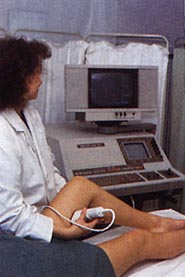
doppler1If you have a persistent bad calf cramp it could be indicative of a blood clot.  A blood clot, once in your body, can break off, go elsewhere and get into your lungs and/or brain and kill you.  I did not know this a year ago, and even after the clot went away after six months of medication, it does not seem to be as widely, or as clearly stated, as it should be.

“Your life is in danger – this is an urgent medical condition.” On June 10, 2015 I heard that statement many times from medical professionals and would continue to hear it often as the DVT diagnosis, treatment and resolution continued over the following six months.

Persistent calf pain, which felt like a standard athletic cramp, had driven me to the first of several physician appointments which led to the diagnosis.  If you are experiencing such a cramp, or have had a persistent issue with your calves, you may be experiencing a DVT.

Chris Bosh had a much worse condition that included clots traveling to his lungs, which can lead to an embolism.  Women who suffer DVTs through pregnancy and delivery are at higher risk than I was.  There are many common ways in which a clot can occur, and my experience was about as good as it could be all things considered.  I got off easy – but it was completely new to me that the initial pain could arise from what felt like a conventional athletic cramp.

After multiple appointments with several types of physicians, many risk factors were identified, but none was ever clearly the “smoking gun.”

  • Trauma to the leg – I had bumped my front shin against a steel beam 10 days prior to the diagnosis, and trauma is a known risk factor.  The migration of this pain, from the shin on the front of my leg to the calf in the back, was one of the m
  • Flight – I travel a lot and regularly fly overseas.  DVTs are a known complication of long flights with a host of ways to mitigate the risk, including wearing of calf compression socks (which themselves are recommended mostly due to their ability to mitigate pain once someone is diagnosed with a DVT, rather than do to known statistical mitigation of DVT onset).  While this is the most widely known factor – most of the physicians I saw did not think this was a major factor.
  • Exercise – I had worked out a lot prior to onset.
  • Dehydration – Due to the exercise, travel, and a common side effect of me being Celiac.
  • Celiac – I’m Celiac, but there is no known data about risk factor correlation between this and DVT.  (Although most auto-immune disorders like Celiac tend to make everything worse.)
  • Rhabdomyolysis – In 2014, I had exercise induced Rhabdomyolysis (this is its own long story, due largely to Celiac, Exercise and Dehydration).  There is some data that there is correlation between this and DVT.

After six months of blood thinners with no change in the size of the clot, the physicians I was dealing with agreed that continuing that therapy was unlikely to be successful.  Fortunately, one final ultrasound showed that the clot had greatly decreased in size.  I will continue to take a thinner for flights over 5 hours.

Throughout this process there was; (1) a lot of fear, (2) inconsistent information, and (3) not much guidance as to finding others who had had similar experience.  Hopefully this helps someone else should they have the same issue develop.

Posted in Uncategorized | Tagged , , , , , , | Comments Off on My Bad Calf Cramp was a Blood Clot

Technology Forecasting and Predictions: 2016 (7 of 7)

DTNS’s 2016 prediction show, #2657, was published on December 31, 2015 and along with the diverse group of hosts, there was a broad range of predictions in many areas.

  • Virtual reality dominated from an air time standpoint.  With multiple big companies and startups working in this area, it becomes easier to look at use cases and make real predictions.
  • Software bots and intelligence beyond the current digital assistants (Google Now, Siri and Cortana) will emerge as a trend.
  • Cyber attacks – their possibility and consequences.
  • Gaming – Nintendo will accelerate the launch of the NX.
  • Facebook – will be active in search (or not).
  • Drones – there will be unintended consequences in the US FAA’s drone registration plans.
  • Uber – regulatory concerns about whether or not drivers are employers will continue and eventually become a Federal issue.
  • Quantum computing – new evidence of performance will emerge and could cause new regulations about import / export of this equipment.

I’ve logged the full breadth of the predictions in the same google sheet I’d used for past episodes.

Posted in Business, Disruption, Innovation, Invention, Theory | Tagged , , , , , | Comments Off on Technology Forecasting and Predictions: 2016 (7 of 7)

Is that a Disruptive Prediction? (6 of 7)

“And two years later, what come out? PlayStation 2.” – Ali G

Ali G

Linear predictions are important, but it is unlikely they are disruptive.

Some predictions are linear – like that made by Sasha Baron Cohen’s character Ali G above.  Sitting in 1993 it might have been disruptive to predict Sony’s entrance into the gaming console market.  Nintendo and Sega were certainly impacted over the past 23 years.  However, once we’d seen a PlayStation, extrapolating to predict an improved future PlayStation was not disruptive.  It was linear assumption that included estimates about the commercial and technical roadmap in consumer electronics and gaming.  Other predictions are less linear.  Some predictions are truly disruptive.

Disruptions fit into certain categories.  Disruptions have certain characteristics which improve their likelihood of; (i) spreading quickly, (ii) surprising, and (iii) creating effects which weren’t expected.

Looking at my own technology predictions at the end of 2015 – the only area I felt would be truly disruptive was Self Driving Cars (or Self Driving Automobiles, Autonomous Vehicles, etc.).  There are a few areas where current media hype appears to anticipate something being ‘Big’, where I’m skeptical.  I’m less impressed by the potential with drones than I was.  While I feel I was too skeptical about 3D printing – it doesn’t feel as if it will be the consumer-level, household ownership, type invention that was once forecast.

Many areas where developments and technology are growing – software, payments, life science, etc. feel more linear in their development than they feel disruptive.  Eradication of cancer, creating longer lives with better health, automating financial services and improving computational power are all important and significant.  When those innovations arrive, will we really be surprised?

Self Driving Vehicles will be Disruptive

The arrival of self driving cars feels like it will have impact beyond what we currently anticipate based on a past list of components that increase the probability of a technology being disruptive.  A simple scoring of “1” for each of the 12 items on the list leads to a total of 11/12.  Such vehicles are easily ‘inserted’ into the current global infrastructure.  All it takes is one municipality, one buyer and user demand.  Once inserted, autonomous vehicle should find ready penetration once they work.

The disruptive potential of self driving cars (or intelligent vehicles "IVs") is made clear with a framework

The disruptive potential of self driving cars (or intelligent vehicles “IVs”) is made clear with a framework

It isn’t clear if there is Compound/Geometric behavior in vehicle networks – but it seems entirely possible that a small addition of such vehicles, if they are truly safer, could have a huge impact on overall road safety.  Emergent Behavior simply means that many of a thing may behave very differently than just one of a thing.  This certainly seems possible.  Fleets of autonomous vehicles available for users could create dramatically different driving, travel and transportation behavior than what is currently done.

There are three areas where current inertia around intelligent vehicles provides the technology with the power to truly disrupt.  The supply chain is massive, fragmented, and all in pursuit of this concept.  The components for this innovation may already be in place. Further, these are big players who are persistent – if there is resistance or failures, they will continue to pursue their goals.

Lastly, the vehicles are being designed to be reverse compatible with the existing traffic infrastructure.  Google’s push to modify the vehicle, rather than requiring the modification of millions of miles of roadway, has shown that this is possible.

Posted in Disruption, Industry, Innovation | Tagged , , , , , | Comments Off on Is that a Disruptive Prediction? (6 of 7)

Travel Guide: Clothing for Long Flights and Travel

Favorite travel gear.

Favorite travel gear.

Balancing comfort and style while regularly logging over 100,000 miles a year in flights (or even doing a few trans-oceanic flights a year) isn’t easy.  I’m good at identifying comfort – fortunately my wife, daughter and mother-in-law can help with the style.  Icebreaker and LuluLemon are the two brands with multiple entries on my list.

While comfort and avoiding looking like a clown are the top priority on the flight – it is a huge bonus if the clothes you’re wearing can also be back up inventory for what you are doing on the trip.  This is really useful if your bags get lost!  For important trips – get their with a day buffer.  Always have backup gear on you for a business meeting.

Uppers

Nordstrom’s Smartcare dress shirt has great breathability (which makes it comfortable) and is practically indestructible.  In a pinch I’ve worn it straight off of +10 hour flight into a meeting.  My daughter has chosen pink versions for me.

Icebreaker has two entries in upper body wear, with more elsewhere.  Most important is their hoodie – I travel with a 200 gsm for chilly flights and as backup for weather changes.  A lighter weight 120 gsm is great for back up – they are easy to wash and don’t get smelly if you have to re-wear it in a pinch.  With both, layering for warmth is easy.

Polartec’s PowerShield Pro and Neoshell products are some of the most advanced membranes you can buy for outerwear.  I’ve been traveling regularly with a Kishtwar jacket by The North Face and appreciate its ability to keep my dry without making me sweat up a storm.

Slacks & Shorts

LuluLemon returns with their ABC Pant.  The fabric is reminiscent of a leisure suit from the 1970s, but the cut is right and it has survived several spills and tumbles.  Writing up this post made me start thinking more about pant and slack comfort and fabrics.

For shorts – O’Neill’s Ultimate Board Shorts are not an exageration.  Now branded as the Traveler Freak Hybrid Board Shorts, they are just dressy enough to look nice when paired with a collared shirt, can dry quickly if used as swim trunks and have enough pockets to get you wherever you need to go.  Getting in a run or exercise session helps jetlag and aids in sleeping – because of that, keeping a pair of LuluLemon shorts convenient helps keep my body clock on schedule.

Boxers & Socks

Jobst compression socks.  I had a DVT in mid-2015.  Prior to that, I’d always been focused on blood flow safety on long flights, but that certainly focused my awareness.  These are comfortable, easy to wash and are on every physician’s recommended use list for blood clot care.  Icebreaker socks are great for shorter flights in either dress shoes or sneakers.

1-IMG_6004I met the Saxx team at ORS in 2015 – their booth proudly proclaimed, “Life Changing Underwear.”  They aren’t kidding.  It isn’t the fabric (for that, I’d been using Icebreaker), but instead the garment design.  Saxx uses a cloth cup or jock-strap in their design that is very comfortable and this really is true on a long flight.

Shoes & Belts

Learning to wear minimalist shoes for long flights and the long walks through airports has reduced foot and knee pain.  It took me some time to build up front strength such that I could wear these kinds of shoes for the long walks common in traversing airports. I prefer either New Balance Minimus if something less dressy is okay or VivoBarefoot if dressier is better.

Reversible dress belt.  My current belt was purchased in a 3-pack from Costco, but I’ve found other good versions on Amazon.  Amazon also has many metal-free belts for getting through security easily, several of these are also reversible.

Posted in Methods, Textile | Tagged , , , , , , | 1 Comment

Tech Forecasting and Predictions – Self Blindness (5 of 7)

Reviewing past podcast tech forecast shows reveals that the hosts are very good at making predictions – but it was surprising to me that those who had domain expertise were less likely to make predictions about their area of expertise.  For instance, Patrick Beja not talking about his outlook for the gaming industry was surprising.

eyechart01

Predictions and technology forecasting aren’t easy.

Once I held myself to task and put together my own list of predictions, this hesitation made sense.

The areas where I’m most knowledgeable are technical fabrics, filtration, membranes and material product design.  However, in these domains, I did not want to go into detail at all. I didn’t want to fully share my views on the 1 year, 3 year and 5 year outlooks in those areas.  I didn’t want to give away perspective that is different than what we already have put into the public domain, and I didn’t want to share anything in this forum that might not be 100% in line with what I’ve shared with customers.

Further, like the hosts of those shows – if I’m already known as an expert in that space, there is little incentive to make statements about the future.  I can only be wrong, my reputation can only be hurt.

Posted in Uncategorized | Comments Off on Tech Forecasting and Predictions – Self Blindness (5 of 7)